On a government contract, every labor hour must trace back to the work it paid for.
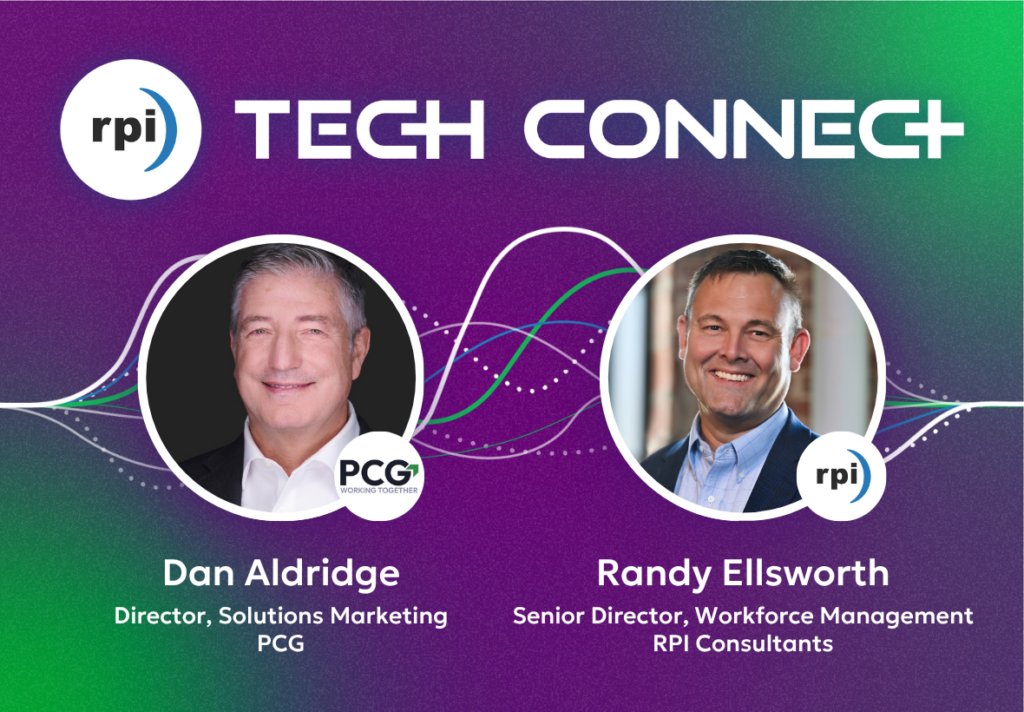
Dan Aldridge, Director of Marketing at PCG, better known as the ERP Doctor, joins Randy Ellsworth, RPI’s WFM Director, to talk about where workforce management fits next to an aerospace and defense ERP.
They cover how labor data ties back to contracts and production orders, why CMMC 2.0 and ITAR matter to the people side of the business, and how a configurable WFM system can support those requirements without custom code. Randy also describes what a successful implementation looks like, from payroll that becomes a non-event to managers who only deal with exceptions, and Dan explains how the RPI and PCG partnership puts industry and WFM expertise on the same project.
If your company builds for government customers and labor tracking still depends on manual fixes, this conversation is worth your time.
Interested in listening to this episode on another streaming platform? Check out our directories or watch the YouTube video below.
Meet Today’s Guest, Dan Aldridge
Dan Aldridge is Director of Solutions Marketing for PCG, overseeing all marketing and lead generation — website, email, social media, content creation, and Go-to-Market strategy — including partner marketing for the Infor and NetSuite partnerships.
With 25+ years in ERP software, Dan has held executive roles at Baan, Infor, Priority Software, and Merino Consulting Services, and founded his own Infor LN consulting firm, Performa Apps. He has managed 200+ ERP consulting projects and led large-scale enterprise transformation engagements for Fortune 500 companies including Flex, Caterpillar, UTC (Carrier), and Siemens.
An MBA in Finance and trained accountant, Dan has also advised CFOs and Controllers on financial reporting, GAAP/IFRS compliance, and SOX projects, and has served as CFO and Controller himself.
Outside of work, Dan is touring all 30 NFL stadiums, restoring classic muscle cars, and attending ComicCons with his family.
Meet Today’s Guest, Randy Elsworth
Randy Ellsworth is the Senior Director of RPI’s Workforce Management (WFM) practice and brings over 25 years of domestic and international experience in the software industry. He has worked directly with Infor and was most recently employed as Senior Director of Infor’s WFM Practice. Throughout his career, Randy has developed a deep expertise in consulting, implementations, and integrations, as well as risk management and mitigation. He brings extensive experience with SaaS solutions and cloud implementations, including many transformational programs.
In his time at Infor, Randy was responsible for implementing WFM methodology and helped develop and ensure industry-leading practices, while also supporting and collaborating with both global and domestic teams. He is an Infor Deployment Method certified practitioner with immense experience in project and program management, services delivery, and systems integrations.
Meet Your Host, Chris Arey
Chris Arey is a B2B marketing professional with nearly a decade of experience working in content creation, copywriting, SEO, website architecture, corporate branding, and social media. Beginning his career as an analyst before making a lateral move into marketing, he combines analytical thinking with creative flair—two fundamental qualities required in marketing.
With a Bachelor’s degree in English and certifications from the Digital Marketing Institute and HubSpot, Chris has spearheaded impactful content marketing initiatives, participated in corporate re-branding efforts, and collaborated with celebrity influencers. He has also worked with award-winning PR professionals to create unique, compelling campaigns that drove brand recognition and revenue growth for his previous employers.
Chris’ versatility is highlighted by his experience working across different industries, including HR, Tech, SaaS, and Consulting.
About RPI Tech Connect
RPI Tech Connect is the go-to podcast for catching up on the dynamic world of Enterprise Resource Planning (ERP). Join us as we discuss the future of ERPs, covering everything from best practices and organizational change to seamless cloud migration and optimizing applications. Plus, we’ll share predictions and insights of what to expect in the future world of ERPs.
RPI Tech Connect delivers relevant, valuable information in a digestible format. Through candid, genuine conversations and stories from the world of consulting, we aim to provide actionable steps to help you elevate your organization’s ERP. Whether you’re a seasoned professional or new to the ERP scene, our podcast ensures you’re well-equipped for success.
Tune in as we explore tips and tricks in the field of ERP consulting each week and subscribe below.
Show Notes:
- PCG Blog Explaining CMMC 2.0: https://pcgservices.com/aerospace-and-defense/cmmc-2-0-is-here-and-mandatory/
- PCG Insights HUB Video page for A&D: https://aerospace-defense-erp-videos-infor-ln-cloudsuite.hubs.vidyard.com/
- PCG Video Detailing CMMC: https://aerospace-defense-erp-videos-infor-ln-cloudsuite.hubs.vidyard.com/watch/4jjKnTVNSYxNV7KaDwkyWw
Transcript
Chris Arey
Welcome back to RPI Tech Connect. I’m your host, Chris Arey. Today we’re going to be talking about workforce management and aerospace and defense. Specifically, we’ll be talking about the value it provides and how RPI and PCG are working together to bring it to customers. Along the way, we’ll get into some compliance and how WFM supports that. And in addition to that, how it works with your ERP.
To help me dig into this today, I’m joined by two guests. I have Mr. Dan Aldridge, better known as the ERP Doctor from PCG, and Randy Ellsworth, the WFM director here at RPI. So, Dan and Randy, it’s great to have you on this afternoon. How are we doing?
Dan Aldridge
Doing well, thanks. Happy to be here.
Randy Ellsworth
Yes, doing well.
Chris Arey
Very good. Dan, if you wouldn’t mind, can you share with us a little bit about yourself?
Dan Aldridge
Okay, sure. So I’m a director of marketing now at PCG, and I’ve only been doing marketing for about two years, very new to it. I had spent close to a 30-year career in consulting, ERP and manufacturing mostly, and I’m also a finance consultant. So that’s kind of my background for most of the time, only two years, like I said, in marketing, but I really am having a good time with it. A lot of our clients are aerospace and defense companies, in manufacturing in particular.
Chris Arey
Awesome. Thank you for that. And how did the term ERP Doctor come about? What’s the story there?
Dan Aldridge
So that was some branding that I did probably 10 to 15 years ago. I created a site called erpdoctors.com, which is my own site. I’ve got a lot of content out there and things, you know, videos, training videos, all kinds of stuff. And it really kind of took off from there, so I kept it.
Chris Arey
Very cool. You’re quite the internet personality, so it’s great to have you on here this afternoon. And Randy, it’s been a minute since you’ve been back on the pod. What’s going on? What can you share?
Randy Ellsworth
Yeah, sure. Hey, I’ll say first, I’m not a doctor, but I do get to do a podcast with one today. So that’s exciting. In terms of my background, I’ve been close to 40 years in the software industry, primarily focused on implementations, with a large part of that in workforce management.
Prior to joining RPI, I had several services management roles at Infor, including managing the WFM team there, where we implemented WFM in many different industries, including A&D. So fast forward to today, I’ve been a few years at RPI. I started the WFM practice, where we are implementing WFM and optimizing some complex solutions in that space. So excited to be here today.
Chris Arey
Very good. I look forward to hearing more about how WFM can support aerospace and defense. But before we get into the good stuff, I wanna address this partnership and how excited I am to be working with Dan and the rest of PCG on delivering excellent solutions to their customers. Dan, is there anything in particular that you’re excited about working together? Anything you wanna call out?
Dan Aldridge
Yeah, I really am. I mean, WFM has been a hole in our offering up to this point. Once we started working with you guys, it’s really fantastic. It’s something that everybody needs, particularly regulated industries, they need it quite a lot, and we didn’t have a great answer for it.
You know, there’s little pieces in the ERP. You track employee records and time spent against production orders, all kinds of things like that. But you don’t have any WFM that ties to payroll and everything like that. So that’s why I was excited about it. It fills a hole, and we like working with you guys. So we really, really like working with you guys.
Chris Arey
Likewise, man. It’s always a good feeling to bridge a gap like that. Randy, how do you feel about bringing WFM to aerospace and defense?
Randy Ellsworth
Yeah, hey, I think it’s a great fit. With RPI and PCG, we complement each other, with PCG coming in with the manufacturing and A&D experience and RPI with the deep HCM and WFM experience. We have people that go back to the origin of this product. It’s very complementary. And that’s what excites me, being able to fill those gaps.
Chris Arey
Really good stuff. And Randy, you said there it’s a good fit. Now we’re gonna talk about why it’s a good fit. So Dan, next question for you, sir. You’ve spent a lot of time working in this space. When you zoom out, what’s top of mind in this sector right now?
Dan Aldridge
Well, I mean, there are some wars going on, so that’s what’s going on in this industry, right? So the biggest thing, I think, is that the capacity of the US aerospace and defense industry is being taxed. These weapons that were formerly able to deal with, like, you send up a missile to intercept another missile, per se, are both going to be in the millions of dollars, each one of them. Now you’ve got drone warfare, where the drones can shoot down the missiles or vice versa.
So if we’re not having enough drones, which we’re not, then it becomes a complication for the industry. We have to figure out how to do more with less, also because the costs are rising for all the components and things like that. So you’ve got to figure out ways to create lower-cost types of armaments and things like that. And then, of course, there are all these regulations like CMMC, which I’ll talk about a little bit later, that these aerospace and defense manufacturing companies have to pay close attention to.
Chris Arey
You think about what these companies are producing and what they’re responsible for, you have to imagine it’s probably highly regulated and monitored. So I would imagine that tracking things like who’s producing what, how they’re producing it, how long it takes, and the man-hours involved is probably heavily scrutinized. So Randy, hearing a little bit about A&D and what they’re doing, WFM: how does that fit into the equation?
Randy Ellsworth
Yeah, look, we’re the recipient of all this data. At the end of the day, we are on the labor and compliance side, where the ERP is dealing with the manufacturing side. We’re dealing with compliance, whether that’s pay compliance, federal regulations, reporting, whatever it is. We automate gross pay, and we ensure compliance across industry.
So labor is one of the most complex and costly parts of the business. As you get into the details, labor is important: who’s doing what, where, and tracking that to the various contracts and making sure that we comply with that, and with labor compliance as it relates to overtime, et cetera. So they’re very interconnected, with us being able to receive a lot of this data from the ERP and reconnect that on the other side to make sure that we’ve tied that back together, the labor side along with the job costing, if you will.
Chris Arey
I think a lot of times people hear workforce management and think maybe timesheets. How would you describe it to someone who’s never worked with it before, Randy?
Randy Ellsworth
Yeah, it is timesheets, but that’s just kind of the core of what we do. We automate all of this stuff. When you get into these complex environments where you may have union contracts, you certainly have to be accountable and auditable through what you do. So we automate what is a lot of times manual processes in terms of complex pay rules, overtime, shift differentials, all the labor stuff that goes into it. Maybe there’s union contracts to comply with.
And then we also use the data that comes from the ERP to make sure that we’re coding that time appropriately, that we’re able to audit and trace that all the way through. And as I said earlier, just connect it back to the ERP data so we make sure we have a holistic picture. An audit is not the time to find out that you’re not compliant. We do that ahead of time as we implement these systems.
Chris Arey
Two questions for you there. The first thing is about you mentioning data exchange with the ERP. I imagine that WFM is a system that works well with CloudSuite and Infor, but other ERPs too, right? Can you talk about how seamless that exchange of info is?
Randy Ellsworth
Sure. Look, like I said earlier, we’re basically the recipient of that data. WFM is flexible in terms of the ins and outs that we receive. From an HR standpoint, you need an ERP to send employee demographics and all that type of stuff: jobs, teams, positions, hierarchy of some sort.
But as it relates to an ERP or an MES, it’s, you know, what are we coding our time to? What contracts, what jobs? We call them labor metrics. What jobs, projects, tasks, et cetera, are we coding our time to, and what does that mean on the back end? WFM is very flexible in terms of output. Of course, we have standard outputs to payroll and finance, but very flexible on the output side.
And if there are feeds to other systems, a lot of times in these complex environments, it’s about integration. What are the downstream systems that are needed? Very flexible in terms of the output and what we can produce for reporting or compliance or whatever.
Chris Arey
Thank you for that, Randy. Dan, anything in there stand out to you, as somebody who’s familiar with A&D and manufacturing?
Dan Aldridge
Yeah, so all the things that Randy mentioned in terms of projects: projects are being tracked within the CloudSuite Aerospace and Defense package, and those are tied to contract line items. So you have CLINs, they call them, and the time that’s associated with those contract line items. It could be inside a project, just a project. It could be charged directly to a project. So, you know, some time and expense and those sorts of things.
And then it also can be tied to a production order, which in turn is tied to a project. So it can get quite sophisticated, and everything rolls up to the project in terms of job costing. So you have production orders going on, and other things like machine time are coming from other systems even into the ERP, but the ERP is nicely feeding all that information back to WFM.
So WFM can take care of some of the things like the compliance within there. There’s even things that people are running into now, like CMMC under that, and I’ll explain a little bit more later. But one factor there is that if it’s controlled information and there’s an ITAR, there’s a regulation called ITAR, which means that has to be American citizens handling certain line items. So it gets quite sophisticated, and you don’t want to have an ITAR audit either.
Chris Arey
Audits are no good. We don’t want audits. Randy, WFM is something that is super capable of supporting these different requirements.
Randy Ellsworth
Yeah, absolutely. WFM is designed to look at compliance from many different ways. If there’s an individual that needs citizenship, for instance, or skills or credentials or training, those are attributes that we bring in. And then, based on that, we can alert. We would maybe receive schedules from production, and then we can use that to signal errors or flag things in the system that are not compliant.
So there’s many ways to… I mean, there’s the compliance, and then there’s how it’s implemented. So there’s many different ways, as we get into these complex implementations, to leverage that data that’s coming across to ensure that we’re compliant across systems and doing the right thing as we execute in these environments.
Chris Arey
Really great stuff there. Thank you, Randy. Question for you. As somebody who’s been a part of, I want to say, dozens, hundreds even maybe, WFM implementations, what do you see? What does WFM look like when it’s done right? What constitutes a successful WFM implementation, and what does that look like?
Randy Ellsworth
Yeah, well, these are always challenging projects. Ultimately, I think our goal is to be able to track everything and make payroll a non-event. If you can make payroll a non-event, that’s a win. Companies spend a lot of time doing manual entries, and with that, if you don’t have the proper methods to capture data and the right data available to do all this compliance automatically, then you’re doing manual time entries, you’re doing corrections.
The managers are doing corrections, they’re chasing stuff down, payroll is doing corrections, and then on the back end, you’re getting audits and various things. It is a struggle if you don’t have it in place.
When you implement one of these systems and you consider this stuff end to end, you have the data flowing through and you have automation. I will say that in a union contract, if you can come up with a scenario, we can probably automate it. And that’s big when you get into these complex scenarios.
So it’s that ability, at the end of the day, if you can have the data flow through, you’re not dealing with a bunch of errors. You allow your managers to just manage by exception what’s flagged by the system based on automated rules, and they’re dealing with a subset of the quote-unquote problems that come along in the day-to-day with labor. That’s a win. And ultimately, paychecks, payroll compliance, being able to pass an audit without sweating.
Chris Arey
Very good. Thanks for that.
Dan Aldridge
And people are pretty particular about their paychecks, aren’t they?
Randy Ellsworth
Very much so. We test and we test, and we hold on until it’s spot on. You have to.
Chris Arey
So you talked there a little bit about understanding business processes. If you’re doing manual work and you understand a scenario, you can come up with a scenario and articulate that, chances are you’re gonna be able to automate it too. So I feel like a great place for starting a WFM project is having a good understanding of business processes. Dan, I wanna talk about compliance and the need for traceability in A&D, because I feel like that’s a big part of setting up for a successful WFM implementation. Is there anything that you can share from that perspective that you think would be valuable for today’s listeners?
Dan Aldridge
Yeah, I think that anything associated with a government contract has traceability requirements. And when you’re talking about WFM, I think Randy’s already covered that pretty well. But there are things like the labor costs. Like I say, there are different types of contracts. You can have time and expense, you can have fixed price. I mean, a lot of times government contracts these days are moving almost exclusively to fixed price contracts.
So in terms of tracking costing, it becomes very important, more to the company almost than the government, right? Because the government doesn’t care. They’re paying fixed price, but you care because you’ve gotta keep those costs down in order to keep your margins up. So a lot of that kind of data is coming through there, and you want to be able to trace it to projects, to contracts, to people in the organization, and to payroll as well. So there are those sorts of complex traceability requirements.
They’re all in the system, and then there’s automation going on on the ERP side as well. So there’s AI types of actions, RPA, that when you’re doing your purchase orders and matching invoices and things like that and reading the invoices in, a lot of that stuff is taken care of by RPA and AI at this moment. That’s really exciting stuff, because that can help you process this a lot faster. And then you’ve got a human in the loop to check it and make sure it’s ready and it’s correct to go into the system.
And that’s traceability that the government needs as well, right? Because it’s types of projects that are being traced, individual people that are working on them. I mentioned ITAR, and then for CMMC, it’s certain types of compliance that is required on particular types of classified or unclassified information as well. So that has to be protected.
Chris Arey
So CMMC 2.0, you’ve mentioned it a couple of times now. Can you give us the quick and dirty on what that is?
Dan Aldridge
Cybersecurity Maturity Model Certification. That’s what it is.
So basically, under there, you have classified and unclassified information, and if you have certain types of classified information, then you have to protect it. So that’s what it’s really about. And traceability is part of it, but also just knowing how to handle it and being sure that you’re compliant with these, because it has its own set of audits, right? For monitoring that information. So that’s basically what it is in a nutshell. I did provide some resources for that, and they’re gonna be put in the text underneath the podcast when it airs.
Chris Arey
And you mentioned that it had recently gone into effect. There was a requirement with a deadline that people had to certify that they were in compliance with this certification. Is that right?
Dan Aldridge
Yeah, so CMMC 2.0 actually went into effect last November, and they said you have to be compliant within one year, but they’ve already moved that out a little bit. You definitely still gotta put your foot on the gas to meet this thing, because I think it’s quite a small percentage that are actually compliant at this moment. Even with an extra six or seven months or whatever they put on to the end of that, it’s still gonna come up so fast.
And there’s a limited number of these companies that provide the certification, and there are also companies like BDO, which we work with, that know pretty much everything there is to know about CMMC 2.0 and how you comply. So those people, there’s a waiting list for those sorts of folks.
Chris Arey
Got it. Thank you for clarifying that. And folks listening in, we will have resources in the show notes for this episode. Randy, WFM is FedRAMP authorized, and you mentioned earlier the distinction between “supports” and “complies with” and how those are not necessarily the same thing. Can you share about how WFM does support these various requirements?
Randy Ellsworth
Yeah, look, there’s a lot of controls within WFM for compliance in terms of access. So pretty much unlimited security group access, which, when it comes to CMMC 2.0, there are limitations in terms of what data they can see or what access they can have, depending on what comes through. The WFM system is very granular, down to the field level. So you can give higher group-level security in terms of access to screens, et cetera, that they can see, but then you can get down even to a field level.
So that flexibility, as it comes time to implement, and I mentioned earlier, some of it is all the rules, and then it’s how you implement it for your business. And that’s where WFM really shines, in terms of we can adapt that to your business without making code customizations. It’s just a highly configurable application built with compliance and security in mind. And that’s not to speak to enforcing FedRAMP capabilities. That’s product. I’m speaking of how we implement and how we configure the system.
Chris Arey
I’m glad you mentioned that, Randy. I was actually just getting ready to ask you: when I hear that a solution is highly configurable, it makes me think that folks are probably gonna need help getting it just right. Would you say that’s correct? And who should they call?
Randy Ellsworth
Absolutely. We have a team of… who should they call? RPI, for sure. We have deep expertise here. And look, I do wanna say that Infor WFM is not a niche product. It’s out there. Gartner, the latest, I don’t know, September, I think, of 2026, Infor is in the leader category in the Gartner Magic Quadrant. So the product is very, very capable.
And RPI, I’ve been in this game for a long time, and I’ve got a team of experts that go back to the origin of this product, 25 years, implementing in very complex, heavily regulated environments. This product can fit the bill. You can twist it and turn it without breaking the thing. And that’s just to say these A&D implementations are very complex, and you can’t just pull something off the shelf and use it. We have the expertise to tweak it, along with PCG’s industry expertise. You put the two together, and it is a great combination.
Chris Arey
Let’s go. Partnership. Let’s go. I really appreciate that, Randy. Thank you. That was super. We are getting close to time, though, and it’s been great chatting about the complexities of A&D and what Infor WFM is capable of. So Randy, you might remember this. Dan, this will be a first for you. Before we wrap up, I always like to ask my guests if they have one actionable takeaway they’d like to share with today’s listeners. What would it be?
So this is your 30-, 60-second, most important, must-know walk-away after listening to this. What do you have for us? Randy, let’s start with you.
Randy Ellsworth
Boy. I guess, that’s a lot. Do I only get sixty seconds? I’ll try to keep it to thirty.
Chris Arey
You can take as much time as you need.
Randy Ellsworth
If you’re having labor challenges, in terms of traceability, look at your processes, look at what you’re doing end to end. If you’re finding a lot of manual edits that you’re doing, if your managers are pulling their hair out trying to reconcile time with what their day job is, if payroll’s getting involved, you’re having missed items like that that have to go back, or if you’ve had an audit or you’re in fear of a lawsuit because of labor compliance, look at those things. Bring those things to the table.
Let us walk through them with you and talk about your challenges, and we can tell you about our experience and how we help organizations sort that out and make it an easier job. Nobody wants to do time entry, fixed timesheets. They don’t. They just want it to work.
Chris Arey
And no challenge is too great for RPI’s WFM consultants. Excellent. And let’s go.
Randy Ellsworth
Absolutely. Give us a union contract, we’ll automate it for you. That’s a challenge.
Chris Arey
Dan, what do you have for us?
Dan Aldridge
Well, I would say, if you’re gonna implement a system like WFM, you really need it badly, because there are tools inside of an ERP, and they can put out output information so that you can handle payroll on your own without a WFM in place. But I can tell you that having that layer, particularly when you’re working with aerospace and defense, is so crucial because there are so many possibilities for mistakes if you’re using ERP data alone or you’re trying to pass that out to payroll without a WFM in the middle.
So I would say it’s a perfect opportunity, because it is very seamlessly integrated with the CloudSuite Aerospace and Defense package that we work with and we have our industry expertise in. It’s fantastic, and it has basically all the specific processes. And you can look at your business process flows with the process mining tool. So there’s a lot of new things coming along with the Velocity Suite that can really work with both systems.
And actually, if you’re dealing with us, you can even bring in a manufacturing execution system, an MES system that we developed called Smart Factory. That does an even better job of getting all the hours in against the work orders and all that sort of thing. So that’s what I would say: if you have the opportunity, like you have here, of WFM that works very nicely in aerospace and defense, combined with an industry-specific solution, not a monolithic, everything-in-one-system-does-all thing, with very industry-specific data coming out of the ERP into the WFM, that’s a really great opportunity.
Chris Arey
WFM for everyone. It’s like the Oprah thing: you get a car, you get a car, you get WFM for everyone. Let’s go.
Dan Aldridge
Yeah, I have to share one little anecdote. One of our customers, they’re called Apex Aerospace, one of the guys who was working there as the chief information officer, or whatever, the VP of IT, he said that implementing the system was like trying to land a 747 on a canoe. He even had in his presentation the 747 sitting above a canoe that he had kind of put together with AI or whatever.
I thought that was just a wonderful analogy for doing a project, because it’s so much. I mean, this WFM and the ERP system all working together, it’s a lot. You know, it’s a lot, but having integrated systems from the get-go makes it a lot easier.
Chris Arey
Like you mentioned earlier, coupling the industry expertise with the solution expertise is a winning combo for folks. So RPI and PCG are happy to bring both of those things to you on your next WFM project. If you have any questions about today’s episode or you want to learn more, let’s have a conversation. We’d love to hear from you. You can contact us at podcast@rpic.com. Again, that’s podcast@rpic.com.
This has been RPI Tech Connect, and we will catch you next time. Thank you, Dan. Thank you, Randy.
Dan Aldridge
Thanks.
Randy Ellsworth
Thanks, guys. Take care.