Conferences can feel like a lot, but this year’s GHX in New Orleans had a clear message.
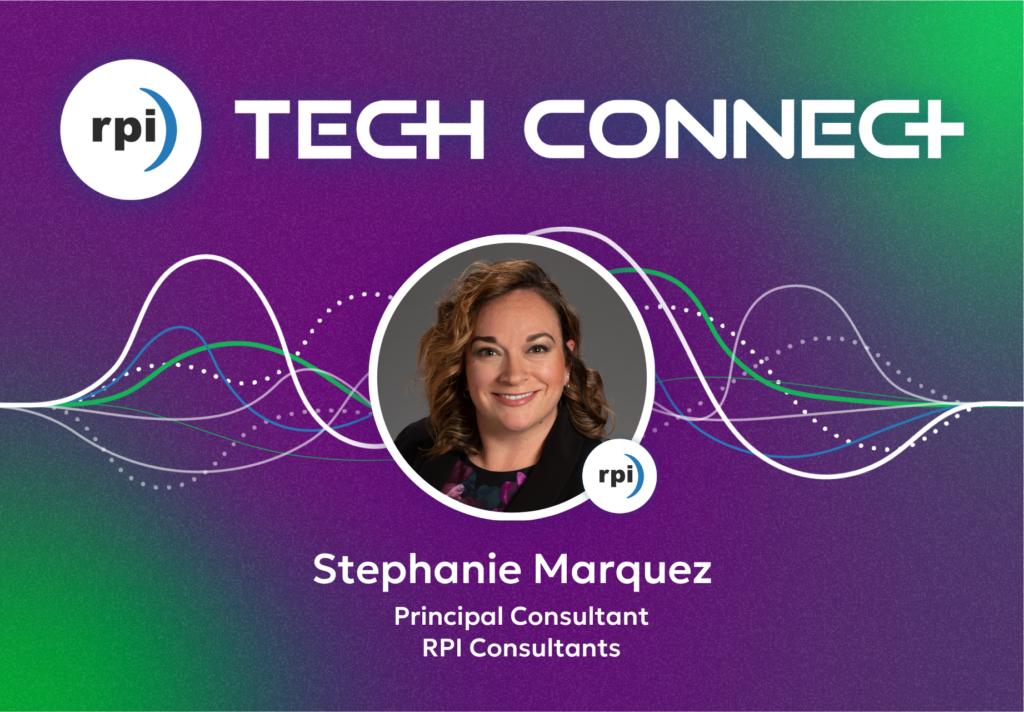
In the latest episode of RPI Tech Connect, Principal Supply Chain Consultant Stephanie Marquez returns to share her three biggest takeaways from the summit; why the industry is getting back to process fundamentals; how cross-functional collaboration is finally getting the attention it deserves; and why small experiments often beat big plans. She also shares a few quotes from the event that remind us that while technology and systems play a key role in supporting healthcare supply chains, it’s still very much so a human-centered process.
Beyond the sessions and panels, what stayed with Stephanie was simpler: healthcare supply chain professionals everywhere are wrestling with the same challenges. If you’ve ever wondered whether you’re focused on the right things, this episode might be the validation you didn’t know you needed.
If you work in healthcare supply chain and want to know how your peers are building resiliency in their operations, check this one out.
Interested in listening to this episode on another streaming platform? Check out our directories or watch the YouTube video below.
Meet Today’s Guest, Stephanie Marquez
Stephanie Marquez is a Principal Infor CloudSuite Supply Management Certified Consultant with over 15 years of experience in both Corporate Procurement and Project Management. She started with RPI Consultants in July 2019, bringing a variety of Supply Management expertise to the implementation of Contract Management solutions, Infor system upgrades, and procure-to-pay process improvement initiatives. Stephanie is also experienced in data analysis, policy and procedure documentation, end-to-end testing, and training. She is a self-motivated learner and problem solver focused on continual growth and development.
In her role as Resource Development Manager, Stephanie is responsible for overseeing the training, development, and coaching of junior Supply Chain team members.
Stephanie’s skills can be seen in RPI’s CloudSuite Bootcamp training sessions. Each training lasts for three days interacting in-person with clients. She’s led multiple training sessions in Supplier Order Management and Contract Management. She created the curriculum, documentation, and content for our other SCM focused Bootcamps.
Meet Your Host, Chris Arey
Chris Arey is a B2B marketing professional with nearly a decade of experience working in content creation, copywriting, SEO, website architecture, corporate branding, and social media. Beginning his career as an analyst before making a lateral move into marketing, he combines analytical thinking with creative flair—two fundamental qualities required in marketing.
With a Bachelor’s degree in English and certifications from the Digital Marketing Institute and HubSpot, Chris has spearheaded impactful content marketing initiatives, participated in corporate re-branding efforts, and collaborated with celebrity influencers. He has also worked with award-winning PR professionals to create unique, compelling campaigns that drove brand recognition and revenue growth for his previous employers.
Chris’ versatility is highlighted by his experience working across different industries, including HR, Tech, SaaS, and Consulting.
About RPI Tech Connect
RPI Tech Connect is the go-to podcast for catching up on the dynamic world of Enterprise Resource Planning (ERP). Join us as we discuss the future of ERPs, covering everything from best practices and organizational change to seamless cloud migration and optimizing applications. Plus, we’ll share predictions and insights of what to expect in the future world of ERPs.
RPI Tech Connect delivers relevant, valuable information in a digestible format. Through candid, genuine conversations and stories from the world of consulting, we aim to provide actionable steps to help you elevate your organization’s ERP. Whether you’re a seasoned professional or new to the ERP scene, our podcast ensures you’re well-equipped for success.
Tune in as we explore tips and tricks in the field of ERP consulting each week and subscribe below.
Transcript
Chris Arey
This is RPI Tech Connect and I’m your host, Chris Arey. Today we’re diving deep into the recent GHX conference in New Orleans. Principal Supply Chain Consultant Stephanie Marquez has returned from the event floor and has all the stories to share. Marquez, welcome back to the program. How are you?
Stephanie Marquez
I’m doing well, thank you. How about you?
Chris Arey
I am fantastic, thank you. I’m gearing up for the Memorial Day holiday weekend here, so energy and vibes are high.
Chris Arey
For those who haven’t had the pleasure of meeting you, would you mind sharing with the audience a little bit about yourself?
Stephanie Marquez
Yes, for sure. So as you mentioned, my name is Stephanie Marquez. I am a principal supply chain consultant here at RPI. I’ve been with RPI just about seven years and I’ve held several different roles within supply chain over my last 17-ish years in that side of life — from buying to sourcing to contract management, system admin. A little bit of a jack of all trades, if you will. And I’m glad to be speaking with you today about GHX.
Chris Arey
I heard it was a lot of fun. What was your overall impression of the event?
Stephanie Marquez
So it’s been about seven years since I went to my last GHX Summit, and for me it was really awesome. There had been a lot of time that had passed, so I couldn’t quite recall what to expect. But it was incredibly well organized.
There was really always something to be doing and checking out — a seemingly endless amount of tracks and panelists to listen to in the different sessions. So it was really, really great. Lots of information. If anybody walked away feeling like they missed something, then that’s on them — they definitely did. Having it in New Orleans certainly didn’t hurt. The city is just a vibe, and it was a pretty amazing experience.
Chris Arey
I’ve never been there, but I’ve heard great things. And so what type of people attend GHX? Who is the event intended for?
Stephanie Marquez
So it’s really a bunch of different participants — providers, suppliers, consultants, folks from GHX. Lots of GHX people go. It’s really a lot of different stakeholders who have a part in any sort of supply chain procure-to-pay process, finance folks as well.
It’s a great opportunity to bring everyone together because everyone can take some time and really relate to one another with common challenges or issues. It’s really just a fantastic opportunity to learn from your peers in the industry.
Chris Arey
These are always great events. We’ve talked so much about these types of events on the podcast — where you get folks together in the same room talking about how they’re solving problems creatively. That sharing of ideas inspires other folks to try things that maybe they didn’t have the courage to or weren’t sure how to approach. Love to hear that was the overall sentiment you gathered from the event.
All right, so great context. Let’s go ahead and get into your three main takeaways from the sessions and conversations that you had at GHX.
Stephanie Marquez
Yeah, so really for me, in the sessions that I participated in, it was a dominant theme all throughout — back to basics, with a heavy focus on process improvement and data integrity. It was very intertwined in all of the different panel discussions that I sat in. There wasn’t really a heavy focus on newer technology; there was just a lot of emphasis on the foundational components of supply chain, procure-to-pay, and finance.
A lot of the discussions were really about reviewing the processes, being honest with ourselves — you know, the good, the bad, the ugly — and formulating a plan that’s actionable to address the items. Actionable was kind of that underlying theme alongside back to basics, process improvement, and data focus.
Chris Arey
It’s so refreshing to hear that that was a theme at a conference like this. Technology and new solutions are all important and impressive, but it’s also something I feel like people may be experiencing a little fatigue with. So getting back to basics sounds refreshing. You mentioned process improvement — what were you hearing in that regard?
Stephanie Marquez
Yeah, so the process improvement component was really coupled with data governance and data integrity. Again, in the sessions I participated in — and I couldn’t do all of them — there was a significant amount of discussion around data governance. When we say that, it’s really a focus on: what’s the source of truth for the data, how is it managed, who’s maintaining it, and how are we holding people accountable?
A lot of the panelists also addressed their organization’s strategy around leaning on resources such as GHX to help with that governance and standardization. The important part of the discussion was that it’s not a one-and-done thing. It’s not like, let’s clean up our item master and move on and never have to touch it again. The governance, the process of it, really becomes woven into the fabric of everyday tasks that the teams are responsible for.
Chris Arey
I like that messaging, because I feel like it’s consistent with the things we encourage here at RPI — continuous improvement, nothing is set it and forget it. So it’s nice to hear that on a larger scale, those were themes present at GHX. How did that make you feel as somebody who’s been working in this space for 15-plus years?
Stephanie Marquez
I said on Wednesday — we had a debrief with the two colleagues that I attended the conference with — that the last three days had been so validating. Because sometimes when you’re lost in the weeds of the work all the time, you really wonder: am I still on point with what’s happening in the rest of the industry?
When you’re sitting around hundreds of people who are in that industry and you’re like, wow, they’re experiencing similar things, or I know clients that have experienced this, or I was just talking about this last week with somebody else — it’s incredibly validating that you’re on the right path, focusing on the right things. For me, that was a big moment. Not really an “aha” moment, but it was very satisfying.
Chris Arey
And you said this was the first time you had attended something like this in seven years?
Stephanie Marquez
2019, yeah, was the last time I was at GHX Summit.
Chris Arey
Awesome. Well, I’m glad you got that kind of reassurance that this is something people in the industry are focused on. What was your second takeaway?
Stephanie Marquez
Yeah, so healthcare supply chain historically tends to operate in silos — procurement, inventory management, finance — and each of those departments functions very well within its own lane. But Tina Vatanka Murphy spoke beautifully during her keynote session on Tuesday. For those unfamiliar, she’s the CEO of GHX, and she kind of just kicked off the summit with a bang.
Each one of those areas operates really well independently; the struggle is really in that cross-functional collaboration. That’s where we tend to see things break down, and it’s almost like one of those unspoken truths that everybody knows about but we don’t always speak to.
Sitting on the supply chain side, we do tend to see that communication or collaboration break down when we start factoring in our friends in finance, right? You can’t have payables without a relationship with supply chain and vice versa. So there was definitely a heavy focus on that.
And furthermore, when we talk about collaboration and stakeholder involvement, it’s usually around projects, but it really needs to be the focus in the day-to-day. To provide some more context: during the conference, I was able to connect with a previous colleague who is at LCMC, right there in New Orleans. She mentioned that supply chain and finance at her hospital have a two-hour meeting every Monday.
Doesn’t matter what’s going on — they’re connecting on current issues, maybe ongoing projects, or process improvement things that might be upcoming. That has just become part of their culture. It’s about involving everyone who has a stake in the process.
Chris Arey
Wow. That Monday two-hour meeting with finance — is that a new initiative they started or what prompted that?
Stephanie Marquez
She hasn’t — yeah, I believe she’s been with the organization for quite a while, so I think it’s something that has evolved over time. But it’s just become part of their culture now.
Chris Arey
I hear this idea and it sounds like a really good one. You mentioned that healthcare historically works in silos. Do you think something like this — the two-hour meeting between two teams — is an uncommon scenario?
Stephanie Marquez
In my experience, from a consulting side but also as someone who worked in healthcare supply chain, it wasn’t fairly regular. When I was working with a healthcare system in Western New York, we would meet, but it was typically around a specific project or a month-end close challenge. It wasn’t something that was just ingrained in the culture. So it’s nice to see that folks are making that transition and realizing how important it is.
With my colleagues here at RPI, when we’re working on implementation projects, it’s very important for us in supply chain and finance to get our teams together very early on in the project. I’ve done that on the last several implementations with the same finance colleague on our end, and we’ve seen a massive amount of success in doing that. So we’re helping to open those doors and using the project as an opportunity to then weave that collaboration into their day-to-day.
Chris Arey
It sounds so simple — why would collaborating with people who also have a shared interest in the success of the organization be a challenge? What are the barriers there?
Stephanie Marquez
I don’t think it’s so much a matter of not wanting to. I think we’ve said this before — everyone is doing more with less. Time is really a challenge, resources are spread very thin. And so that sort of culture shift, in my opinion and in my experience, needs to come from the top down.
It’s great if you have a buyer or a sourcing manager who really sees the value in it, but if there’s misalignment at the leadership level, it just won’t work. It’s not that people don’t want to — you just have to create the framework and the structure and the culture to support it.
Chris Arey
I appreciate that context about how healthcare typically operates and how these barriers might exist. What was your third takeaway?
Stephanie Marquez
Yeah, definitely. So I sat in — I want to say it was the second-to-last day — in a panel discussion specifically about supply chain resilience. Since we had recently recorded a podcast focused on that, I was incredibly intrigued. There was a couple of panelists: an individual from GHX and a system director of supply chain logistics and analytics from a healthcare system. They discussed what happened at their healthcare system when they were the victim of a cyber attack a few years ago.
What stood out the most was how they described the changes in their stakeholder collaboration as a result of experiencing the cyber attack. At the end of the panel conversation, the audience got to do Q&A, and I asked the panelists: how did this event impact or change the way in which you collaborate with your clinical leaders, your IT leaders, supply chain, finance, and so on?
What he described was a much more aligned relationship across those teams and departments. He spoke to how this event really forced them to streamline their disaster planning to ensure that everyone was on the same page. They did have disaster planning in place before, but what he described was that it was operating in those silos. That event really broke those barriers down, and at the end of the day, he emphasized how much stronger they had become together as a result.
Chris Arey
You think about something like a cyber security attack and it sounds stressful and probably a pretty painful learning lesson, but in this particular situation it sounds like it was actually a blessing in disguise — revealing that they had a plan in place, but teams were approaching it individually rather than as a unit. And because of that, maybe things were being overlooked or people were doing repeat work.
Stephanie Marquez
Yes, very much aligned. He emphasized how incredibly fast their IT department was to shut it down, which was a true testament to just how skilled that team is. And then he walked us through how their planning had changed and what are some of the things they do now that they didn’t necessarily think of before.
Unfortunate as it is — blessing in disguise. I’m sure there are a lot of people who would say otherwise, but listening to him describe how they now do things monthly, have this structure in place — they just have a very strict, organized, and structured resiliency plan.
Chris Arey
That’s great to hear that they’re better because of it. And I think that’s a great example of collaboration happening in real time — sharing that story during a live panel discussion.
Stephanie Marquez
Yes, it was one of the last panel discussions I participated in, and it was pretty impressive.
Chris Arey
That sounds like a great way to wrap up the event.
Stephanie Marquez
Yeah, and I just want to — I don’t want to oversimplify the proactive collaboration piece, because it sounds simple when we’re talking about it, but it really requires a lot of action, participation, alignment, and acknowledgment from all parties.
It’s like we have to be intentional about creating the framework to support that level of collaboration. Because you’re not just talking about needing one buyer on a committee — you might need multiple people to sit in and be the voice for operations, for clinical, for IT. So I don’t want to oversimplify it. But it’s not anything that somebody can walk in Monday morning and just say, you know, we’ve got a team. It does take some really thoughtful planning.
Chris Arey
I like that you add that note, because I feel like it segues nicely into your third and final takeaway about being intentional and taking action — and the way that small experiments can really go a lot further sometimes than dreaming and big planning. Is that right? Am I articulating your third takeaway correctly?
Stephanie Marquez
Yes, for sure. So again, this came from one of the “aha” moments from sitting in a panel discussion, but this one specifically was really focused on invoice barriers and impact. The panelist was a senior leader from UPMC, and she did such a phenomenal job of giving the audience three primary takeaways.
The last one emphasized how sometimes we get stuck in the weeds — we can’t see the forest through the trees. We talk about change, we talk about these big plans, but the action and follow-through is typically what lacks or where people get stuck. And her ending sentiment was just: just do it. Try something. It doesn’t have to be big — they can be small, actionable experiments to see what works, but do something. And again, it seems like one of those basic concepts. Because people are unfortunately expected to do more with less, when we talk about wins, we forget that they can be small wins.
Whether it’s addressing invoice barriers and identifying the impact and maybe working with one vendor that’s causing a lot of issues — no one’s saying you have to work with all 5,000 vendors in your vendor master. Start with one. That was her primary point: focus on one thing at a time, get that small win, and then gain that momentum to keep the team moving forward in the direction where those big plans and big outcomes lie.
Chris Arey
I really love that. And you said just do it — this is a podcast and we haven’t had any sponsored advertising yet, but that felt like a nice plug for Nike.
Stephanie Marquez
Yeah, I said that too, but I was like, maybe I shouldn’t.
Chris Arey
No, it’s great. And honestly, it’s so important. So often people get caught up in the planning — there’s so much planning and so much planning, but people aren’t accountable and things aren’t acted on. And all of a sudden it just becomes something you talk about and you don’t actually make any progress.
Even those incremental little wins over time are going to help you establish that resiliency and get to a place where your healthcare supply chain is operating the way you want it to. And I understand there was an example story shared around AI in this session?
Stephanie Marquez
Right, exactly. So AI is the talk of everything all the time now, and while it was woven into this discussion, it wasn’t a primary focus. Another great panelist — he was the director of data for a very large healthcare system.
We’re talking 57 hospitals across nine states, so a lot of volume. He talked about how over the years he’s worked with his team to determine, from a data integrity standpoint, that source of truth — what works and what doesn’t. He discussed how he’s used AI to help support their analytics.
His perspective was that AI can be great as a tool to bridge the gap, maybe for those who may not have as strong an analytical background as he does — he’s an analyst by education and by trade. But he was able to recognize that that’s not the case for everybody, and everyone on his team has something great to contribute. So leaning on it as a tool rather than the full solution — using it to help organize the data, surface trends, and then leaning on the human component to validate. It’s like trust, but verify.
Chris Arey
I like that framing of it. AI is there to augment and help people. The man giving this talk was an analytical expert, but some folks on his team who didn’t have that skill set — AI was a great tool to help supplement skills they don’t have. And that was a great immediate way to start using AI in their workspace.
And I also understand there were some pretty powerful quotes you heard throughout your time at GHX. Any in particular you’d like to share?
Stephanie Marquez
Yes, so both of these quotes came from keynote speaker Ann Jordan. She is the president and CEO of HFMA — the Healthcare Financial Management Association. And they really were just a stark reminder for all of us. Think of a huge ballroom — around 700 attendees, I believe. And she just reminded us — and I will use this quote even in my home life — “Healthcare is the pathway to humanity.”
That one was kind of like a gut punch. And the other one: “At the end of every supply chain is a human.” Whether that’s a patient — because in healthcare supply chain, the patient is who we are there to serve — or a vendor we’re working with to get product in the door, or a teammate in AP or finance.
Those two quotes, in the span of probably five minutes from one another, act as a bold reminder that we’re all human, and there are real people at the end of everything we are doing in healthcare.
Chris Arey
That’s so good. And I honestly feel like both those quotes reinforced your first takeaway about getting back to the basics. This is a human process — humans are driving healthcare. And you know, we did a recap of GHX last year, and hearing the takeaways from that event versus the one you attended this year — kind of different.
Chris Arey
And I really like where it sounds like they’re taking things — reminding folks that this is a human process, and that they’re really building a community here, nurturing the folks who work in this space.
Chris Arey
Okay, so thank you for sharing those quotes. We’ve had a couple on the pod and I think the ones you shared today are fantastic and, I don’t know, heartwarming. I feel good hearing these things. So before we wrap up — as you know, this is your 30-to-60-second most important thing you want people to walk away with after listening to this. What do you have?
Stephanie Marquez
Yeah, so for me, the state of healthcare is always a hot topic of discussion. Walking into a conference like this with so many professionals within the industry — like you said, last year the themes and the tone were a little bit different.
For me, it was super eye-opening and very inspiring. It just reminds me, and hopefully it reminded everybody else, that all of the healthcare industry — regardless of whether you’re at a small community hospital or working for a system with 57 hospitals across nine states — we’re all in the same boat. We’re all working toward improving outcomes: patient outcomes, operational outcomes, team outcomes.
When we can get on the same page together as an industry, I hope that all of those other participants were just as jazzed to go home and share some of those themes as I was. I’m not ignorant to the fact that a lot of what we’re talking about is incredibly challenging. But when you hear CEOs and presidents of companies speaking very boldly about these topics and the issues at hand, to me that’s refreshing. It’s like, okay — the people at the top really see what’s happening and are making a call to change. So there you have it.
Chris Arey
I love that. And it makes me think that you leave an event like this — hearing those stories from the top execs who are living and breathing in this same space — and you leave motivated, inspired, and hungry to do more. Is that how you felt?
Stephanie Marquez
Yes, definitely.
Chris Arey
Very good. And I take it you’ll be attending next year – you had a great time. I like the energy that you brought to the show today and thank you for sharing your takeaways, I thought that they were fantastic. Folks listening in, if you have any questions about GHX and how RPI can help you implement supply chain resiliency into your organization, we’d love to have a discussion with you. You can contact us at podcast@rpic.com.
Stephanie Marquez
Thank you.