The critical water management software that utilities rely on wasn’t built for what they’re facing in 2026, and the shortcomings are beginning to make themselves known.
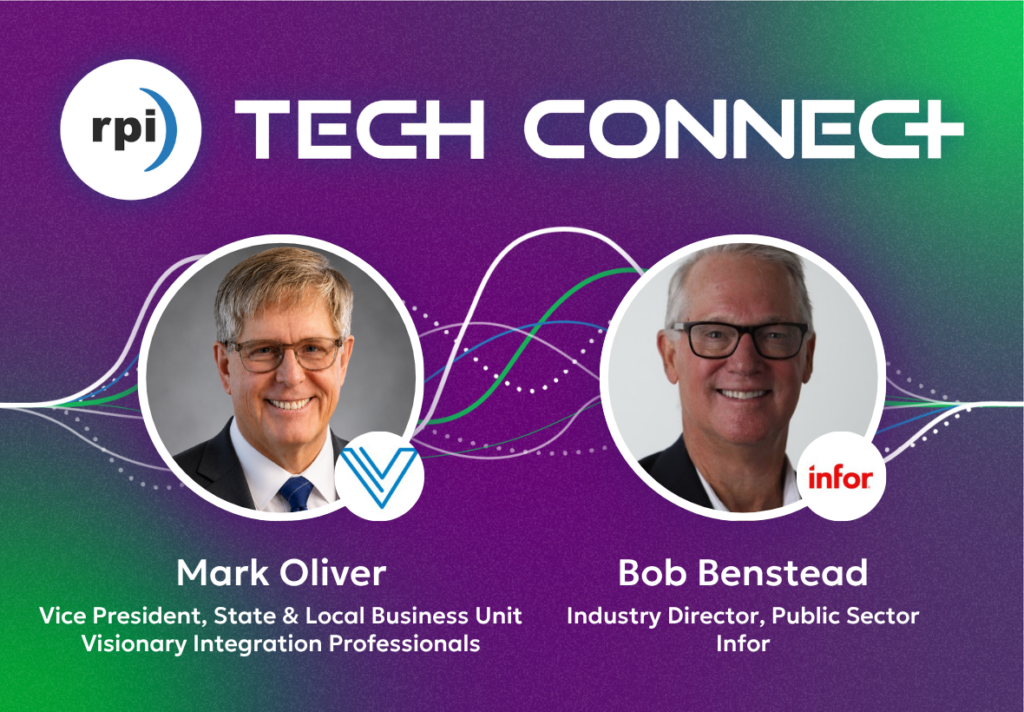
In this episode of RPI Tech Connect, two guests calling in from Northern California join to talk about the current state of water utilities: Bob Benstead of Infor Strategy Group and Mark Oliver, who leads the Infor Practice at VIP.
Bob covers the landscape—who gets the water and who doesn’t, the country’s aging infrastructure and how to prioritize repairs when there’s never enough money, and the multi-tier compliance maze running from the EPA down to your county.
Mark picks up on the software side: why on-prem systems can’t keep pace with integration and security demands anymore, what a connected cloud platform changes for billing, asset management, and financials, and why AI is only as useful as the data you feed it. Plus, the two dig into what growing data center demand means for water availability and cooling.
Three big challenges, one common thread: you can’t fix what you can’t see. If your systems are showing their age, this conversation is worth your time.
Interested in listening to this episode on another streaming platform? Check out our directories on the WRKdefined network or watch the YouTube video below.
Meet Today’s Guest, Bob Benstead
Bob Benstead is the Industry Director for Infor’s Public Sector and Utility sectors. His duties include strategic industry planning, partner relations, global industry council management, and client relations. He has been in the government and utility software business for over 25 years and has held several executive roles including managing all sales and delivery related operations for various government software products.
Bob has experience in government operations such as regulatory compliance, infrastructure management, citizen relations, and utility management. Bob has been a member of the CLEAR Regulatory committee, AWWA, APWA, IAM, and has been a guest lecturer for the University of Wisconsin’s Department of Engineering Professional Development Program and Colorado State University.
Meet Today’s Guest, Mark Oliver
Mark Oliver brings more than 23 years in water utility software to his role as Director of the State and Local Business Unit at Visionary Integration Professionals® (VIP), where he leads the firm’s Infor practice.
His background spans both sides of the software equation—product management and delivery services—so he’s seen what makes systems succeed long after go-live.
Meet Your Host, Chris Arey
Chris Arey is a B2B marketing professional with nearly a decade of experience working in content creation, copywriting, SEO, website architecture, corporate branding, and social media. Beginning his career as an analyst before making a lateral move into marketing, he combines analytical thinking with creative flair—two fundamental qualities required in marketing.
With a Bachelor’s degree in English and certifications from the Digital Marketing Institute and HubSpot, Chris has spearheaded impactful content marketing initiatives, participated in corporate re-branding efforts, and collaborated with celebrity influencers. He has also worked with award-winning PR professionals to create unique, compelling campaigns that drove brand recognition and revenue growth for his previous employers.
Chris’ versatility is highlighted by his experience working across different industries, including HR, Tech, SaaS, and Consulting.
Show Notes:
About RPI Tech Connect
RPI Tech Connect is the go-to podcast for catching up on the dynamic world of Enterprise Resource Planning (ERP). Join us as we discuss the future of ERPs, covering everything from best practices and organizational change to seamless cloud migration and optimizing applications. Plus, we’ll share predictions and insights of what to expect in the future world of ERPs.
RPI Tech Connect delivers relevant, valuable information in a digestible format. Through candid, genuine conversations and stories from the world of consulting, we aim to provide actionable steps to help you elevate your organization’s ERP. Whether you’re a seasoned professional or new to the ERP scene, our podcast ensures you’re well-equipped for success. Tune in as we explore tips and tricks in the field of ERP consulting each week and subscribe below.

Transcript
Chris Arey
All right. This is RPI Tech Connect, and I’m your host, Chris Arey. Longtime listeners might remember an episode from years ago where we talked about the state of water utilities. Today we’re going a bit deeper on what that space looks like and some of the challenges that organizations in that space are facing.
Joining me are two guests who have spent a lot of time in the water utilities space. So returning to the show, we have Mr. Bob Benstead Benstead from Infor’s Strategy Group. And making his very first appearance is Mark Oliver of VIP, where he leads the Infor Practice. Bob, Mark, it’s fantastic to have you both on the program today.
Mark Oliver
Thank you.
Bob Benstead
Happy to be back.
Chris Arey
Awesome. Before we jump in, where are you calling in from today?
Bob Benstead
Ironically, we’re both from Northern California, so we have a lot to say about this water industry and the challenges of water and all that stuff.
Chris Arey
Very cool. California, I spent some time living out there. I do miss it, but I definitely can understand, or I guess you’re uniquely positioned to talk about the water utility space today. So I can’t wait to hear about it.
Mark Oliver
Yep, yep. Actually, we’re both just outside of Sacramento.
Chris Arey
Nice. All right, so before we get down into our big three challenges facing water utilities in 2026, I want to get a pulse of what this industry is like today. So Bob, can you start us off? Give me your read on the industry.
Bob Benstead
Sure, you know, there’s no shortage of crazy issues. There’s certainly a lot of topics to address. It’s often very regional, but I think a couple of the big ones, real quickly, are the water availability. We in the West obviously have been challenged for years, but you’re finding a lot of new things coming up, for instance the pending El Niño or Super El Niño, and what does that mean for California? And it boils down to even something as small as Southern California or Northern California, or the southern tier of the United States.
There’s a lot of things happening around the availability: the issue is an ongoing one that is certainly not going away anytime soon. That’s the infrastructure, and the state therein, and the capital available to even deal with that. But there’s two new ones that I’ll just briefly mention. We can probably talk about them later. One is the influence of AI. It’s a brand new world. It is crazy right now, it’s the Wild West, but there’s potentially some enormous benefits done right.
And then one that seems to be accelerating is, in support of AI, data centers and the impact on water and stuff. I’ve had very interesting conversations, very interesting examples, and you know what that’s doing to impact water availability and costs and all that type of stuff.
Chris Arey
I’m happy that you brought up the data center thing, because that’s a topic I see everywhere all the time, and heading into our conversation today, I didn’t even think of that, so I can’t wait to hear more about that talking point when we get to it. Mark, same question for you, what’s the lay of the land, right?
Mark Oliver
So I just kind of want to play a little bit up on that (the data centers) because a lot in the news and stuff, you hear about the electricity that the data centers are using and how that’s affecting things, but what you don’t hear so much is the cooling that needs to be done, right? And that’s where the water part comes in, because most of them, if not all of them, are using water to drive the cooling. And so that’s where we come in.
The other thing that I’m seeing (just because I’m coming from the perspective of a group that implements a lot of software) is that a lot of the water industry is coming up to a point in their infrastructure, their software infrastructure, where it’s just getting old and definitely cannot handle the AI components.
Looking at some of the issues: just the integration issues that they’re having between their financials and their billing and all the different components they’re trying to manage, because everything is just getting more complex, and you’re needing your data to be much more accessible across different systems and to be able to analyze it. And that’s what I’m seeing, just a lot of requests for proposals going out: hey, we need to modernize.
Chris Arey
When you mentioned the infrastructure there, is that a physical thing (like carrying water to communities) or is that a hardware thing, like computers, or both?
Mark Oliver
It’s more of a hardware thing. I mean, Bob is going to get into the infrastructure, because it’s really both, right? But from my standpoint, I’m seeing more of the hardware thing. And that’s where I’m seeing a lot going, ‘We can’t handle all this infrastructure on-prem anymore,’ and that’s why a lot of these requests are coming in going, what do you have in the cloud? You know, what can we leverage in the cloud?
Chris Arey
I look forward to talking about the cloud, because I feel like that’s going to be the solution, or a possible solution, to a lot of these challenges today. But with that, let’s get into this first identified challenge here, which is water availability. Bob Benstead, tell me about it.
Bob Benstead
Yeah, so, you know, often, and this is probably true in most regions of the world, United States, North America, there is a very big competition, if you will, about who gets the water. We mentioned we’re from California, so we have an agricultural interest, we have an environmental interest, we have a consumer city interest.
There’s all kinds of competing pieces, and there’s only so much water to go around. And what we’re finding is there’s a lot to system water, meaning the water: where do they get it from? How much is available? We’re susceptible to droughts in the West. We’re now talking about susceptibility to flooding and all that kind of stuff.
But then, when you get down to once it’s in the system, you also have water availability: how much do you lose? How much is non-revenue water? How much is loss or theft and all that type of stuff? So when you have that, you have water loss sometimes within a system. So it’s both gross in nature and local, at the system level. There’s a lot of things that influence the availability of water. Various geo-regions have better access, others don’t.
Chris Arey
Mark, same question for you. Water availability.
Mark Oliver
I think Bob hit on a really key point here, in that we can’t really help what the availability is. I mean, the snowpack is going to be the snowpack, the aquifer levels are the aquifer levels, right? But we can start to analyze and figure out where these losses are coming from. Are they coming from evaporation out of canals, right? If so, what can be done there? Are there leaks in the pipes?
Is it people, for lack of a better word, siphoning off, stealing the water? And that’s where the software starts coming in: how can we better analyze what systems are in place to be able to measure throughput, the flow, etc., so you can start to identify: well, it’s not just, ‘We’re losing this many thousand gallons,’ but where are we losing it. And once you know where, then you can start to manage that.
Chris Arey
That’s a really good point you make there: the conditions are the conditions. Some of these things you can’t change, but if you’re losing water, being able to measure and identify where that water is being lost is a really key part of helping, I guess, manage what’s available and what you can use.
Mark Oliver
It’s no different than cash flow, right? Where’s my cash flow going? I’m going to Starbucks four times a week. That’s where it’s going.
Chris Arey
So what is the overall level of maturity, then? Are water utilities, from your perspective, good about measuring these things? Are they kind of lost and throwing their hands up? How far along are they?
Bob Benstead
Well, I will say that they’re getting much, much better. There’s all kinds of programs specifically to identify leaks. It depends on what part of the world, in many cases, and to some degree what part of the United States, but they’re actually putting a lot of effort into it. A lot of it is system loss, so where am I losing water? Are there leaks in the system? Is there loss due to theft? That type of stuff.
But then you get into the other part, and that’s the actual revenue and the billing of the water: how much of that’s being captured? Is there unreasonable loss of water that’s not being billed? It’s being delivered but perhaps not being billed. So it’s kind of a connection of all those types of things.
Chris Arey
And is there a platform out there that captures all of that in one place, where you can see billing and leakage and whatnot?
Bob Benstead
There is. There is. You know, we take kind of a universal approach, where we do all of the utility billing and all of the asset management and all of the regulation piece in one. But there’s tools that are even beyond that: an example is mapping capabilities with GIS, and there’s very specific leak-detection capabilities and things like that, designed specifically for that. The interesting part is what they’re doing now with things like IT, where they can span all these types of things and utilize these multiple tools and what have you.
But a lot of the—I will say a lot of the lost trends, when it comes down to measurement, when you’re billing, and you have capacity, and you’re expecting revenue to fund future growth, repairs, rehab, things like that, it becomes very important to connect the billing and the asset management, because they often go hand in hand. How’s my metering doing? How’s my system delivering? That type of thing.
Chris Arey
And this is one of the promises of the cloud: being able to see all this in one place, in a single place.
Mark Oliver
I’m going to take it one step further, in that yes, it’s really important to be able to have that utility billing aspect and the asset management, right? Because you need to be able to see everything, from your input (where’s the water coming from?) into your treatment plants, your water mains, service lines, water meters, all the way into the homes, or commercial, or into your farms.
But it’s also being able to see that on the financials side as well, to be able to have a platform where you can look across the entire operation, not just from the operational side, right (the boots on the ground, the pipes in the ground, that kind of stuff) but also the financial impact and the analysis on your financials, and be able to see, okay, what revenue streams are being impacted, how much is it taking to repair or maintain certain areas versus what it might cost to replace those kinds of things.
So it’s really an entire platform of the utility billing, the asset management, those operational assets, and the financials. And you could even, if you want, throw in the HR piece, as far as your employees and how much time they’re spending on this. You need to be able to look across the entire operation.
Chris Arey
Yeah, really good point.
Mark Oliver
And that’s what the platform does. And the platform, really, something at that level, and looking across that much, really does take the cloud. And I mean, I know we’re not here to advertise, but I think that’s where Infor really, really shines.
Chris Arey
Awesome. And I’d love to hear more about the Infor platform and how it can help address these challenges. But I do want to move on to this next one here, which is the infrastructure component, which we kind of touched on earlier. But Bob Benstead, I do want to raise a point that you mentioned last time you were on: that the American Society of Civil Engineers report card gave the infrastructure of United States water a C-minus. That was two years ago. I’m not sure if you know what the new grade is, or if we’ve improved since then, or what the status is.
Bob Benstead
Well, it’s along the same lines. You know, we have massive underfunding and massive needs, and it’s one of those things where there just simply isn’t the money to go around, you can only raise rates so much, there’s all kinds of factors in there. But at the end of the day, I think the best place to start is, you have to understand what you need and actually know the condition of the infrastructure you’re dealing with. How good are my pipes? How good are my treatment plants? Do I have enough of all the components that are needed to actually look at that?
And so we take an approach that you need to know and have condition assessments of what your infrastructure is, and then start looking at things to try to mitigate that based on ROI. And once you get ROI established: meaning, okay, these are the top ten things I can do based on this amount of money for this amount of time, then you can start going into, okay, what happens if I choose this? So you have to move it through the process.
Where am I getting the money? Are there grants available? What’s the prioritization from the financial piece, and all of that type of thing? And then you have to have the crazy component: what is going to further my cause and help with EPA mandates, for instance, and stuff. And then, once it goes in, it can follow into project management and funding, and drop back down into the asset management system, to actually go pick the best thing you can possibly do based on real data: real goals, real funding, that type of thing.
Chris Arey
Question about prioritization. It sounds like a difficult thing to navigate. Do you have any recommendations on how these utility organizations should approach that?
Bob Benstead
Yeah, you know, that’s all over the map. I’ve seen some, for instance, in Australia, where they only used four factors: is it in the central business district, is it near a stream, or is it near some other type of sensitive area? So there’s various things you can put in.
It depends on the data. You don’t have to do major data collection, but a lot of people track various things: what is my revenue, what is my age, what is the soil type, various things you can utilize in a decision matrix. And then you can run these scenarios against each other. So, long story short, you can actually pick what it is. You don’t have to have huge volumes of data or huge new data collection efforts. A lot of folks have what they need to start making that prioritization based on what’s important to them or available.
Chris Arey
Got it, that makes sense. So you mentioned something earlier about infrastructure and being able to detect where leaks are. So in my mind, that sounds like a two-part equation: you need to have physical sensors or something in the pipes to measure where the leak is, and then that’s feeding the software. How does that work?
Bob Benstead
Well, there’s a lot of ways. There’s a lot of systems out there now with telemetry, all kinds of feeds coming in, pressure zones and things. And there’s actually solutions built specifically to see where my losses are: what zone am I having? Am I losing water there? But then the second piece: so you have the physical capability of seeing what’s happening, but you have the other part, which is the revenue loss and the loss of water from your billing system. So that too can augment detection: what’s happening, why am I not getting the water there, am I losing revenue because of X. So it’s actually kind of a full circle. But at the end of the day, most people have criteria to at least start running those analytics, to see where it is I’m losing, what’s my biggest risk, things like that.
Chris Arey
So I’m hearing a lot about the capability of the platform (Infor Cloud) helping with these various areas within water utilities. Compare that to the on-prem solutions they’re dealing with now and trying to get away from. Is it just light years apart? Do they not have any visibility into any of these things? Is it really like that?
Mark Oliver
It’s not so much that they have no visibility, right? They can. But without a real platform that connects everything together, they’re relying on their own IT, or hiring outside IT folks to do all those integrations, and all that, you know, custom. Everything’s custom.
And anytime they want to make a change, anytime they start thinking, ‘Well, maybe I can do that kind of analyzing with this data,’ well, you’ve got to redo the integrations and things. Whereas when you get into a platform, all that stuff is native, right? So it’s more of a configuration of what do you want to do, what do you want to see, what data you want to pull. I mean, I can literally, if they say, ‘Well, I want to start analyzing this data,’ I can go in after hours, make a change of what data is being downloaded into what we call a data lake or data warehouse type of thing, and the next day we can be analyzing it. So it’s not this tremendous effort and tremendous cost, because everything’s already piped (not to have a pun there, but it’s already piped, right?) to work together.
So, I also did want to comment here that when we start talking about analyzing data, the first thing a lot of people will say nowadays is, ‘Hey, AI can do that.’ Yeah, eventually. But AI has to have quality data behind it, right, to make those decisions. So, you know, Bob Benstead was saying that a lot of people have that, but it’s still kind of sifting through and not uploading noise, right? Because noise makes it very difficult for AI to do a job.
Chris Arey
I’m glad you bring up the AI element again, because I have to ask, what are your thoughts on, not to get political, but the data center is obviously having an impact on water availability for the cooling purposes that you mentioned.
Mark Oliver
And you were saying, let’s do more with AI? Yeah, yeah, I get it.
Chris Arey
Is that being measured?
Bob Benstead
Yeah. You know, it is a hot political potato, to be very honest with you. There are places (Arizona, Wyoming) every day you seem to see an article. A lot of the trend is ‘not in my backyard’ attitudes, to be honest with you. Some of it valid, some of it not. But the fact remains that’s an explosive area.
It’s a common theme regardless of where you’re at: how’s it gonna impact the water capabilities, how much is it going to utilize, are they following compliance stuff. Same applies for energy. So it’s very real, you can look up any kind of article and you’ll see some rather heated conversations going on in society about that very thing.
Chris Arey
I feel like the introduction of the data centers is a huge reason why, or a motivator for these water utility organizations to move to the cloud, so they can measure the kind of— right?
Bob Benstead
Absolutely, absolutely. And interestingly enough, it’s the very hosting of AI capabilities, in many cases, for all those huge transaction capabilities, that’s gonna eventually solve it. That’s one of the ones: you have the potential of using the AI that relies on these data centers to actually resolve the long-term solutions and what have you.
Chris Arey
It’s full circle.
Bob Benstead
It is indeed.
Chris Arey
Mark, go ahead.
Mark Oliver
I look at the data center issue as an engineer, I’m actually classically trained as a mechanical engineer, so that’s how I think. So I’m not looking at it from a political standpoint. I’m looking at it going, okay, this is the direction the entire world is heading. This is the biggest next technological evolution that we’re going to have.
So it’s not like you can say, ‘not in my backyard,’ and it’s just not going to happen, right? Because it’s coming: the train is coming down the tracks. So now it becomes an engineering problem: where do we put them, how do we cool them, how do we provide electricity, that sort of thing.
And so, again, from an engineering standpoint, do you start building them offshore, using ocean water to cool? Do you put them— you know, on and on and on. But it becomes an engineering problem, where I would rather the politicians stay out of it and let the technology companies come up with a solution, because they will.
Chris Arey
Dang, that’s a fascinating argument, I appreciate that. I want to move now, so we talked about one motivator for moving to the cloud, we have data centers. Let’s talk about compliance, everybody’s favorite topic. Is there anything out there that’s making this move more imminent? Bob Benstead, what can you share?
Bob Benstead
Yeah, yeah, so we have various levels of it. This is actually true in the United States, you can look at the same thing in Canada, Australia is a very good case of multiple layers of enforcement and regulatory components. But in the United States, the big, probably influencer and policy-setter, and what have you, on a gross, macro level, is the EPA. They have very strict guidelines, and it’s about more than just water quality: a lot of it is around water use, a lot of it is around contaminants, all kinds of stuff.
You have the federal piece, but then you drop down and you have a lot of things in the state: Mark and I live in California, and there’s a lot of regulatory issues that are specific to California. And then you break down into regional: is it on the coast versus the mountains, all those types of things.
You have multiple tiers, which makes it very difficult for many water authorities to make sure they have their priorities right. How do you comply with the EPA when there might be a local rule that’s a little bit different?
So you have to make sure you start with an understanding of how that cascades down and affects your operations. And it does affect all the things in the infrastructure piece: it has things to do with billing, it has things to do with regulatory pieces, such as land management. Am I allowed to do this? That type of stuff. So it’s a very complicated piece, but absolutely necessary. I can tell you right now, there’s a lot of places that, if they don’t follow that, will be under what’s called a consent decree, and someone else will take over operations. So there’s a lot at risk in that, and you have to really make sure you have a complete picture of what you’re managing, how it’s being regulated, and how that affects your operations, and how the systems such as we provide can help manage that piece.
Chris Arey
So when you’re thinking about compliance, you said the EPA, federal level, and their state, regional, local: all these different levels of things that need to be accounted for to make sure that people are in compliance. Is that something that the platform, the Infor platform, can track and manage, and show very quickly if you’re in or out of compliance? Is it that simple, or what is the mechanism for that?
Mark Oliver
It’s a little bit more than that. There’s another aspect to compliance, specifically from a security standpoint with the data that you are collecting. With everything in the direction that things are moving with hackers and the tools that they’re using, it is going to get extremely difficult to meet those security compliance regulations if you are still on-prem. And that’s where, when you go to a platform in the cloud, it becomes Infor’s responsibility to manage all that, along with AWS and SaaS. So you’re buying that compliance as well.
Now, as far as the compliance that Bob was talking about, the platform then allows you, yes, to visually see it, but it also allows you to more easily and quickly produce the reports that are required to go to the EPA, and et cetera, et cetera. So, yeah, it’s both sides.
Chris Arey
I’m really glad that you brought up that other part (the security part of this equation) because it’s so true. That’s something we talk about a lot here at RPI: when you make the move from on-prem to the cloud, you have that reassurance that security and updates are happening behind the scenes. You don’t have to dedicate resources and time to that, you can trust that it’s happening behind the scenes. That is a really good addition there. Thank you, Mark.
I want to hear now, we’re going to revisit AI, because it’s a tech podcast, and it’s all the rage, and in the water utility segment too, it’s just super fascinating. So we know the role that water utilities play in powering AI, but I want to hear from y’all’s perspective, do you think AI can play a role here in managing, analyzing, and budgeting? What can utilities benefit from this tool?
Bob Benstead
Yep, absolutely, there are a lot of cases out there. If you can decipher some of your big problem areas, and as long as you have access to the good data (Mark talked about this earlier, you have to have good data to rely on and pull forward) but assuming you do, and you go through that process, what happens is you have this wonderful capability to do things. Say, for the infrastructure, utilizing predictive maintenance, or process optimization and simplification, all those types of things.
But if you move that out into other areas, you can start using AI to address rate structures, optimization of rate structures, and affordability. You can do it for long-term infrastructure planning. There’s all kinds of things, even down to (as we call it) some of the great data mining and data optimization capabilities, workflow, in other words, and taking that and going, okay, where are my anomalies, where are my bottlenecks, all that type of stuff, even in permitting-type things, so you have a workflow of some sort.
There’s a lot of places in there, and a lot of complexity at times. And being able to take that, and in a very powerful way, say, ‘You’re a bottleneck here, and it’s costing you this much revenue,’ it’s things like that where AI is almost like a new frontier, the art of the possible. But there are parameters you have to have in place: governance models, what kind of data it is, what’s being used, what’s allowable, things like that.
Chris Arey
And there’s the AI capability, you know, we’ve talked about it from the Velocity Suite perspective, but the Infor platform has a lot of AI natively within the cloud solution that can help with this kind of analysis and report building and whatnot. Is that correct?
Bob Benstead
Yeah, absolutely. The agentic wave is coming. We’re working with our client base and partners and everything to define some of those pre-built cases and being able to utilize those. And that will span everything from asset management to billing, into regulatory issues and things like that. It truly is going to be the art of the possible, but you also have to realize you have to have the support mechanisms and the governance to make sure it falls within the data being used, and the capabilities, and all those types of things, security and whatnot.
Chris Arey
Mark, anything you want to add from your side?
Mark Oliver
Yes, definitely. Because I think there’s really two sides to the AI story when you’re talking about software systems for water utilities. One is what Bob had talked about: the tools, the AI tools that the agency will be able to use on a day-to-day, month-to-month basis. But there’s also the AI tools that are important when we’re implementing an entire system.
This is where it comes in, and most people go, ‘Well, AI is just going to eliminate jobs’. No, especially not in the software implementation phase. What happens is it makes us more effective. Our business analysts, when we’re coming in and interviewing you (it’s taking the notes, it’s writing up the requirements, doing all that) but it allows us then to truly listen to you. What is it that you do on a day-to-day basis? What is it you’re trying to get across? What are your intentions, right?
So it’s really helping us: it becomes a tool for us to implement the software and the platform in a way that makes your job so much easier. It makes it more intuitive, right? Because we’re able to take the time now to really listen to you and make it yours, versus, ‘We’ve got this contract, we’ve got to get the requirements,’ that kind of thing. So that’s what we’re using the AI for, again, it’s another tool in our toolbox to help us.
Chris Arey
I really liked that you added that second element here to the AI use-case situation. The implementation component is huge, it’s something that we do here at RPI, too.
What’s interesting to me, as the host of the show, is that we hear from guests who work across many different industries. I recently had a neurologist on the platform who was talking about AI helping him get more face time with patients by allowing him to take notes during the session with the patient as opposed to being in front of the computer, taking notes, and not even engaging with the person in the room.
It freed him up to really listen and understand their pain points and deliver better care. So I like that, because that same capability in healthcare is showing up in water utilities during the implementation phase. Really great point there, Mark. Thank you.
Mark Oliver
Yeah, you’re welcome, because at the end of the day, it’s how the platform is implemented.
Chris Arey
So true. It’s only as good as the way it’s implemented, and the organization’s ability to use it thereafter. All right, gentlemen, we’re getting close to time, and before we wrap up, I always like to ask my guests if they have one actionable takeaway for today’s audience. So Bob, big moment, what do you have?
Bob Benstead
You know, this will vary from region to region and entity to entity, to be honest with you, but it is important to have a prioritization of those things you want to address. There’s not enough money to do everything (there’s often resource constraints) but have an idea what it is, and then make sure you have the data and the systems to accommodate that.
That doesn’t mean having to put in twenty systems, try to find stuff… well, obviously, I’m making a pitch for ours, where you have the bulk of the components there, but know the data you’re going to use, and make sure that it’s accurate, valid, all those types of things, because will support your operations along with all kinds of intelligence and reporting, and it will eventually support AI.
You have to have the right data and make sure you control that piece. So, place an emphasis on prioritization and maintain the data to support that process.
Chris Arey
Good, I like that, because it feels like an incremental, manageable first step. If you haven’t made the move to the cloud yet, this is a good place to start. Really good. Mark, what do you have?
Mark Oliver
You’ve got to look not only at the platform, but at the people who are going to implement it, right?
Can you work with them? Do they drive? Is it going to be an us-versus-them kind of implementation, or is it going to be one team working collaboratively to get you a solution that’s going to work for you?
Chris Arey
ERP projects are supposed to be a “we” project, right? Really good note to end on there. Thank you both so much, this has been a lot of fun. I learned a lot and appreciated the different perspective on the water industry.
For those of you listening in, if you have any questions about today’s segment, or you want to learn more about Infor’s Cloud Solution or VIP, or how RPI can help you, we want to have a conversation: please contact us at podcast@rpic.com. Again, that’s podcast@rpic.com. This has been RPI Tech Connect. We’ll see you next time. Thanks so much.
Mark Oliver
Thank you very much.
Bob Benstead
Thank you.