The healthcare organizations that avoid the scramble during a shortage usually sorted out how their supply chain runs long before the crisis hit.
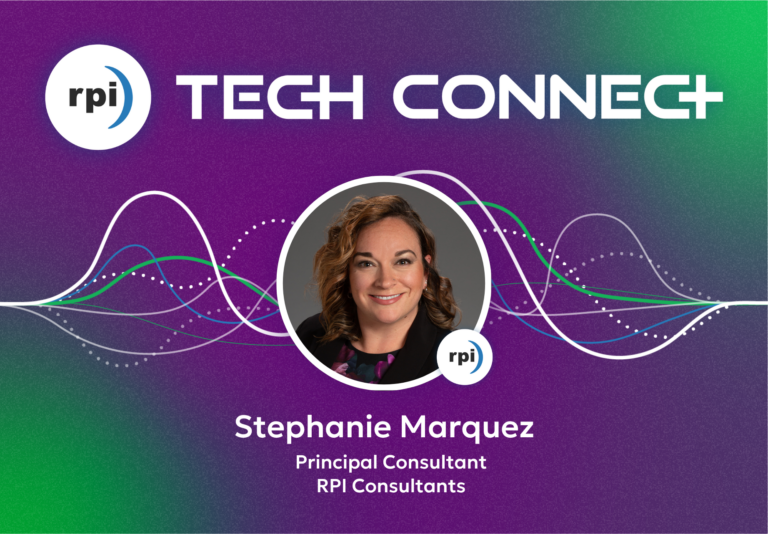
In honor of National Health Care Supply Chain Week, SCM Principal Consultant Stephanie Marquez joins RPI Tech Connect to explain what resilience looks like in practice, drawing on about 17 years across manufacturing, healthcare, and consulting. She makes the case for centralized procurement and explains why procure to pay deserves more attention than it gets. She also covers how supplier cybersecurity and HIPAA now touch the supply chain, and where she tells teams to start when the list of fixes feels overwhelming.
If you lead or support a healthcare supply chain and want a realistic way to get ahead of the next disruption, this episode is for you.
Interested in listening to this episode on another streaming platform? Check out our directories or watch the YouTube video below.
Meet Today’s Guest, Stephanie Marquez
Stephanie Marquez is a Principal Infor CloudSuite Supply Management Certified Consultant with over 15 years of experience in both Corporate Procurement and Project Management. She started with RPI Consultants in July 2019, bringing a variety of Supply Management expertise to the implementation of Contract Management solutions, Infor system upgrades, and procure-to-pay process improvement initiatives. Stephanie is also experienced in data analysis, policy and procedure documentation, end-to-end testing, and training. She is a self-motivated learner and problem solver focused on continual growth and development.
In her role as Resource Development Manager, Stephanie is responsible for overseeing the training, development, and coaching of junior Supply Chain team members.
Stephanie’s skills can be seen in RPI’s CloudSuite Bootcamp training sessions. Each training lasts for three days interacting in-person with clients. She’s led multiple training sessions in Supplier Order Management and Contract Management. She created the curriculum, documentation, and content for our other SCM focused Bootcamps.
Meet Your Host, Chris Arey
Chris Arey is a B2B marketing professional with nearly a decade of experience working in content creation, copywriting, SEO, website architecture, corporate branding, and social media. Beginning his career as an analyst before making a lateral move into marketing, he combines analytical thinking with creative flair—two fundamental qualities required in marketing.
With a Bachelor’s degree in English and certifications from the Digital Marketing Institute and HubSpot, Chris has spearheaded impactful content marketing initiatives, participated in corporate re-branding efforts, and collaborated with celebrity influencers. He has also worked with award-winning PR professionals to create unique, compelling campaigns that drove brand recognition and revenue growth for his previous employers.
Chris’ versatility is highlighted by his experience working across different industries, including HR, Tech, SaaS, and Consulting.
About RPI Tech Connect
RPI Tech Connect is the go-to podcast for catching up on the dynamic world of Enterprise Resource Planning (ERP). Join us as we discuss the future of ERPs, covering everything from best practices and organizational change to seamless cloud migration and optimizing applications. Plus, we’ll share predictions and insights of what to expect in the future world of ERPs.
RPI Tech Connect delivers relevant, valuable information in a digestible format. Through candid, genuine conversations and stories from the world of consulting, we aim to provide actionable steps to help you elevate your organization’s ERP. Whether you’re a seasoned professional or new to the ERP scene, our podcast ensures you’re well-equipped for success.
Tune in as we explore tips and tricks in the field of ERP consulting each week and subscribe below.

Transcript
Chris Arey
We keep coming back to this idea that most supply chain problems in healthcare aren’t actually supply problems; rather, they’re structural ones. And the organizations that figured that out before a crisis were the ones that didn’t scramble.
SCM Principal Consultant Stephanie Marquez has spent a lot of time in this space, and today on RPI Tech Connect, we’re gonna get the chance to hear her perspective on how to build that kind of resilience in your supply chain.
So, Stephanie, welcome back to the show. It’s been a minute. How the heck are you?
Stephanie Marquez
It has been a minute. I’m doing really well, thank you. I appreciate you having me back.
Chris Arey
One of my favorite guests. For those who haven’t met you, what do you want them to know? What can you share about yourself?
Stephanie Marquez
Sure. As you mentioned, my name is Stephanie Marquez. I’ve been in the supply chain space for about 17-ish years, as hard as that is to say, in a variety of different industries. I have a background in supply chain in manufacturing, healthcare, and now consulting.
Throughout that journey, I’ve had the opportunity to wear many, many different hats. I’ve been a buyer, I’ve done sourcing management, contract management, systems admin, and now consultant. So I like to try to bring all of that with me into any of our engagements with our clients. And again, thanks for having me.
Chris Arey
You know, every time I hear your background, I’m always a little impressed. You must be such a well-rounded supply chain and healthcare professional, having been in all these different spots, right?
Stephanie Marquez
That’s very kind. I like to think so.
Chris Arey
I know so. But here we go. I think a great place to start our discussion today is to define this term “resilience.” I want to make sure that we’re all working from the same definition. So in the context of healthcare supply chain, what do we mean by that?
Stephanie Marquez
When I use the term resilience as it relates to supply chains in healthcare, I’m coming from the perspective of how operations are run. How are teams positioned for success to be able to respond to specific demands, like emergency cases, challenging times, or product shortages? There’s really more of an emphasis on the structure: the structure of the operations and the framework in place to support the teams in doing their job.
Chris Arey
So it’s one step above. It’s not that supplies and inventory themselves aren’t a part of that equation. It’s just a step above, looking at how processes and workflows are running to make sure that supplies are where they need to be when you need them. Is that right?
Stephanie Marquez
Exactly. The last thing you want is people scrambling because those frameworks, if you will, aren’t in place for them to be able to do what they need to do.
Chris Arey
Okay, got it. I’m glad that we made that distinction. Do you find that there are sometimes problems with siloed models in supply chain? And what is a siloed model versus a centralized one?
Stephanie Marquez
Yeah, for sure. Something that I’ve noticed is that it does make a difference whether supply chain operations are centralized or decentralized. And I want to emphasize that there’s no right or wrong way to do it. It really relies on what’s best for the organization and how their locations are set up, geography, etc. A decentralized supply chain model really requires a high level of governance from leadership, because things can go, I don’t want to say sideways, but you have less control of your standardizations when things are like that.
In a centralized procurement model, operations are really supportive of streamlined processes and those standardizations that I mentioned, which contributes to consistency in the products that we’re buying and how we’re interacting with our users. When everyone is involved in the process and operating the same way regardless of location or geography, it really does contribute to the resilience that we’re talking about.
Some of the outcomes you would see from that would be strong reporting. We’re going to talk a little bit, probably a lot, about data, because there’s always a story there. But we’ll have increased spend visibility, and it’ll contribute to contract compliance. So there are really a lot of different things that the centralized procurement operation model impacts.
Chris Arey
Okay, great. I’m glad to hear about some of the benefits and the value in having a centralized system here. And, you know, I’m not a supply chain professional. Shocker. Disclaimer to everyone listening: I am not a supply chain professional. In my mind, I feel like I know what a centralized strategy looks like, but I want to hear from you. What does it look like? How does it work? How does it operate? What can you share?
Stephanie Marquez
I think back to my time as a functional user. I was working for a healthcare system here in Western New York, where I live, and we had a centralized procurement model and seven different hospitals. That centralized model really is one decision point. You have a team of buyers and sourcing managers all working together to impact the outcomes of all of those systems, so you really have one source of truth and system-wide visibility.
When you have disruptions in a siloed or decentralized model, sometimes every one of those locations might be discovering, “Oh, we have the same problem.” They’re finding that out independently and then kind of competing, I guess you could say, for the same solution or the same product. A centralized model lets you redistribute your inventory across sites or borrow from one another, so it really contributes to active solutioning much quicker.
The advantages also come in the form of cost savings. You’ll have tighter controls over your expenditures. Consolidated purchasing power really allows organizations to realize better volume discounts. That’s where we see a lot of these centralized procurement models in healthcare participate in group purchasing organizations, or GPOs, which allows them to get those volume discounts across systems. And it certainly contributes to the strengthening of supplier relationships.
Chris Arey
You mentioned that when you have a decentralized or siloed system for supply chain, different departments might be discovering problems independently. And I assume that those are also happening at potentially different times, as opposed to centralized, where everyone’s working from the same information, the same data set, and they all have access to it at the same time.
It sounds very obvious and clear to me that centralized is the way to go. Why the heck, or what is stopping healthcare organizations from moving to that kind of system?
Stephanie Marquez
In preparation for our conversation today, I tapped some of our own internal resources to get their feedback too. From what I’ve experienced and from what our colleagues have described, the primary barrier is often resistance to change. I think everyone has experienced slow-acting systems at some point in time. And if you’re transitioning from something that’s decentralized to a centralized model, there’s oftentimes a really high technology investment that accompanies that, because everyone needs to be on the same system.
Sometimes those centralized systems can feel sluggish to the users, to the folks on the unit, on the floor. It can feel slow. And we obviously don’t want to do anything that hinders patient care, because that’s essentially what the end of supply chain is in healthcare. Implementing that change can offer some significant improvement, but again, it can feel like it’s a little bit slow-moving.
By understanding that, you can then realize why the operations, the framework and the structure, are so critical to make sure that if we are making that transition, we’re disrupting the clinicians, the end users, and ultimately the patients as little as possible. That’s the goal. We don’t want to do that.
Chris Arey
You know, I’ve got to tell you, it sounds like this is an organizational change as much as a process change. If I had a dollar for every time change management came up in one of these conversations, I’d have probably close to a hundred dollars. We haven’t had a hundred episodes, but we’ve had close to it. And I swear it’s something that comes up time and time again.
So for a healthcare organization that’s looking to move to a centralized supply chain model, where do you tell them to begin, knowing that?
Stephanie Marquez
One of the first places that I’m always going to suggest is really starting with the people. Your clinicians and administrators have to be aligned on that overall goal, with the understanding that the changes the operations team and the administrators might be moving to are not something that’s going to happen overnight.
Before any process or operational changes can happen, teams really need to know what they’re working with. So a heavy, heavy review of the data and the analysis is something I would recommend starting with, because the folks doing that work may not be the ones having the conversations with clinicians or administrative staff, so they can run that analysis in parallel to those conversations. You need to know: Who are we buying from? Where are we spending our money? How much are we spending? How many items do we have? That’s typically where I would recommend starting.
Throughout that analysis, I wouldn’t be surprised if it’s discovered that Hospital A buys a specific item in mass volume, and Hospital B also purchases that same item, but Hospital B isn’t getting the same pricing. Through that analysis, you can discover those types of things. In healthcare, it’s not uncommon for systems to merge and acquisitions to happen. They happen pretty frequently and steadily. Focusing a high level of effort on other things as well, like your item master standardization, is really critical, as is identifying where folks can consolidate.
So the analysis of that data really is not just one component, right? You want to look at your items, your vendors, your contracts, and all of that is really going to highlight where the organization might be able to establish some quick wins. For example, consolidating those low-variability item categories like consumables and tackling those categories first is going to help show the team some immediate improvement. It’ll show leadership or executives, “We’re seeing some change, we’re seeing this happen, we’re seeing some savings.” Then you can move on to tackling some of those more highly resistant, clinician-preferred items.
Chris Arey
Love to hear that, Stephanie. What’s really great about that is that it sounds like you’re introducing change incrementally, and you’re doing so in a way that not only lets the folks you’re working with in day-to-day hospital operations feel seen, heard, and understood, but, equally as important, you’re showing them the value that these changes are gonna have on their system. Is that right?
Stephanie Marquez
Yeah, definitely. And I want to make it very clear, as someone who was a user, that what we’re describing here is not an easy task. I think it should be said: I have the utmost respect for folks whose day job is to make sure that products are coming through the door, whether that’s inventory or whatever. These types of projects that run in parallel with folks’ day-to-day work can be very difficult to manage. So out of respect for those people, I want to acknowledge that we are well aware of those challenges.
We’ll talk about this a little bit, but people are having to do more with less: less time, less resources. It gets me at my heart, because I’ve been on that side where someone says, “Hey, we need to do this, and I need you to review these 25,000 items and find out blah, blah, blah,” and you’re like, “Oh, okay.” So I think it’s important to highlight that.
Chris Arey
Thank you. I appreciate you doing that. I want to shift gears a little bit now and talk about procure-to-pay as it relates to supply chain resiliency. I think a lot of times it gets underestimated, or seen as this back-office function, but as I understand it, you see it differently. Why is that?
Stephanie Marquez
We see this regularly, where clients have been on their system for 15, 20, or more years. Unfortunately, because teams are having to do more with fewer resources, there really is less of an opportunity to review regular processes. This is when the standard processes we’re accustomed to break down, because things are evolving, right? The way in which we do business is evolving. The technology that’s introduced into our jobs is evolving. Workarounds tend to become the norm, they get accepted into the process, and nobody questions it.
When this happens, we see higher spend. We see impact to AP with high error or match error issues, duplicate payments, missed discounts, an increase in off-contract spend, and longer approval times. So it’s taking more time to get things in the door, which can strain our supplier relationships if we have impacts in AP, and then there’s an increase in manual processes. I think you get the gist. I could keep going.
And we know that manual processes don’t scale well, especially under conditions where we’ve got shortages of goods, or there’s a natural disaster that’s impacted IV fluid production, or COVID and acquiring PPE. So for me, rather than it being a back-office function, it’s quite literally the foundation. If we don’t have strong processes that people are confident in, that are manageable and reviewed over time, that’s where we see that breakdown. And again, it impacts the patient on the unit. It just does.
Chris Arey
You mentioned something there that we actually talked about on the blog recently too: when you have these workarounds and they become the norm and part of the process, there’s also the people side of that. The folks working in that space have to deal with these things, which leads to burnout and wasted time. They’re having to do this manual workaround as opposed to, I don’t know, doing something of higher value that’s going to improve patient care, you know?
So I’m hearing the value of a strong P2P process and what it looks like. Maybe you can make clear how that influences resiliency in supply chain.
Stephanie Marquez
Yeah, for sure. I think it’s important to know that when we’re working with clients, or we see clients at user groups and events we go to, and we hear their stories, and it seems like they’re doing everything right, those mature processes weren’t just set into place and then, you know, set it and forget it. It’s just not.
Chris Arey
It’s an active thing here.
Stephanie Marquez
Exactly. They’re monitoring those regularly, maybe using industry benchmarking to help determine whether their process changes are proving to be efficient. In those processes, we’re going to see strong governance and leadership involvement, as well as well-defined purchasing and vendor policies. We’re going to see that standardization. We’re going to see clean approval workflows, maybe ones with a specific escalation in place. In healthcare, we’ll see utilization of EDI for purchase orders, acknowledgments, and invoices. So we’re trying to decrease that manual or touch processing and get to touchless processing. We’ll also see AP automation in place.
When there’s a breakdown in those P2P processes, things slip through. What we might see to start is an increase in our buyer messages. Now we have this backlog, and until we get those resolved, we’re impacting AP and contributing to their backlog, which may then contribute to suppliers not getting paid on time, and we’re missing contract pricing, which could lead to compliance issues.
Also, because I feel so strongly about people, I want to stress that the breakdowns are not caused by the people who are in place to do the process. It’s generally due to an outgrowth of the original process that was established, which is why I mentioned it’s not just set it and forget it. We have to get to a place where we have resources that are reviewing the processes consistently. Everyone starts off well-intended, but sometimes people just don’t have the time. Creating that rush order or finishing that negotiation for a multimillion-dollar contract with a new vendor is gonna take priority and precedence over review of that process.
Chris Arey
Yeah, it’s something we continue to hear in discussions on this show and elsewhere in the community: these are active efforts. You need to make a concerted effort. You need to have a committee. You need to have folks who are working together continuously. Like you said, it’s not set it and forget it. It’s something you do once a month, or whatever cadence you determine is right for your organization.
So, question for you: if someone listening in suspects that their P2P is somewhere in the middle, not broken, but not fully mature like you’ve described, where do you tell them to begin to start moving things toward something more robust and sophisticated?
Stephanie Marquez
The first place I’m always going to recommend people or leaders start is talking to their people. Talk to your buyers, your receivers, your folks working in the warehouse, or your AP processors who are doing the work day in and day out. I would be willing to wager that they’re going to have a pretty good idea, if not an exact idea, of where things may be going sideways. And those are the people who are even going to have those million-dollar ideas on how to fix it.
From there, once you have those conversations (I’m a visual person, so I map out everything), mapping out the current state end to end to get that visual is incredibly valuable. And I don’t mean the current state as we want it to be in an ideal world. I mean the current state that’s going to include the good, the bad, and the not-so-pretty things that are happening.
From there, dive into the data, because there’s always a story waiting to be discovered in the data. I’ve said this a few different times, but highlight the story of the data, right? What is the organization spending on non-PO expenses or off-contract spend? Look at things such as: What’s our average invoice lifecycle time? What vendors are making noise? Are they the consistent vendors?
I’ve said this and I’ll say it again, because I can’t stress it enough: you don’t start with the system or the technology. You want to start with the people and the process, and then transition to the system and the technology.
Chris Arey
That’s the second time I’ve heard you say it on this call. Now, I want to ask you: in your 17-plus years working in this space, your recommendation is to talk to your people. Do companies struggle with that? Are there things that come into play where they’re so wrapped up in buying new software or doing this and doing that, that they don’t think to reach out to the people who are living and breathing in this space?
Stephanie Marquez
It’s a very delicate subject, and I don’t ever think that it’s ill-intended, right? I just think that leaders are given goals by administrators or executives, and they have to execute those goals in the best way they can. Talking to people and hearing the truth sometimes exposes things that we might not want to know, right? So it does happen. When we’re working on these projects, we want to talk to the people who are doing things day in and day out, because those are the ones who are going to give us the real deal.
And it’s not that anyone is intentionally misleading people or hiding anything. It’s that if you’re not doing the work every day, you just don’t have a clear understanding. You’re too far removed from what happens. You might have a really strong person, a sourcing manager, let’s say, who’s running into the same type of issue, but best believe she’s going to tackle the issue. She’s going to get it done, because she knows that’s what’s in the best interest of her client or her end user within the organization, and for that supplier relationship.
She’s probably not going to have time to sit and think, “I need to bring this up.” You just get into that mode where you’re moving along. But if they’re given the opportunity and a safe space to communicate what’s happening, I tend to believe that people would be very forthcoming with that information.
Chris Arey
As a consultant, when you come into these projects, is that something that you try to establish early on, coordinating the knowledge transfer between the people who are in that space and the people who are making these decisions, and making sure they’re aligned so that whatever you’re working on is going to be the best for the organization? Is that something you do?
Stephanie Marquez
Yeah, exactly. Absolutely. We’re talking specifically about supply chain, but there isn’t any part of supply chain that doesn’t cross over into another vertical. We’re talking P2P, right? Procure-to-pay. The pay portion crosses over to our friends in accounts payable. Sometimes it’s the same team and the same leader; oftentimes it’s not.
So when I’m working on an engagement, I want to bring those teams together early, because they both have a piece of the puzzle that we need to be able to make appropriate recommendations or solutions for them. When you have stronger cross-collaboration, things are just better. They just are.
Chris Arey
Yeah, I love these stories you’re sharing. They’re just another great reminder of how much these types of projects and this type of work are about people as much as software, IT, computers, whatnot, technology. The people are at the root of all of it, and it’s just nice to hear. And now we’re gonna talk about something that sounds nothing like that, and that is security and compliance.
Maybe when I first mention those things, you think, how does that fit into this conversation? But I think there’s a compliance layer that catches a lot of supply chain leaders off guard, and that’s HIPAA compliance. Most organizations treat it as an IT thing or a legal thing. You frame it as a supply chain problem. Why is that?
Stephanie Marquez
I think in recent years, and even when I was working for that healthcare system, healthcare systems themselves have been subject to cyberattacks, and unfortunately, we’re probably going to see it more and more. Attackers are increasingly targeting third-party vendors or business associates, so it’s not even just the healthcare systems themselves. Supply chain partners that have access to your systems, whether that’s through a portal, data via EDI, or even the operations, right? It’s made that supplier an extension of the risk.
That’s where we start talking about how, yes, it lives in supply chain, and yes, it’s IT-focused, but there’s some intersectionality there that we have to talk about and address. A supplier breach certainly has the potential to expose patient data, disrupt our procurement workflows, and compromise traceability data for recalls or drugs.
What we’re finding in a lot of our engagements is that supply chain and IT are no longer operating in silos. They really can’t, right? I’ve seen and experienced a big increase in supply chain and IT collaboration with clients. And I think that’s gonna become the norm. I don’t think; I know it’s gonna become the norm.
Chris Arey
It sounds like organizations’ supply chains need to be vetting the vendors and suppliers that they work with, right? Because that is a potential risk for those types of attacks. Is that right?
Stephanie Marquez
Yep, definitely. Absolutely. And that vetting is gonna change. It’s like we were talking about earlier with processes: set it and forget it. With the way that technology is changing, vendor vetting, if you will, is just not one of those things where you can say, “Yeah, that process, those questions, our criteria, it’s good. We can leave it.” You might be okay for a short period of time, but you probably want to revisit it.
Chris Arey
Another recurring theme in our discussion today: these are people projects, and you need to make a concerted effort within your team to revisit, in this particular example, how you’re vetting your vendors and suppliers. Because, as you pointed out, things do change, and unfortunately, cybersecurity attacks and that type of malicious work are getting more sophisticated all the time. To keep up with that and make sure you don’t have a vulnerable point, you need to be actively working on how you’re going about vetting those different folks.
Stephanie Marquez
Yeah, exactly.
Chris Arey
Are there any other types of cyber risks in healthcare supply chain that maybe aren’t getting talked about enough? You have the floor right now.
Stephanie Marquez
We talked a little bit about our third-party suppliers or vendors, the people that we’re getting the products from. Sometimes those vendors get their supplies from someone else, kind of like a fourth party, if you will.
Chris Arey
A little bit like a daisy chain.
Stephanie Marquez
Yeah, exactly. I was going to say that. So I think stuff like that is helpful to know, again, revisiting what your risk assessment criteria look like. That’s where the collaboration with IT is going to come into play. They’re going to be focused on things such as your electronic PHI, or protected health information, or multi-factor authentication. With that collaboration, you might say, “Hey, I’m concerned about this,” and they’re going to tell you, “Well, we have mandatory encryption in place,” or “We have multi-factor authentication.” So they’re able to let you know and advise what tools should be in place if they’re not.
Another underappreciated area, and I think people really know about it, is our outdated systems, right? Legacy systems that folks have. They lack some of the modern security functionality that we see today. As I said, we work with clients whose implementations were sometimes 10, 20, 30 years ago. And yes, there are patches and improvements, but those legacy systems aren’t the same as newer cloud-based platforms. So upgrading to a cloud platform and conducting regular assessments is certainly going to contribute to mitigating that risk.
Chris Arey
Do you think that contract management is another avenue for reducing risk? I’m thinking about contract management between the hospital system that’s ordering supplies and a vendor, Vendor A.
Stephanie Marquez
So you’re talking about the language of it, if you will.
Chris Arey
Yeah. Is that also an opportunity to safeguard yourself?
Stephanie Marquez
Yeah, definitely. When organizations engage in agreements with suppliers, those contracts with suppliers and/or technology partners really need to have pretty explicit compliance language, as well as cyber incident notification timelines. If something happens, how quickly do we have to respond? That needs to be outlined. Even regular review of things such as our business associate agreements: those need to reflect new requirements. And again, those things are changing so quickly.
We know IT’s focus is making sure that the organization stays protected and safe, so they’re going to have that information sooner than I would as a sourcing manager. But again, going back to that crossover, that collaboration: yes, the language in the contracts and agreements you’re engaged in with suppliers definitely needs to reflect those requirements.
Chris Arey
Stephanie, thank you. You’ve identified so many different steps that these supply chain teams can take to build resiliency into their models. We’ve talked about so much today, and I want to thank you for that.
We are getting close to time, though, and I don’t know if you remember, but before we wrap up, I always like to ask my guests if there’s one actionable takeaway they want to impart on today’s audience regarding today’s topic. So I’d love to hear: this is your 30-to-60-second elevator pitch on this episode and what you want people to walk away with. What have you got?
Stephanie Marquez
I always like to take some time to reflect back to my time as a functional user, and as someone who’s been on the other end, listening to these types of informational sessions. When you’re on the other side, whether you’re a leader or a functional user, it can often feel very overwhelming. Like you said, we talked about a lot of stuff, and it can feel like there’s so much that needs to be done. So I want people to take away: focus on what they can do, what they can update, what they can change. And when you identify those, create an actionable plan.
A lot of times we hold meetings where we address the things that we discussed today. But if there aren’t actionable tasks assigned to responsible people, they’re just left out there to hang. Then we’re talking about the same thing and we’re not seeing any change.
Also, remember that not everything is going to change immediately. But if we can identify where we’re going to see some quick wins, whether that’s on the resiliency side, the compliance side, or the cybersecurity side, whatever that might be, those quick wins are what give the teams the motivation to keep going, right?
It’s like, “Cool. Now I can see that my efforts and my contributions have made a difference. They’ve made an impact. Things are changing. Cool. Let’s tackle the next thing.”
You said it earlier: incremental. Absolutely incremental. Create yourself a roadmap, right? Figure out what’s achievable when, prioritize, and revisit it, because those priorities will shift.
Chris Arey
That’s great, Stephanie. I love that you mentioned that it’s one thing to have a meeting and talk about the stuff that needs to be done, but it’s another to take another step: assign the work out in small amounts, and have some sort of regular touchpoint afterward to hold people accountable and see the progress you’re making. And that’s such a good point too: when people get those little wins, it’s gonna inspire them. It’s gonna motivate them. It’s gonna make them want to keep working toward these goals that you’ve outlined. Yeah?
Stephanie Marquez
Yeah, definitely.
Chris Arey
So good, Stephanie. Well, thank you so much again for your time. It’s always a pleasure. I look forward to chatting with you about GHX takeaways here in a couple of weeks.
Stephanie Marquez
Yeah, definitely looking forward to that.
Chris Arey
Anyone listening in, if you have questions about today’s discussion, or you wanna learn more about supply chain resilience or how RPI can help you navigate this space, we want to hear from you. You can contact us at podcast@rpic.com. Again, that’s podcast@rpic.com. This has been RPI Tech Connect, and we’ll catch you next time. Thank you, Stephanie.
Stephanie Marquez
Thank you.