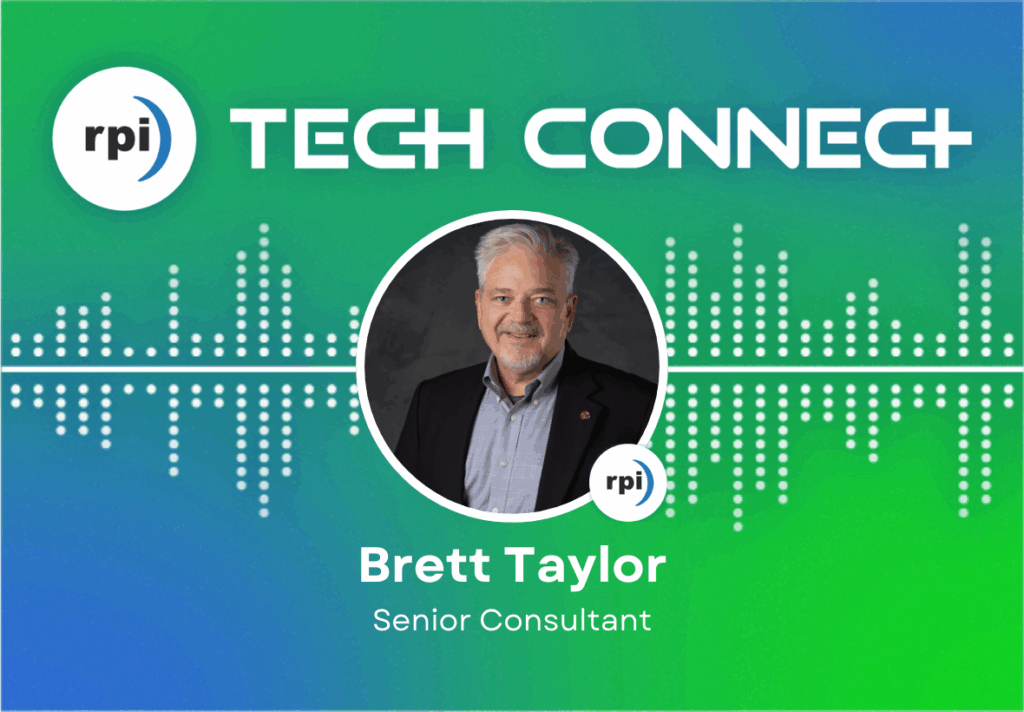
Two decades ago, federal law enforcement officers had to line up at shared terminals just to check their timesheets. Today, with Infor Workforce Management, those same tasks happen instantly on a phone. Brett Taylor, Senior WFM Consultant at RPI, joins host Chris Arey to trace that transformation and explain why modern WFM is becoming a game-changer for police, first responders, and other types of law enforcement.
From the early days of WorkBrain to the cloud-based, mobile-first platform Infor offers today, Brett shares how WFM helps agencies handle complex pay rules, union agreements, and 24/7 scheduling demands, all while reducing errors and improving morale. He also breaks down strategies for winning leadership and frontline buy-in, managing change effectively, and embracing continuous adoption for long-term success.
If your organization is considering workforce management, or you’re already invested in the Infor ecosystem, this conversation will give you a front-row look at what’s possible. Interested in listening to this episode on another streaming platform? Check out our directories on the WRKdefined network or watch the YouTube video below.
Meet Today’s Guest, Brett Taylor
Brett Taylor is a Senior Workforce Management (WFM) Consultant with over two decades of experience designing, implementing, and optimizing enterprise timekeeping and payroll systems. He possesses deep functional and technical knowledge, delivering scalable, efficient, and compliant solutions tailored to complex organizational needs.
A seasoned technical expert in WFM, Brett excels in workforce data analysis, pay rules configuration, scheduling systems, and the integration of WFM platforms with core HR and payroll systems.
With a career grounded in hands-on technical delivery, Brett brings a systems-focused mindset to every engagement. He is adept at dissecting legacy processes, translating business requirements into system specifications, and leading the configuration, testing, and deployment of time and attendance solutions. Brett is also a trusted resource for clients navigating detailed technical decisions, whether related to pay-code logic, time entry validation, and system modernization and standardization.
Meet Your Host, Chris Arey
Chris Arey is a B2B marketing professional with nearly a decade of experience working in content creation, copywriting, SEO, website architecture, corporate branding, and social media. Beginning his career as an analyst before making a lateral move into marketing, he combines analytical thinking with creative flair—two fundamental qualities required in marketing.
With a Bachelor’s degree in English and certifications from the Digital Marketing Institute and HubSpot, Chris has spearheaded impactful content marketing initiatives, participated in corporate re-branding efforts, and collaborated with celebrity influencers. He has also worked with award-winning PR professionals to create unique, compelling campaigns that drove brand recognition and revenue growth for his previous employers.
Chris’ versatility is highlighted by his experience working across different industries, including HR, Tech, SaaS, and Consulting.
About RPI Tech Connect
RPI Tech Connect is the go-to podcast for catching up on the dynamic world of Enterprise Resource Planning (ERP). Join us as we discuss the future of ERPs, covering everything from best practices and organizational change to seamless cloud migration and optimizing applications. Plus, we’ll share predictions and insights of what to expect in the future world of ERPs.
RPI Tech Connect delivers relevant, valuable information in a digestible format. Through candid, genuine conversations and stories from the world of consulting, we aim to provide actionable steps to help you elevate your organization’s ERP. Whether you’re a seasoned professional or new to the ERP scene, our podcast ensures you’re well-equipped for success.
Tune in as we explore tips and tricks in the field of ERP consulting each week and subscribe below.

Transcript
Chris Arey
Welcome back to RPI Tech Connect. I’m your host, Chris Arey, and we’ve got a very exciting topic ahead of us this afternoon. We’re going to be talking about Infor Workforce Management and how it supports law enforcement agencies by addressing their unique workforce challenges.
To help us unpack this topic, I am thrilled to be joined by Brett Taylor, a Senior WFM Consultant here at RPI. He’s got over 20 years of experience working with WFM applications within a law enforcement ecosystem.
Brett, thank you for joining me today, sir.
Brett Taylor
Absolutely, happy to be here.
Chris Arey
Great to have you on the show, man. I think a great way to kick off our discussion today is to hear more about your background. You spent the last two decades working with a federal law enforcement agency using WorkBrain, which I believe has now been acquired by Infor.
What can you share about your journey there and how the product has evolved?
Brett Taylor
Well, I’ll start a little bit before. I started my working life in the trades as a cabinet maker and a carpenter.
I’ll kind of circle back around to why that’s relevant later. I was brought in purely on the technical side for the agency that I worked for before.
I was brought in to implement what then was WorkBrain for a federal law enforcement agency as a technical consultant. We needed to build an interface into NFC, the National Finance Center.
If you’re in the federal government, it’s one of four payroll providers that have these old, bulky mainframe systems. And that is the only way that you can pay people in the federal government.
I was brought in to customize a good chunk of Java code that would take what was then WorkBrain information and get people paid properly.
There were a lot of reports that needed to be done, going back over 20 years. And so, we were still using the internal tools that came with the product, which was an onerous process at best.
But what happened is we got it implemented, and then that agency, the people in human resources said, we need continued support on this.
They offered me a job, and I had absolutely no idea that that’s where I was going to land, but I continued to support the product over the past 20 years.
So, you know, one of the things that I have seen is just a tremendous amount of change in what the product was versus what it’s become now.
When we first started, all the officers, if they needed to look at their time sheet, they had to go to shared computers that were throughout the complex, right, or physical time clocks.
There was no such thing as any kind of mobile application or anything like that. Well, the product, WorkBrain was purchased by Infor, and Infor has put a tremendous amount of R&D and improvements into the product.
Now they have a module called employee self-service and you’re on your phone and you can look at your leave balances, you can make your leave requests, and you can bid on a schedule if that’s allowed within your organization.
To settle the concerns of management if you will, you can swipe on that phone but you can also do what’s called geo-fencing so you can control where an employee can use that from, right?
That’s a substantial change from that internal only reporting tool. They partnered with Cognos, and now Cognos comes embedded with the product. And that was a huge change.
A common theme that I’ve seen is there would be a need, and it would be recognized, and then that need would get addressed and how that has changed has been substantial.
When we first started, this was again 20 years ago, but there wasn’t any means for archiving the data. Your database could just grow huge. And then customers said, hey, look, we’ve got these huge data sets of old data.
It was still WorkBrain, but they said, all right, well, we’re going to implement a whole module for managing archiving your data because they listened to what people said and they implemented these changes.
They had a whole enhancement request system where you would say, I’d like to see this, and you could collaborate with other customers. And they would say, hey, we’d like to see it too. And it would get upvoted and things like that. A lot of those changes would have languished 10 years ago.
You know, it would be hard to get those things moving. What I’ve witnessed as a customer of Infor is they’ve put a lot of effort into making it much easier for people to put those requests in and for those changes to happen.
That cycle of when somebody wants a change to when it becomes operational has shortened greatly.
The other important big change is when we first implemented it, it was all on-prem, right? So you would have your own servers, and you would put your software on your servers.
You know, when after you bought the software, that’s how you’re rolled. At the time doing custom coding wasn’t, I wouldn’t say that it was encouraged, but it wasn’t necessarily discouraged.
Because of what we had available to us, we saw the Swiss Army knife of tools available and highly customized it and kind of use the product probably beyond what it should have been used for, but we didn’t have an HR system to work with.
So one of the changes that has come about is they’ve said, you know, for the core logic for the core business application to stay as modern as possible to implement these changes to ensure that security is up to snuff, we’re going to go to a multi-tenant cloud-based system.
If that has been, and from what I’ve seen as a customer, mean, that’s been a huge move forward. And somebody say, well, wait a minute, I have this thing that happens within my organization that doesn’t happen anywhere else for how we pay people, right?
If I have somebody who comes in at 11 o’clock at night, and I’m an officer, a canine handler and my dog didn’t come to work with me because the dog is at the vet, then something else happens.
This kind of thing is very easily manageable now, it’s called groovy, scripts that you can kind of hang off the application to manage your custom conditions and your custom rules. That said, so if we’re talking where it was to where it is now, the number of custom conditions and custom rules has gone away because customers have said, hey, we continuously have these kinds of problems.
Customers say, I continuously have this kind of same kind of condition, same kind of rule, right? And now just standard functionality, right? Labor organizations have standard things that happen.
People get paid extra money to work on the weekends. People get paid extra money to work night shifts. Those are very common things that happen. So the product has just kind of kept pace with that.
Chris Arey
So they make them like standard functionality within the application. Nice.
Brett Taylor
Yeah. All you do is you go in, and you pick the different rules and then you configure them. Some of the code that I wrote to be able to manage that agency’s special conditions, that stuff is now available.
Somebody else had the exact same kind of problem, right?
Chris Arey
Yeah, you have to love how in tune Infor has been in the sense of being community driven here.
They’re seeing these requests coming in to add feature functionality or this kind of custom coding. They see that happen so often.
It’s like, well, why don’t we just make this a part of the software standard, out of the box. To hear about those types of changes is awesome.
From your perspective, especially once being a customer of the application and then now, 20 years later, you’re helping other customers make better use of it, right?
Brett Taylor
Well, and that’s one of the reasons that I’ve made a transition to RPI is because RPI is now cutting edge, right? And they’re saying, hey, what are the newest things coming out?
I see some of my fellow team members assisting their customers and saying, hey, we have a special improvement.
How do we put this in? I am now seeing these things on a continuous basis and it’s exciting.
And I have already heard of use cases and of, someone thinks they have something that’s so complex it can’t be handled.
It can be a double-sided coin with this application, but it’s a Swiss army knife. And it’s like, not only can that be handled, but these days, can be handled without customization. It can be handled with configuration, right?
So speaking of configuration, it’s critical to understand, right? And so, now that I’m on the other side, I’m not just a customer, but I can see underneath the hood a little bit.
Chris Arey
Yeah. I’m glad you’re making that distinction clear. I think Randy had mentioned that on a different episode.
Brett Taylor
You make a configuration change, and you test it and there’s a way to just migrate it. You don’t have to go back through and re-click your configurations.
That’s all a product of someone saying, here’s a need and then Infor going, you know what, we’re going to listen to what you’re saying.
We’re going to respond to that need. What does it do? It brings value to the customer. It just does.
Chris Arey
Yeah.
Brett Taylor
Right? And I have got to tell you, Chris, that’s an exciting thing to be a part of. It just is. It just is.
Chris Arey
Yes, sir. I love your enthusiasm for it. WFM has been a hot topic lately; Keith Wayland, the Managing Partner here at RPI, was just on the program talking about WFM.
We have high expectations for 2025, because it seems like the product is headed in the right direction and it just continues to improve.
So, I appreciate you telling me about your journey with the program and how it’s evolved from your perspective, as well as how your relationship with it has changed as well.
I want to quickly take a minute here. You mentioned some great technical things about how WFM has evolved, but I’m curious, what makes it such a great tool for managing police and other types of first responders?
Brett Taylor
Sure. And I think I kind of touched on this a bit with the example of the canine officer coming in at 11 o’clock. Those kinds of use cases are very common in law enforcement.
So, you’re going to have patrol officers who have a job. You’re going to have, say, your investigative division who has another job. You might have a protective unit who goes about their job providing protection for very important people, right?
And how you schedule those people, who the people are that need to be scheduled, even some of the pay rules.
It could be that if you’re in one of these units, you are not a member of the same bargaining unit as one of these other units. Those different bargaining units could have different rules about how people need to get paid, about how people need to be scheduled and things like that. And that’s just bread and butter.
Chris Arey
Wow.
Brett Taylor
There is this thing called a calculation group. You change your calculation groups, and when you move from one part of the organization to the other, your calculation group changes and you’re good.
Chris Arey
It does it automatically. Nice.
You have to think too, if you remove the number of manual changes you’re making, it’s going to reduce errors, it’s going to be faster, it’s going to make people happier with their jobs. It’s just good all around.
Brett Taylor
Absolutely, absolutely. You want an officer to be focused on the job that that officer needs to do. You don’t want that officer to wonder whether they’re being paid correctly.
You don’t want that officer to wonder whether their request for leave was approved. You don’t want them to have to stand in line to be able to get on to a terminal to be able to look at that information.
You put it in their hands, on their phone, and they can look and see what’s going on and handle things correctly.
Chris Arey
Yeah, meeting them where they are. You love that.
Brett Taylor
Right. Meet them where they are. Right. And that’s another thing. This generation of people who are now coming into law enforcement, you tell them to stand in line to go to a terminal to enter information in there, you may as well have told them, Hey, here’s a chisel and a hammer. Go carve it out of a piece of rock, man.
Chris Arey
Forget it.
Brett Taylor
It’s just, that’s how we communicate now. And, Infor has seen that. They’ve just put out their employee self-service portal.
They have a mobile application where if you’re in the rest of the Infor universe, you can do your business on your phone. And that’s just how the world works these days. Yeah. It’s a reality.
Chris Arey
It is, it’s great to hear that they’ve made those changes too. So, for those who might be listening to our discussion right now, who are considering WFM, what makes it such a strong choice, especially if they’re already in multi-tenant ecosystem? What can you share there?
Brett Taylor
I don’t think you could have given me an easier question to answer, right? No, seriously, because first, we weren’t multi-tenant.
Second, any of the other modules that someone would typically already have in multi-tenant were in completely isolated systems, often mainframe based.
If there was a change that needed to be made to that mainframe application, it would be extremely difficult.
You’re going to have to go to the retirement home to go find somebody to come and make that change for you, right? And that’s just, but that’s not just in the federal government. There’s still a lot of payroll systems that are mainframe based.
If someone’s already in the Infor ecosystem and they’re already on multi-tenant and their HR is already a multi-tenant, you’re almost just flipping the switch. The ease of that interoperability is great, and some of the things that we struggled with were not because of WFM’s limitations, but rather the system we were feeding information into couldn’t respond.
Now you can, and it may not be as easy as just flipping a switch, but it’s not much more difficult than that.
Chris Arey
It sounds like a no-brainer if you’re already on the cloud.
Brett Taylor
If you’re in the Infor universe and looking for time and attendance or looking for scheduling, it is as easy of a decision as you can make.
Let’s just take the business case that you go with another system and must build all those integrations in right; you have to wire all that stuff together.
And if you’re not built in a way that that you can respond to change, you’re just stuck in the past. And Infor has demonstrated that they’re prepared, particularly with what I know of WFM, right?
They’re actively putting effort into research and development. They’re actively moving the product forward. And they’re competing and they’re winning. That’s, yeah.
Chris Arey
Yeah, that’s something we’ve talked about on this program before too, is that you know, in a workforce management market previously dominated by players like UKG and Kronos, Infor is carving out a chunk for themselves.
We’re continuing to see it increase as time goes on, which is always good to see. Now.
Brett Taylor
Yeah, again, I can’t say bad things about some of these other products. Prior to the agency that I came on with, I had been with a company that used Kronos as a time-to-tenants application. And that’s the product that I supported at the time.
The change in how you can kind of lift the hood and do what you needed to do and what at that time was WorkBrain and Kronos even going back 20 years was still, I was like, wow, this is really a different model.
And then the peeling model, particularly to a much more technically minded person of kind of, I’m not looking at the top layer, I’m looking at what’s under the hood. And I want to see a 407 that’s turbocharged and instead of lifting the hood and seeing a little four banger that can’t even get over top of the mountain, right?
So, it’s cool, it’s good stuff.
Chris Arey
Yeah. So, so I want to, I want to pivot a little bit here. You know, the software is obviously impressive. It’s continuing to evolve, but, you know, buying that software isn’t the end all be all.
There’s a lot that goes into implementing and adopting that.
What kind of strategies or recommendations would you have for agencies to go about securing buy in from the top to the bottom of their organizations.
Brett Taylor
Absolutely. And to your very point, it’s important to receive support from the top to the bottom and from the from the left to the right.
What I mean by that is particularly for law enforcement, there can frequently be somewhat of a divide between your business and administrative side of house and your operational side of house in law enforcement.
You need both sides of the house to agree this is what we’re doing. This is what we want to do.
And this is why we want to do it. as well as having not just from, from, from the, like you said, from the top to the bottom, but having someone say at the officer level, having someone at the sergeant level, the lieutenant level, finding out who the people are within your organization that see the value in this approach.
Chris Arey
Hmm.
Brett Taylor
There is no word travels faster than the words that are going on inside the locker room, right? And so if you have strong voices in the locker room, if you have strong voices at roll call who can see the value, that is something that can really be a key to implementation.
I think a big mistake is to say, this is just going to be a top-down decision that’s driven by the administrative side of the house and just take it and we’re just going to tell you how it’s going to go.
Well, people naturally resist that, right? Human beings in general, it’s not just law enforcement, but human beings just in general, people are going to resist that kind of, you know, that lack of change management.
Chris Arey
Yeah. Got it.
Brett Taylor
And I have a story on that. This was before I was even an employee when we were still doing the original implementation. And I remember we were testing the time clocks, and I was standing behind the chief of police in the very beginning of the morning as he was getting ready to start his day.
He was standing behind an officer, and I was standing behind him and I was testing the time clock. I was like, wow, the chief, chief hit the time clock. And so, I’m like, what?
And I said to him, sir, you don’t have to hit the time clock. You’re in a special group that for you, it just happens. You don’t need to do this.
And I remember he said, if it’s good enough for the troops, it’s good enough for me. He wanted to set the example and he did. He always was very focused on the idea of if I’m asking my officers to do something, I should be willing to do the same job myself, right?
Chris Arey
Leading by example, you have to love that. That’s fantastic. And when you have that kind of alignment too, you know that people are going to come together and be collaborative and implement and whatever kind of changes might become.
Brett Taylor
Well, and you know, people in the field, it’s just remarkable how if you can get someone talking and they can say, hey, what about, and frequently that “what about” makes all the sense in the world.
Chris Arey
Yeah, it’s the seed that gets planted.
Brett Taylor
Yes. And it hasn’t been a top-down thing. Somebody’s just like, Hey, I, every single day I do the same thing and it doesn’t make sense to me why I’m doing the same thing every day.
Whether it’s having to hand fill out a form, right? Is there any way we can get that form so that it’s electronic or what’s being done with this information?
Is it really relevant? Is it important? And I think that’s also particularly if someone’s moving to adoption, there could very well be stuck in some old business practices. And it’s worth saying, do we need to keep doing that? I mean, we’ve always done it.
But what are we doing with that piece of information, right?
Chris Arey
Yeah, that’s right there. That line right there is such a dangerous one. We’ve always done it this way, so it can’t be wrong. It’s like, no, no, there’s a better way.
Thank you for sharing that. We’re getting close to time. Before we wrap up, I always like to ask my guests if they could offer our audience and today’s listeners one actual takeaway from our topic today, what would it be?
Brett Taylor
Yeah, absolutely.
Chris Arey
I would love to hear what kind of wisdom you can share with us for those maybe thinking about adopting WFM.
Brett Taylor
Really the two things I would say from a super high level, and then I’ll maybe talk a little bit more about them. They are to plan for change and then for continuous adoption.
That means change management is a very, very large deal. You’re affecting employees at all levels of the organization and need to have them understand why and how and buy into it.
You’re dealing with changes that are very fundamental to how they conduct their day-in-day-day-out life at work, so it’s important to be fair in that process.
And then at the same time to say, just because you don’t want to doesn’t mean we’re not going to do it. But we’re going to listen to your feedback and we’re going to make allowances.
I think that’s critically important because change management is just, we’re human beings, right? And just respect the fact that you’re dealing with human beings. And the other one, continuous adoption.
Stop trying to, don’t boil the ocean for it, right? And because I’m a technologist, I’m like, we can do this, we can do that, we can, right?
And he’s like, no, no, no, let’s just settle down and let’s get everybody paid correctly. And then let’s figure out what some of these edge circumstances are and let it grow.
And if we go back to that adoption that we were talking about from top to bottom, left to right throughout your organization, you’ll get people who will start coming forth with, can’t we? Wouldn’t it be a good idea if we?
And then just realize that if you’re already going to be leveraging something that’s capable of change, embrace that and plan on, you know what? We can’t do all of it right now, but we’re going to be live and then we’re going to continue to move forward, whether that is through staff augmentation, continuing to pay a consulting firm, or having your own internal staff.
The problem is your own internal staff, if they’re not supporting it right now, where are they going to find time in their day to continue to support it? But just as a leader, if you’re the person making that decision, this is just going to keep going.
This is, this is, we’re not just going to buy this car and just keep driving it. You’re going to have to continue to put gas in it. You’re going to have to change your brakes.
Continuous improvement is what allows the product to continue performing for you.
Chris Arey
I really love your advice there about the continuous improvement. That’s something we always talk about here at RPI. Once you go live, it’s not the end.
Really kind of creating that culture where, you know, end users and such can come forth and say, you know, what if we did this change or what about this?
Just getting in that mindset of how you can continuously improve and enhance the application is really going to increase your return on investment there.
Brett Taylor
Mm-hmm. Yeah, absolutely. you’re working within an entire universe now of software with an organization that’s encouraging that.
I can see in how long all of the release notes are of what’s coming out. You’re like, whoa, I forgot. I didn’t see this. I didn’t see that. Yeah, it’s impressive. It’s good stuff.
Chris Arey
Yeah. A lot of good changes on the horizon and already in production. Love to see that. Well, thank you so much for joining me today, Brett. It was an absolute joy chatting with you this afternoon.
For those of you listening in, if you have any questions about our discussion today, about WFM, or anything at all, we encourage you to contact us at podcast@rpic.com. Again, that’s podcast@rpic.com.
This has been RPI Tech Connect and we’ll see you next time. See you Brett.
Brett Taylor
Fabulous. Thank you, Chris.