Predictions are only useful if they help people make better decisions. In the complex Infor ecosystem, looking ahead is less about guessing the future and more about giving the community a shared point of reference. When customers and partners understand what pressures are building, what capabilities are maturing, and where momentum is forming, they are better equipped to plan, invest, and move forward together.
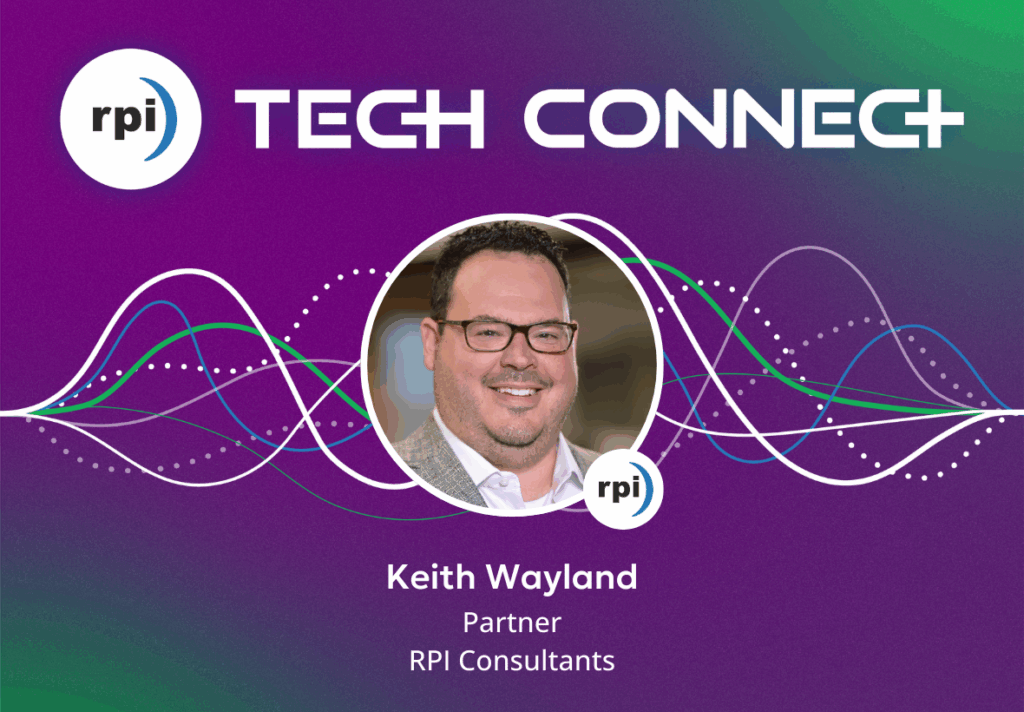
In this season three kickoff of RPI Tech Connect, Chris Arey is joined once again by Keith Wayland for their annual predictions conversation, a tradition that has become a reliable guide for the Infor community. Keith shares what he sees shaping 2026 and why these shifts matter for organizations at different stages of their CloudSuite journey.
The discussion covers the next wave of CloudSuite migrations driven by the 2030 Lawson end-of-life timeline, how this second phase differs from earlier implementations, and what organizations should consider as they plan timing and resources.
They also explore how AI adoption is moving beyond experimentation through Infor Velocity Suite, along with why renewed energy around user groups and in-person events could play a meaningful role in how the community collaborates going forward.
If you are navigating CloudSuite decisions, preparing for what comes next, or simply trying to stay aligned with the direction of the Infor ecosystem, this episode offers practical perspective on what to watch in the year ahead.
Interested in listening to this episode on another streaming platform? Check out our directories or watch the YouTube video below.
Meet Today’s Guest, Keith Wayland
Keith Wayland is the Managing Partner of RPI Consultants, an enterprise consulting firm that specializes in improving business processes through innovative solutions and applications.
Keith co-founded RPI Consultants in 1999 and transitioned to the role of Managing Partner in 2013. Under his guidance, RPI expanded its portfolio of services across the Infor ecosystem, achieved over 400% revenue growth, gained recognition as an industry thought leader, and tripled its employee headcount.
Previously a functional consultant, Keith supported many Lawson implementations across healthcare, public sector, and other industry verticals. This foundation provided him with the hands-on experience needed to deliver successful ERP outcomes to services organizations.
Keith’s leadership philosophy emphasizes collaboration, leading by example, and building trust through transparency. With RPI’s expansive portfolio and commitment to excellence, Keith is dedicated to continuing the company’s trajectory of success for years to come.
Meet Your Host, Chris Arey
Chris Arey is a B2B marketing professional with nearly a decade of experience working in content creation, copywriting, SEO, website architecture, corporate branding, and social media. Beginning his career as an analyst before making a lateral move into marketing, he combines analytical thinking with creative flair—two fundamental qualities required in marketing.
With a Bachelor’s degree in English and certifications from the Digital Marketing Institute and HubSpot, Chris has spearheaded impactful content marketing initiatives, participated in corporate re-branding efforts, and collaborated with celebrity influencers. He has also worked with award-winning PR professionals to create unique, compelling campaigns that drove brand recognition and revenue growth for his previous employers.
Chris’ versatility is highlighted by his experience working across different industries, including HR, Tech, SaaS, and Consulting.
About RPI Tech Connect
RPI Tech Connect is the go-to podcast for catching up on the dynamic world of Enterprise Resource Planning (ERP). Join us as we discuss the future of ERPs, covering everything from best practices and organizational change to seamless cloud migration and optimizing applications. Plus, we’ll share predictions and insights of what to expect in the future world of ERPs.
RPI Tech Connect delivers relevant, valuable information in a digestible format. Through candid, genuine conversations and stories from the world of consulting, we aim to provide actionable steps to help you elevate your organization’s ERP. Whether you’re a seasoned professional or new to the ERP scene, our podcast ensures you’re well-equipped for success.
Tune in as we explore tips and tricks in the field of ERP consulting each week and subscribe below.

Transcript
Chris Arey
This is RPI Tech Connect and I’m your host, Chris Arey. Today we are kicking off Season Three with a now-established tradition.
Mr. Keith Wayland is back for his annual top three predictions for the year ahead. Keith, it’s great to have you back on the program. For any first-time listeners, could you share a little bit about yourself and some of the things you focus on here at RPI?
Keith Wayland
Thank you. Chris, I am honored to be here. Congratulations on all the traction you’ve gotten with the Tech Connect podcast. I’m very proud to have you and glad that you’re doing what you’re doing.
And obviously I’m honored that I get to do these predictions. I’ve been working in this industry for over 25 years, so I’ve had the opportunity to grow with it and to see it evolve.
I consider myself not only an active participant as the managing partner of a consulting company, but a student of market trends and what’s happening. So yeah, I’m both excited to be here and appreciative of the opportunity.
Chris Arey
Thank you, sir. And I have to say, this is the third time we’ve done this and you’re two for two right now. I hope that we come into 2027 saying you’re three for three.
You’ve got a great track record. Before we get into your three bets here, I want to take a minute to lay a foundation for today’s discussion.
Let’s look at what’s happened in the ERP landscape over the last couple of years, specifically as far as Infor is concerned. What can you share there?
Keith Wayland
I mean, we continue to see legacy software migrations, right? Primarily Lawson S3 in the service industry: healthcare and public sector. What we’ve seen is that there’s a very large contingent of customers running Cloud Suite that have reached Cloud Suite maturity, right?
You know, they’ve gotten to the other side, they’re more sophisticated with the software, they’re using more functionality, and they’re also increasing their overall collaboration across the community. One of the benefits of going to a multi-tenant software system is that those conversations carry a lot more weight. That’s been exciting to see.
Chris Arey
Okay, very cool. Given that, I’d love to hear your first prediction for 2026. What do you have in store for us?
Keith Wayland
I think starting in 2026, what we’re going to see is a second wave of organizations converting to migrating and planning to migrate to Infor CloudSuite. One of those drivers is the Lawson end of life date of 2030, which Infor announced in February or March of 2023, if I’m not mistaken.
And I think that took some pressure off, right? And some organizations, especially those in healthcare, decided that they had other priorities that they wanted to attend to at the time, but now they’re circling back.
If you look at these industries, they’re complex, right? When you look at local governments and healthcare providers, they’re not quick hits. These are typically 18-month, 24-month commitments.
They’re also very deliberate industries: they don’t shoot from the hip. They’re not going to wait till the end. They’re not going to leave themselves without room. When you start looking at how these organizations are going to back into their implementations, a lot of these are going to start 2027 at the latest, right?
They need to leave themselves some room and maneuverability. Some of them are going to start in 2026 just because they want to get ahead of that curve. We’re already starting to see those trends. I think we’re going to have that second wave coming and it’s going to be in full swing for the next four or five years.
Chris Arey
Got it, okay, so this prediction is centered around this 2030 end of life date and working backwards from that.
Given the average length of these projects, is 2026 when those things will start to materialize?
Keith Wayland
Yeah. Some will be starting projects, and some will be starting the planning. In the public sector, that procurement process can be six months to a year, right? You’ve got to establish your budget, which is not an easy process.
Some will start their process this year and the actual migration will start in 2027. Some are starting their migrations in 2026.
Chris Arey
Okay, cool. And this second wave, as you call it, what makes it different from the first wave? Is the first wave over?
Keith Wayland
So first, we’re doing a dozen of these migrations right now. It’s not like they stop; the process is always ongoing.
I will say that 2022 was a was a busy year throughout the industry. Part of that can be attributed to awkward timing because of the pandemic, where there were some delayed projects that then bunched up.
It’s not like the process stopped and is restarting, rather the current market reflects the overall volume of organizations that are moving.
As far as that first wave, because some of those customers migrated earlier, some of them left their payroll module to upgrade later. That’s been occurring over the last few years, and we are continuing to see that same pattern.
There are still customers that are fully on CloudSuite running S3 payroll that will continue to migrate over the next couple of years. So that tail is a long tail.
In terms of what’s going to be different for the second wave, I can point out two things. One is that the solution is now really fleshed out, right? Some people that underwent their implementations in 2019 or 2020 didn’t want to be at the forefront of payroll.
Now, you know, Infor manages payroll for very large organizations across many states and can satisfy all kinds of crazy requirements. This is really fleshed out.
Financial reporting was an issue that everyone invested a lot into over the years. When you look at our implementations today, you know what’s being delivered along with the tools that the customer is using. Those parts of the implementation have become much easier and a lot more seamless.
The second part is the consulting companies themselves, RPI along with our competitors. We’ve been through a lot of these. There’s just so much more experience, right? There are always nuances to every customer. No two customers are alike: they’re kind of like snowflakes.
But the more that you’ve seen, the more you can anticipate, the more you can look out for, right? That means fewer bumps down the road for these organizations. They benefit from the knowledge of all these organizations that have been live for a long time, that have been through the migration process, and a consulting ecosystem that is very familiar with what the process looks like.
Chris Arey
Very cool. And a quick question for you here. We mentioned that the 2030 extension was announced in 2023. What was the original end of life date?
Keith Wayland
Yeah, I think it was early, either February or March of 2026, if I’m not mistaken, but don’t quote me on that.
Chris Arey
Okay, so that’s a considerable extension, three or four years there. You can see how things might shift in terms of priorities for these businesses that were kicking their implementations down the road a little bit.
Keith Wayland
100%. Yeah. I mean, they’re big projects. They’re not only costly from a monetary standpoint, but they are disruptive to the organization. They take a lot of energy. The average life cycle of ERP system is 20-25 years.
It’s an excellent opportunity to improve your business processes and how you manage your data. It’s something that you want to be deliberate about, right? You want to do it right. If you don’t have to rush into it, you shouldn’t.
Chris Arey
Do it right. Yeah. From your perspective, how are you seeing Infor respond to this approaching deadline? Is there anything going on in that space?
Keith Wayland
Yeah, mean, Infor has fine-tuned a lot of tools to help customers, especially those related to the data migration process. Legacy ERP systems tended to be a little bit looser in terms of data integrity. CloudSuite, however, has very specific processes that require everything to match up, line up, and make sense. There are no orphan records or mismatched records.
Sometimes data transformation can be a little bit complex. Infor’s got hundreds of iterations under their belt, and they’ve gotten good at it. They’re providing support infrastructure, not just for customers, but for the partners out there that are doing this work to support them. They make sure that their customers, which they really care about, migrate successfully.
Chris Arey
And for those of the people that are listening in right now who are part of this group that has waited, what is the earliest sign that they’ve waited too long? Is there anything that they should be thinking about on that front?
Keith Wayland
I think right now is a great time to migrate. I think if you start this in 2026, you’re well positioned to select a vendor that knows what they’re doing and get the best talent. We’ve seen this in previous cycles with the v10 upgrade: even in that first wave, the folks that line up early are going to get the top end of the talent, the partners and the resources that come with them.
And as you get to the back of the line, you know, it gets a little bit more challenging. Somebody starting in March of this year is going to be solid. Somebody starting at the end of 2027 is going to deal with a stretched resource base.
Chris Arey
This is really one of those early bird gets the worm things, huh?
Keith Wayland
100%. 100%.
Chris Arey
Okay, awesome. Great, great input there. Thank you, Keith.
So, folks, prediction number one, we are going to see some more momentum with 2030 deadlines coming here.
Keith Wayland
Second wave.
Chris Arey
Yep, now’s the time to get moving here. So, onto prediction number two. There’s been a lot of talk about AI the last couple years.
Do you think that’s going to have some sort of influence on the year ahead?
Keith Wayland
I do. You know, Infor has been positioning the Velocity Suite for about two years now. And we know that they’ve made a lot of traction across their manufacturing and distribution markets.
These industries were the early adopters, primarily because Infor has a lot more access to operational and revenue data, so that investment came quicker.
We also know they’ve been working with targeted health care customers for the last 12 to 18 months to demonstrate that these tools can be applied to all of the industry-specific use cases.
I think what we’re going to see in 2026 is more of a focus on the solutions that these tools offer than the functionality itself. And I think we’re going to see more adoption across the healthcare and public sector markets.
Chris Arey
I really love this prediction because I don’t think you and I have had this conversation yet, but we do this annual survey every year. One of the questions that we have asked folks is about AI usage, specifically Velocity Suite.
We’re already seeing some interest and planned use for that software. It’s great that we’ve got some alignment there.
Keith Wayland
I think one of the great things about doing an annual survey is that you can see trends, like what direction is the market moving in? And I think it’s very insightful and a great thing you guys put together.
Chris Arey
Thank you, yeah. And it’s funny you mentioned that. Last year, we had a question about the general usage of AI. And at the time, I think the amount of data was kind of low. Not many people were actively using it yet but had plans to.
Keith Wayland
Adoption was low still, yeah.
Chris Arey
In the first two weeks of collecting data, we’ve already seen an increase in the adoption of AI technology in daily workflows.
Keith Wayland
That’s basically my predictions for 2026. You’re going to see increased adoption of the Velocity Suite across a more informed customer base.
Chris Arey
Awesome. Question for you here, kind of philosophical. What do you see as the biggest difference between experimenting with AI and using it regularly?
Keith Wayland
I mean, I think it’s when you’re experimenting, you’re tinkering, you’re trying to understand how the tools work and seeing where they might be beneficial. When you’re using it, you’ve already sort of identified how something works.
For example, we have a built-in machine learning model in our Yoga solution. We got feedback from a customer that they keep teaching it how to process the specific vendors’ incoming invoices and it’s not learning it.
And so, we dug into that, right? What we found is that there were multiple processors trying to teach it different ways to handle those vendor invoices, right? Again, you learn what the limitations are, right? It can only learn based on its inputs. If it has conflicting inputs, then it can’t come to a conclusion, right? But these are the things you figure out while experimenting.
When you’re experimenting, you’re pushing the boundaries for what the model can do. And then where it works, that’s where you apply it further, just like you would in any other market.
Chris Arey
Yeah. Yeah, I love that distinction there.
For folks who are listening in that are new to AI and are considering Velocity Suite, any recommendations on how they should get started with that kind of thing?
Keith Wayland
I mean, I would reach out to Infor, right? Here at RPI, I know that Richard Stout and Ken Foley have been working with Velocity Suite a lot, and they have emphasized that it includes a lot of tools; Robotic Process Automation and Process Mining, to name a few.
To talk about what the use cases might be for you, I do think that Infor may still be at the stage where you can play with it a little bit and talk to them about whether it works for you. I think there are a lot of opportunities out there for this product.
Chris Arey
For folks listening in, don’t be afraid to make use of the resources out there who can help you understand what’s going to be best for you.
Keith Wayland
Reach out. 100%, yeah.
Chris Arey
So now it’s time for the big reveal: prediction number three for 2026. What do you have for us?
Keith Wayland
I think 2026 is going to be the year that the Infor community comes back in terms of events. I don’t want to understate the last few years. We have certainly seen the revival of Infor conferences, which has been positive.
Post-pandemic, there had been a little bit of a hiatus and people really weren’t attuned to what Infor’s direction, positioning, and messaging were. And there were a lot of questions.
That dynamic certainly shifted this past year. Infor was more built into the community and placed a strong emphasis on customer collaboration. It was very exciting to see. It was a different vibe, and these things have grown. I think this year, the Infor community will grow even further.
We’ve also seen that across the user groups, the Infor Lawson user groups, they got hit hard during the pandemic and that customer base experienced a split.
A couple of things have happened. One, there’s a critical mass of CloudSuite customers. There has also been some consolidation across the user groups. They meet less often but they’re more impactful.
We’re starting to see more than 100 people showing up to these regional user groups. And that’s super exciting to see. As a whole, that in-person dynamic is just different. It’s just different than getting an email or doing a Teams call, which is more transactional.
It feels really good. Like I said, I’ve been a part of this community for a long time, and it feels good when the community is starting to really launch and thrive and feed off each other. We’re all in this boat together.
And, you know, we’ve made big investments in this direction. So, yeah, it’s an exciting time.
Chris Arey
Yeah. What are the factors for driving this return to in-person events? What are the reasons for that?
Keith Wayland
Well, I think it’s value at the end of the day, right? People attend these things because they get value out of them. And these mature CloudSuite customers who are looking to do other things now have more information to share and more to get out of other customers.
The idea was always to ensure that all customers are running the same version of the software. We all might do different things with the tool, but it’s not like you’re running a previous iteration of the software with a different patch level. It’s more like we’re all using the same tool, and we are going to share our collective knowledge to solve each organization’s unique problems.
We are all trying to take advantage of the same new functionality. You know, we’re all trying to figure out the SECURE Act, 401k contributions, and stuff like that. As a result, these events have more value. I think that’s why you’re seeing that additional traction.
We’re also human. We all love to be around other people and we’re able to enjoy a strong sense of community at these events, but at the end of the day, value is the driving factor here.
Chris Arey
Yeah, I really liked that. We hosted MRLUG in November. I remember interviewing some folks and them saying that both the articles and extensive knowledge base available online is great, but nothing replicates what you get in person.
Keith Wayland
Yeah, it was great.
You know, some of these are hallway conversations. You’re sitting down for lunch, and you hear something that you can relate to, and then you have a chat.
It isn’t like, hey, I set up a meeting with you to talk about this specific thing that I thought you might know. It’s like, there’s an element of happenstance to it, which is very difficult to recreate virtually.
Chris Arey
Yeah, I agree. And I’m happy to hear you make this prediction for the year ahead.
For those of you listening, another annual tradition of ours is to do an events forecast podcast. This year, I will be joined by our Chief Marketing Officer here at RPI, Michaela Fallon, and Infor healthcare leader Adam Luff to discuss events for the year ahead and things to look forward to.
So be sure to tune in for that.
Well Keith, we’ve hit your three big bets for the year, and I think they’re all fantastic. If you had to offer one actionable takeaway for today’s audience, what would you give them?
Keith Wayland
I would urge our audience to attend the Infor Connect event this year, which will be held in the third week of June in Orlando. I think there’s so much value there. I would certainly circle the date on your calendar and sign up sooner rather than later, as Infor has recently had to move to a larger venue to meet demand.
It’s a great opportunity. It’s a very well-executed event and is a great chance to meet other folks that are out there in the same boat doing the same things. You learn a lot.
Chris Arey
I really think that’s a fantastic problem to have. You’re hosting an in-person event and so many people attend that you now need to find a bigger venue. I think you’re doing something right.
Keith Wayland
It is. Yes, momentum continues to build.
Chris Arey
Awesome. Well, Keith, thank you so much for joining me for the Season Three debut of RPI Tech Connect. It’s always a pleasure chatting with you. Folks listening in, if you have any questions about today’s discussion, you want to learn more about how RPI can help you, or you want to learn more about Infor’s awesome software, we’d love to hear from you.
You can contact us at podcast@rpic.com. Again, that’s podcast@rpic.com. Until next time.
Thanks, Keith.
Keith Wayland
Thank you, Chris. I appreciate it very much.
Chris Arey
All right, take care.