The largest healthcare organizations in the country don’t choose their AP automation platform by accident.
There’s a reason Yoga keeps winning in that space—and it comes down to three things: how it was built, how it’s supported, and how it actually uses AI. Senior Cloud Engineer Nate Dean joins RPI Tech Connect to break down what sets Yoga apart from platforms that look good in a demo but fall short in production, including a real example from that very morning that shows just how fast the team moves.
If you’re evaluating AP automation solutions and want to know what to look for beyond the demo, this episode is worth your time.
Interested in listening to this episode on another streaming platform? Check out our directories or watch the YouTube video below.
Meet Today’s Guest, Nate Dean
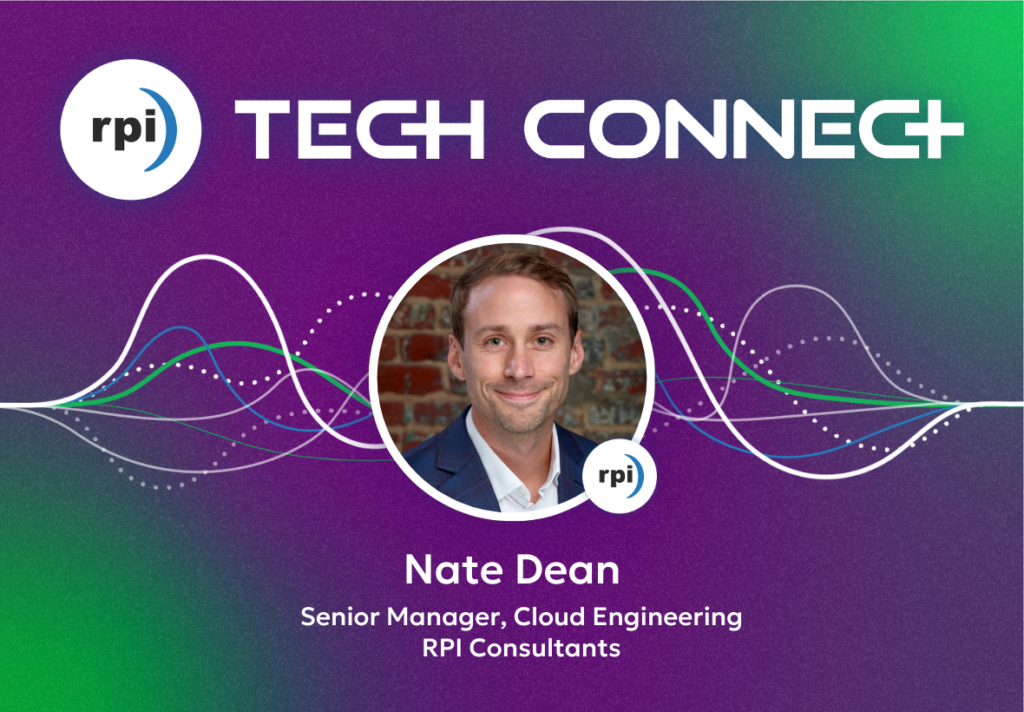
Nate Dean is Senior Manager of Cloud Engineering at RPI Consultants, where he helps shape and deliver software solutions that improve business processes and user experience.
With a background in cloud engineering and hands-on product development, Nate brings a practical perspective to how software is designed, refined, and deployed.
Meet Your Host, Chris Arey
Chris Arey is a B2B marketing professional with nearly a decade of experience working in content creation, copywriting, SEO, website architecture, corporate branding, and social media. Beginning his career as an analyst before making a lateral move into marketing, he combines analytical thinking with creative flair—two fundamental qualities required in marketing.
With a Bachelor’s degree in English and certifications from the Digital Marketing Institute and HubSpot, Chris has spearheaded impactful content marketing initiatives, participated in corporate re-branding efforts, and collaborated with celebrity influencers. He has also worked with award-winning PR professionals to create unique, compelling campaigns that drove brand recognition and revenue growth for his previous employers.
Chris’ versatility is highlighted by his experience working across different industries, including HR, Tech, SaaS, and Consulting.
About RPI Tech Connect
RPI Tech Connect is the go-to podcast for catching up on the dynamic world of Enterprise Resource Planning (ERP). Join us as we discuss the future of ERPs, covering everything from best practices and organizational change to seamless cloud migration and optimizing applications. Plus, we’ll share predictions and insights of what to expect in the future world of ERPs.
RPI Tech Connect delivers relevant, valuable information in a digestible format. Through candid, genuine conversations and stories from the world of consulting, we aim to provide actionable steps to help you elevate your organization’s ERP. Whether you’re a seasoned professional or new to the ERP scene, our podcast ensures you’re well-equipped for success.
Tune in as we explore tips and tricks in the field of ERP consulting each week and subscribe below.

Transcript
Chris Arey
We’re back for another episode of RPI Tech Connect. I’m your host, Chris Arey, and today we’re going to be talking about Yoga, RPI’s AP automation solution. We’ll be talking about why it’s had such tremendous success at some of the largest healthcare organizations in the country.
Rather than walking through the features, today we’re going to talk about what differentiates Yoga from some of the other automation platforms out there.
I’m joined by Nate Dean, a Senior Cloud Engineer here at RPI. Nate works hands-on with Yoga and plays a critical role in ensuring it delivers the success teams are looking for. Nate, it’s an absolute pleasure to have you on the show today.
For listeners meeting you for the very first time, what can you tell us about yourself?
Nate Dean
Thank you, Chris, and it’s a pleasure to be here. I lead the Yoga team that builds the flexible software platform that our AP product sits on top of. On any given day, we’re working on the data side, we’re working deep in the code, we’re working on production issues, working with our consultants, working with our clients and our client success team.
It’s a busy time, but it is really exciting. The production use cases that we see every day, the success that we see in implementations and support, it just really gives you all the energy in the world to keep going.
Chris Arey
Awesome. I love the enthusiasm. You know, we’ve had a lot of different Yoga representatives on RPI Tech Connect over the years now, but you have the most technical background of all of them. It is going to lend itself to an interesting perspective today, and I’m looking forward to our discussion.
Nate Dean
Yes, I’m going to try not to bore anyone. Sometimes I’m way up here and sometimes I’m way down, like right into the code and right into new features, new functionality, bug fixes, all types of things. I’ll try to keep it exciting.
Chris Arey
Something tells me you’re going to find a good balance and entertain today’s guests. Maybe that music background of yours will help. Let’s go ahead and jump right in. To set the stage, I want to talk about the AP automation landscape, as it is kind of a crowded space.
A lot of platforms look good during the demo. Sometimes, organizations decide to move forward with that solution, and then after a couple of months, they’re not really happy with the results they’re getting. From your perspective, why does that experience happen to some teams?
Nate Dean
Well, a lot of platforms are just software, without great service. Yoga was built using over 20 years of ERP implementation experience, starting with Lawson V10 and now Infor CloudSuite. RPI has undergone lots and lots of different implementations and support for a lot of different solutions for AP automation specifically, data capture, data matching, invoice ingestion.
We took all of that expertise and codified it into a platform and a set of tools for AP automation. We coupled that with the great RPI Consultants’ support and implementation model that everyone knows and loves.
Chris Arey
So what you’re saying here is that the Yoga platform is purpose-built.
Nate Dean
No doubt it was. The vision of Yoga came from seeing a gap in the market between ERP systems and the existing tools that were widely used. We said to ourselves, with the newest cloud technology and the really smart team that we’ve got here, we can build something better.
Then, you go through initial implementation, you get the product in front of larger clients, and then our consultants and clients told us what we needed to build next. Then, we build it quickly, we get it into production, we learn, we iterate, and we just keep going. We’ve been doing that now for the past three years.
Chris Arey
Awesome, I love the energy that you have for this product. You mentioned something there that think segues nicely into I think our first differentiator that we’re gonna talk about today. Yoga was built for the Infor CloudSuite environment from the ground up. Many solutions say they integrate with CloudSuite, but why does Yoga being built specifically for CloudSuite matter and how is that different?
Nate Dean
Well, RPI is partnered with Infor. When we start to build integrations with Infor, we’ve got a good advantage. We’ve got all of the Cloud Suite experience along with a very thorough understanding of the various tools across the AP automation landscape.
From the beginning, the very genesis of Yoga, we have known what works, what doesn’t work, what’s good, what can be real-time, or as close to real-time as possible.
Most importantly, we know how to make it seamless. Your admins don’t have to get in there and hook up anything. Most of it works automatically, and the rest of it is able to be hooked up by RPI.
Our implementation time is leading in the industry. Our success rate right at the beginning of a project is really, really astounding.
Chris Arey
You mentioned something there I want to unpack a little bit, and that is that we are an established partner with Infor. From your perspective, that relationship is important for Yoga customers because we can advocate on behalf of the customer to Infor if changes need to be made. Is that correct?
Nate Dean
Yes, of course. Yeah. I mean, we don’t see a lot of that, now that Yoga is a much more mature product and all of those integrations have been battle-tested. But yeah, most definitely.
Chris Arey
Okay. Let’s go ahead and talk about this service model that you mentioned there. Yoga is more than just software. We’ve got a very robust service branch that I’ve heard a lot about. Obviously, having the right technology matters, but that alone doesn’t guarantee success. What can you tell me about the Yoga service model and how is it different?
Nate Dean
Well, it’s the difference of getting software from a non-consulting company and getting software that was built from a consulting company, which is you get that great consulting expertise from the very first day, the first demo, from the beginnings of the implementation.
This attention to detail continues through support and proactive monitoring of issues as they arise.
We’re also working with the team to quickly make modifications as new business use cases arise, which happens regularly. You might have a vendor that wants to do something different. If it’s a big enough vendor, it’s very likely that we might need to build a new piece of business logic or a new implementation detail on our side. That is something that we are expecting, and it’s built into our support model.
Chris Arey
So there are two different monitoring arms of the support side. Is that right? Can you talk about those?
Nate Dean
Yes, that’s exactly right. We’ve got a client success team that works hand in hand with your administrators and managers to make sure that overall implementation and support goes perfectly.
Then we’ve got our consultants and our business analysts that work at a more technical level. Imagine you’ve got a request, that request is going to come in as a HubSpot ticket, and it’s going to be our client success team that is managing that HubSpot queue.
Chris Arey
Okay.
Nate Dean
And then our consultants and our business analysts are the actual boots on the ground that are going to go in there and do the work.
Chris Arey
And so, support leading up to go-live and support post go-live. How is that separated? Is there a handoff between teams and check-ins or what does that timeline look like?
Nate Dean
There’s not a handoff from one team to another, which means you get continuity and expertise as you go. It’s not like we’ve got a great implementation team and then it gets handed off to someone that knows nothing about it. We do not do that.
There is a declining amount of touches that you really want to have with us as a department. Ideally, you’re not having to get on the phone with us every day. That would be a bad sign.
Of course, you can, we’re here and we’re available, but our typical timeline is hyper care directly after implementation, and then those touch points eventually go down to quarterly.
Chris Arey
Awesome. Now I would like to hear a little bit now about how you go about using client feedback to improve the solution. I think you alluded to this earlier by making the philosophical difference between a consulting company making software and a software company making software, and how the mindset is building to solve versus building to build.
Nate Dean
Yeah, building to solve versus building to build. We’re definitely building to solve, addressing the issues that are coming up as clients and consultants encounter them. The consultants say, hey, here’s how we can get to a faster implementation. And we bake that right into the platform. Our consultants say, hey, I’ve got this business use case. And we go, wow, we’re actually seeing that across several clients. We bake that right into the platform.
And it’s really this thing to where you see something, you’re able to automate it. You’re very well-connected, constantly communicating with both clients and consultants. On our customer success team, we are very good at gathering what our team is seeing and making the necessary changes to our product in real-time.
We’re an agile team. We develop code every day, and we push updates into production every two weeks. As a customer, if I’ve got a hot need, especially if I’m in an implementation phase and I ask for it today, it’ll be in production in two weeks.
Chris Arey
That was actually going to be my next question for you. The timeline between when a customer asks for a change to when it gets pushed into production is around two weeks on average?
Nate Dean
It totally depends. We obviously have a backlog just like any software shop, but if we’re seeing multiple clients say that they would really benefit from a particular feature, that’s the kind of stuff that will get turned around really quick, because we have to make sure that our client implementations are successful and seamless.
Chris Arey
I’m sure that other software businesses try to incorporate client feedback into the solution itself, but I feel like their timeline for taking that feedback and acting on it is probably a lot longer than the Yoga team’s is. Is that fair to say?
Nate Dean
Yes, that is very true. People might be doing a quarterly release cadence or, you know, back in the day, it used to be a yearly release cadence. Back then, you’d be lucky if you got patches, bug fixes, or any new features and functionality.
With Yoga, we really are trying to split the difference between having really great continuity to our product, making sure that the day-to-day processing is unaffected, meaning we’re not breaking anything in production, and being able to release new features and functionality quickly.
Chris Arey
I love to hear that not only is the Yoga team being proactive to improve the solution, but you’re working in tandem with the customers, constantly looking for ways to improve. It’s just awesome, right? I’m curious if you could give me an example of a customer who benefited from the service branch of the Yoga team.
Nate Dean
I will give you an example from this morning. This morning, we get a request from a client in an active implementation that they have one vendor who doesn’t want to send invoices via an LSX file or a CSV file. They don’t want to run it through an EDI 810 feed. They don’t want to send you an email. What they want to do is they’ve got an XML file that they want to send.
Chris Arey
Really?
Nate Dean
And interestingly, I mean, we’ve done many very large implementations. We’ve seen a lot of vendors, we’ve seen a lot of business use cases across different industries, but we’ve never seen this one before. But that will be out. We will have that turnaround. It’ll be in production in two weeks.
Chris Arey
And so what are you guys doing for this vendor who doesn’t want to follow the requested format?
Nate Dean
We have integrations already built for us to take invoices that are lines in a spreadsheet. And each line corresponds to an invoice, which is common for utility vendors. A utility vendor would say, you know what, we’ve got a bunch of invoices for you. We’re going to send you a single spreadsheet, and each line is an invoice.
Chris Arey
Okay.
Nate Dean
That’s easy for us to ingest, and then we can match all the data up. A lot of times those invoices can go straight through to payment with no one ever even touching them. But for the XML, it’s just a different file type. It’s a different file structure. XML is an old data language, but it’s something that we can do easily.
Chris Arey
Okay. And I love how quickly you can make that accommodation for them, even though this is more the customer dealing with a stubborn vendor. You know, it isn’t even something they can really control.
Nate Dean
Totally, and this is the stuff that we do all the time. We find an issue, we automate the issue, and then we scale it up. We throw 1,000 invoices a day at this thing, and it really alleviates all of those manual touch points.
People aren’t doing manual data entry. We’ve got good data extraction. We’ve got great data matching. We’ve got historical learning capabilities, something that we’re going to get into in the next section. Plenty of tricks.
Chris Arey
I was going to say, I think this is a great tee up to our third differentiator for today’s discussion, which is the use of AI and automation. Many software companies talk about using AI. Why is the Yoga approach to using AI different than everyone else’s?
Nate Dean
So this is where we live a lot. We spend a lot of our day thinking about the intelligence of a data capture and automation platform. What you don’t want is you don’t want to say, hey, we’ve got an AI black box that you’re running high volumes of invoices through. Maybe it’s good, or maybe it’s not.
I think we’ve all had an experience with ChatGPT where it will give you 3 great answers in a row, but the fourth time, it gives you a bad answer. It might just give you a completely made-up answer. That’s the kind of intelligence that we don’t want. We don’t want that applying to your invoices.
How do we maximize the intelligence of an automation platform? How do we make sure that it’s as deterministic as possible? Meaning, if you put in an X, you’re going to get a Y back. If you put in, know, vendor X, you’re going to get it paid the same way every time and not have a black box AI system running on it.
We use machine learning models for data extraction. We’ve got some secret sauce technology that we use for data matching. Then, we’ve got a learning system that analyzes historical processing patterns to draw mappings or aliases between values. We can also derive business rules. All of those are completely auditable.
It’s auditable when the system creates one of these things. It’s auditable when an admin creates one of these things, when they edit them, when they approve them. They’re back testable. You can say, give me 200 of these vendor invoices and back test this business rule or this mapping. It’s really a remarkable system and it gives admins the control when they need it. It also enables the automated learning so users don’t have to be in there managing it all the time, but can if they need to.
Chris Arey
So the Yoga solution analyzes the data and makes suggestions on custom rules to implement based on what it’s analyzing, is that correct?
Nate Dean
Yeah, precisely. Like they could say, every time you get an invoice for a particular vendor that has this address, you always route it to this specific routing category. It could just pick that up. You could say, all right, here’s a mapping or business rule that’s based on that historical processing activity, why don’t we go ahead and just apply that automatically?
Chris Arey
When Yoga is processing a document, it’ll look at historical information and make suggestions on rules to implement based on the context that it’s gathered. When it makes that suggestion, the user can either approve it or decline it. What does that whole experience look like from the user perspective?
Nate Dean
Yes, so we’re learning mappings as the processors are working. For example, if the system says, every time an invoice comes in for this vendor, it gets routed to that routing category, or assigned to this company, which is like an internal subdivision, we can pick up that mapping or create that business rule, and put it in a pending state. You can back test that mapping or rule to make sure that it’s correct over historical data, and then you can approve it.
Then the cool thing is you can manage that. It’s not a black box. Imagine the processing heuristics for your department change for whatever reason. A ship to address or bill to address now belongs to a different routing category or a different company, which is that internal entity. Dealing with these changes is super easy. You go in there, you modify the mapping manually if you need to, or even if you don’t, the system will relearn the new mapping. It’s the dealer’s choice. Whatever works better for you, that’s what you get to do.
Chris Arey
There are two things I like about this. One is that there’s visibility into it. You mentioned that there’s a log that tracks whether people accepted or rejected a rule, and you can see who did what and when.
It just seems like this is a responsible way to incorporate AI, right? You’re not just taking everything as it is and moving on. That visibility is very important, especially with AI taking over everything. It’s in every facet of our work.
There’s still a very critical role that users need to own, which is verifying the information, right? Reviewing, being responsible, and knowing that you can’t just accept everything as it is.
Nate Dean
You’re exactly correct. An AP processor role, is historically very focused on data entry and manually checking this versus that. Maybe you’ve got a big spreadsheet of these heuristics. This goes there, this goes there. Now, you cab automate all of that.
And then the AP processors get to move up. Now they’re thinking about bigger picture problems. They’re becoming AP analysts and solving larger problems than simply data entry and data matching.
Chris Arey
You love that too, because as roles evolve and progress, workers become more engaged. Going from entering A to B, A to B, to then looking at everything in a much larger picture. That is the hidden benefit that you also get from implementing a solution like this. It’s good for your people too.
Nate Dean
Yes, it’s great for you people. We find that when we do an implementation, both the managers and the AP processers are like we love Yoga, never take it away from us. That’s always fun.
Talk about having energy for your work that you do. When you see outcomes like that, it gives you a lot of energy.
Chris Arey
Yeah. I love to hear that. We’ve talked about these three different differentiators for Yoga. Purpose-built for Cloud Suite, a service model that’s legitimate and supports you from implementation to well after go-live, and the strategic use of AI. These are really important concepts for those evaluating AP solutions to recognize and do research on. I appreciate you explaining those in detail with us today.
We are getting close to time for today’s discussion. Before we wrap up, I always like to ask my guests if they have one actionable takeaway for today’s audience, what it would be. And so, I’d love to hear from you, what do you want folks to walk away with today? What do you want them to know?
Nate Dean
They must know, Yoga AP automation software has solved many different AP automation issues. They include invoice ingestion, document classification, data extraction, data matching, data syncing, and historical learning. There are many pieces. Our platform is also built with a distinct emphasis on security.
Every year we have our SOC 2 audit. Every year we do a penetration test on Yoga software and we make sure that everything is completely secure and that every touch point in Yoga is auditable.
Anytime you change a user’s permissions, that is auditable. Anytime you change a business rule, that’s auditable. Anytime you change, you know, anything, everything gets audited. Any value change on an invoice, all audited.
So, you know, it’s secure, it’s battle-tested and used across some of the largest healthcare organizations in the United States right now, as well as other industries too, private and public. It’s a proven piece of software, we love what we do, and I would suggest that you google Yoga AP Automation Software by RPI Consultants and schedule a demo.
Chris Arey
There you have it, Nate’s enthusiasm for the Yoga product is genuine. And I honestly feel like I haven’t seen this level of energy from a cloud engineer for their software like this before. That tells me that the Yoga solution is legitimate. If you want to learn more about it, reach out and share more about your AP automation needs, and our team can discuss how Yoga Flexible Software might be the right fit for you.
If you have any questions, want to get to know Nate, or you want to learn more about Yoga in general, we would love to hear from you.
You can email us at podcast@rpic.com. Again, that’s podcast at rpic.com. This has been RPI Tech Connect, and we’ll see you next time. Thanks, Nate.
Nate Dean
Thanks, Chris.