Investing in a cloud-based ERP is a worthwhile endeavor that will most certainly yield increased operational efficiency for your business. Of course, migrating years of data, recreating workflows, and replicating reports is no easy effort.
Implementing a cloud-based ERP is an involved process that typically spans 12 to 18 months in length. With that kind of timeline and a sizeable price tag, it pays to know exactly what to expect, common pitfalls to avoid, and how you can start preparing now.
Where to Begin?
When planning for your upcoming cloud-based ERP migration, a great place to begin is to understand the complexities involved in a project of this scale.
Staying within budget is one of the most critical priorities, along with accounting for required modules, customizations, and integrations. Recognizing the project’s challenges upfront will help you plan for the related issues that may arise during the key phases of your migration.
ERP Data Archival
Beyond the technical requirements needed for your future-state system, it’s the handling of data that also presents considerable effort. Most organizations are inclined to migrate all their information, but that can quickly increase project length and cost.
Best practices recommend archiving data that you no longer need, and bringing only the most critical, relevant information over to the new system.
The Human Side of the Project
Migrating to a cloud-based solution requires technical know-how, but what often makes the implementation a success is your team’s willingness to adopt and ability to use the system. During an ERP migration, it’s critical to give special attention to training, testing, and change management.
We recommend including various end users during the project to ensure the system is configured to help them carry out their day-to-day jobs. Gaining enthusiasm and excitement for the new system early on can help significantly as you progress throughout the project.
Move to the Cloud with Confidence
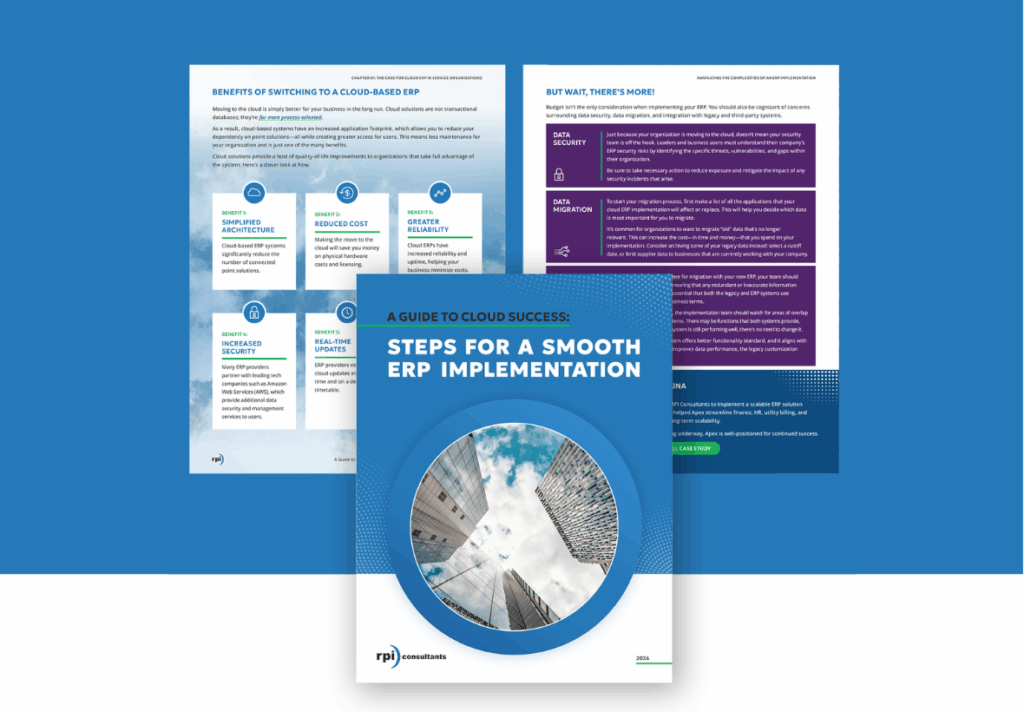
The details referenced above are just the tip of the iceberg when it comes to what you should expect when moving to a cloud-based ERP solution. For a closer look at what’s involved, what to expect, and how to get started, download the full eBook below.