ERP selection can feel like a straightforward software purchase, and in a way it is, as long as you are confident you are selecting the right system. And therein lies the problem. Too often, organizations default to recognizable brands, lean on informal recommendations, or build massive requirements lists that do not actually support a clear decision. After all, ERP system selection is a long-term commitment that shapes operations, reporting, and decision-making for years.
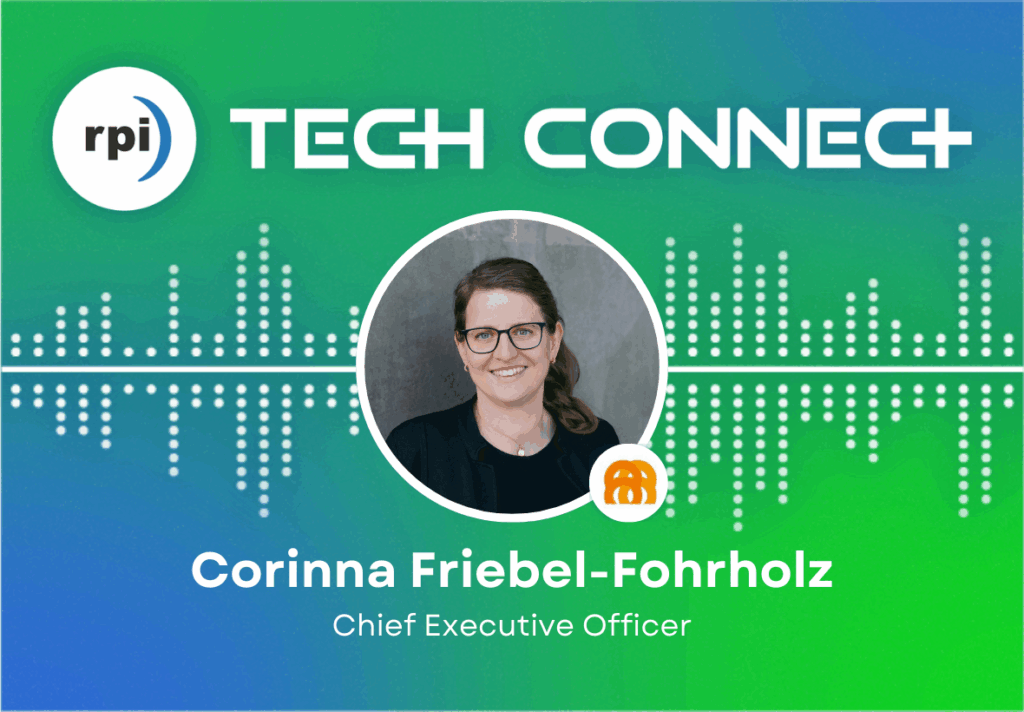
In this episode of RPI Tech Connect, Chris Arey speaks with ERP selection consultant Corinna Friebel-Fohrholz (joining from Germany’s highly competitive ERP market) about how to approach selection with more discipline and better outcomes. They cover the most common missteps, how to clarify decision criteria early, and how to focus requirements on what truly differentiates the organization, including industry-specific needs, regulatory considerations, and future growth plans.
The conversation also walks through a practical way to move from a long list to a manageable shortlist, structure vendor demos around consistent real-world scenarios, and involve users appropriately while keeping decision ownership clear.
If you are preparing to evaluate ERP options, this episode offers a grounded framework for choosing with confidence and avoiding costly surprises later.
Interested in listening to this episode on another streaming platform? Check out our directories or watch the YouTube video below.
Meet Today’s Guest, Corinna Friebel-Fohrholz
Corinna Friebel-Fohrholz is an independent ERP consultant and Managing Director of Glasholz GmbH based in Potsdam, Germany. She supports medium-sized companies in developing ERP strategies, selecting the right systems and guiding them through the implementation from a strategic and organizational perspective.
With a background in business administration and more than 15 years of experience, she combines deep ERP market knowledge with methodical consulting and entrepreneurial thinking. Her work focuses strongly on empowering key users and ensuring decisions fit the company’s goals, culture and processes, rather than the software alone.
She shares her expertise as a lecturer at several universities and publishes regularly on ERP selection and project methodology
Meet Your Host, Chris Arey
Chris Arey is a B2B marketing professional with nearly a decade of experience working in content creation, copywriting, SEO, website architecture, corporate branding, and social media. Beginning his career as an analyst before making a lateral move into marketing, he combines analytical thinking with creative flair—two fundamental qualities required in marketing.
With a Bachelor’s degree in English and certifications from the Digital Marketing Institute and HubSpot, Chris has spearheaded impactful content marketing initiatives, participated in corporate re-branding efforts, and collaborated with celebrity influencers. He has also worked with award-winning PR professionals to create unique, compelling campaigns that drove brand recognition and revenue growth for his previous employers.
Chris’ versatility is highlighted by his experience working across different industries, including HR, Tech, SaaS, and Consulting.
About RPI Tech Connect
RPI Tech Connect is the go-to podcast for catching up on the dynamic world of Enterprise Resource Planning (ERP). Join us as we discuss the future of ERPs, covering everything from best practices and organizational change to seamless cloud migration and optimizing applications. Plus, we’ll share predictions and insights of what to expect in the future world of ERPs.
RPI Tech Connect delivers relevant, valuable information in a digestible format. Through candid, genuine conversations and stories from the world of consulting, we aim to provide actionable steps to help you elevate your organization’s ERP. Whether you’re a seasoned professional or new to the ERP scene, our podcast ensures you’re well-equipped for success.
Tune in as we explore tips and tricks in the field of ERP consulting each week and subscribe below.

Transcript
Chris Arey
This is RPI Tech Connect. I’m Chris Arey and thanks for joining us. Today we’re talking about a decision that sets the course for years to come, and that is selecting an ERP system.
It sounds straightforward, but the truth is most organizations approach it the wrong way. They focus on cost, they chase big names, and they underestimate just how much this choice will shape their business’s future.
So, what does a successful selection process look like, and what are the pitfalls you want to avoid?
Today, we’re going to talk all about it and I’m pleased to welcome our guest, Corinna Friebel-Forholz, who has guided countless organizations through ERP system selection.
So Corinna, it’s great to have you here on the show this morning. How are you?
Corinna Friebel-Fohrholz
Thank you for the invitation. Yeah, I’m fine. In Germany it’s not in the morning, it’s in the afternoon. But I’m fine.
Chris Arey
All right. I’ve got to tell you, you’re one of our first guests to be calling in internationally. So, this is a milestone for us here on RPI TechConnect.
Yeah, I’m happy to have you today, this evening for you and this morning for me. Six-hour time difference for those of you listening.
Corinna Friebel-Fohrholz
Yes, it’s coffee time in Germany.
Chris Arey
It’s coffee time, yes, I need to have some more. Anyways, I’d love to hear a little bit more about you, the company you work for, and your role before we jump into today’s topic.
What can you share?
Corinna Friebel-Fohrholz
Yeah. I’ve been in the ERP selection business for, I guess it’s 15 years now. In Germany we have a huge ERP market, with about 500 systems and thousands of companies who implement them.
We’re quite crazy about ERP here. And so yeah, we have a strong ERP selection business here. It’s what I’ve done my whole career. I fell in love with the industry at my student job.
I worked for a magazine that focused on ERP, and that’s how I got into the business. During my studies, I started consulting for my former boss, and the rest is history.
Chris Arey
Wow.
Corinna Friebel-Fohrholz
I worked as a consultant and later on I became self-employed with my business partner.
Chris Arey
Cool. And the company you work for now is Glasholz, is that right?
Corinna Friebel-Fohrholz
Yeah, it’s Glasholz. It’s a combination of my last name and the last name of my business partner.
Translated into English, it means glass and wood, which is reflective of our commitment to transparent and sustainable ERP consultancy.
Chris Arey
Hell yeah. I like that. That’s awesome. Well, thank you again for hopping on here today. We’ve got an exciting topic ahead of us. 500 ERP systems in Germany is a lot. I think that’s more than we’re dealing with here in the United States.
So, I think a great way to start this conversation today is to understand your company’s mission. At RPI, we’re implementers, and you’re the organization who is present earlier on in the process of helping with system selection.
So, from my perspective, I feel like I understand why selecting an ERP is a big deal. But from your perspective, I’m curious to hear how maybe there’s some overlap or, know, just in general, why is it so important for an organization? What can you share?
Corinna Friebel-Fohrholz
Yeah. I like a simple comparison, which is to liken an ERP selection and implementation project to a marriage. Because, I mean, if you look at yourself, most people are afraid to marry someone on the spot.
It’s a long-term decision. I mean, it costs a lot to do it.
Chris Arey
Yeah. I love that.
Corinna Friebel-Fohrholz
It also costs a lot to separate later on, just like a marriage, right? You want to know each other, right? ERP systems are the digital backbone of your business processes.
If you select a partner to work on that, of course you want to know the good things each system has, but you also want to know the things that you may have to work on, right? In the ERP world, it’s where we have customizations.
Or maybe we have some programming work that requires a separate system, right? Interfaces, stuff like that. And yeah, we want to know who we want to let in our company to support our business processes.
It’s a long-term relationship. From my research background at the university, I know that most companies use their ERP systems for 10 to 20 years. Your selection process is a big commitment. It’s one of the most important success factors of the implementation project.
Chris Arey
It’s a commitment.
Corinna Friebel-Fohrholz
A good decision process is a critical success factor for your implementation later on. Chris Arey
I really liked the comparison you made to marriage there. For starters, not only are we going to be working together for the entirety of this project’s lifecycle, it’s also important to consider the way that the industry is shifting.
We have these organizations that are shifting from an on-premise system to the cloud. It’s about getting ready to do that too. It’s like, how do you separate? Like, what are you going to keep? What are you going to lose?
Corinna Friebel-Fohrholz
Haha! Yeah!
Chris Arey
Getting ready for all that is so critical. I appreciate that comparison and think that I’m going to use that in other places. So yeah, it’s a good one. I want to shift gears here now and talk about when companies get this process wrong.
What kind of mistakes are they making? What have you seen over the 15 years you’ve been doing this? Organizations, system selection, they’re thinking about X, Y, and Z and they shouldn’t be. What are those things?
Corinna Friebel-Fohrholz
We have a saying here in our consultant bubble that goes: I’ve never seen someone who gets fired for choosing SAP. So, it’s a joke we often use. It doesn’t mean that SAP is a bad system. It means it’s not always the best choice, but people often put more trust in big names.
That’s why we make this joke. It’s not only SAP, it’s also Microsoft and Oracle, for example. If people see a big name, they have some kind of trust, right? But it doesn’t mean that that’s always the best fit for a company to go on.
Chris Arey
Sure.
Corinna Friebel-Fohrholz
I’ve also seen companies that choose an ERP based on a recommendation.
Chris Arey
From a company like yours?
Corinna Friebel-Fohrholz
Yeah, straight from a company owner. Imagine that someone has a company with around 200 employees and asks his friend, who is also a CEO, what ERP their company is using.
He gives a recommendation and then this ERP has been chosen. So yeah, that’s not a really good way to do that. If you remember the marriage analogy….
Chris Arey
Yeah! Let’s get married on a whim!
Corinna Friebel-Fohrholz
Germans are also perfectionists, so people are writing down thousands of lines of requirements on big exit sheets that are then run over to ERP vendors.
I don’t know if you go through the same process in the United States, but how is the vendor supposed to work through 2000 requirements on the first page of the exit sheet?
It doesn’t make any sense.
Chris Arey
That point right there is an interesting one. Requirements are obviously important for vetting what tool is maybe going to support those requirements best, but if I’m hearing you correctly, sometimes the requirement list gets too long when it needs to be a little more high level?
Corinna Friebel-Fohrholz
Yeah, and you should focus on what makes it special as a company. mean, most ERP systems function at a similar process level, right? So, you can create a voice, right? You can help your master data customers and vendors.
You don’t have to write that on a requirement list. Yeah, I mean, most ERPs are doing that. So you have to find out what makes you special as a company.
Is it the way you do calculations? Do you have a great way to do production planning, or do you make everything possible for your customers by providing excellent service.
You should focus on what makes you special, not writing down standard ERP functions.
Chris Arey
Because everyone does that already, right? It’s like, let’s think deeper here. I appreciate how candid you’re being here, because let’s be honest, as many ERP systems as there are, each has the same core functionality, so you have to get into the habit of asking these questions.
And for those of you listening in, if you’re getting ready to do ERP system selection, these are great questions to ask yourself. like, what makes you special, makes you different?
Corinna Friebel-Fohrholz
Yeah.
Chris Arey
And how are you going to find a system that supports those specific things as opposed to those really simple standard things that they all do? Right. Okay.
Corinna Friebel-Fohrholz
Yeah. Yeah. And you have to focus on industry specific requirements. In Germany, we have a very specific ERP market. There’s an ERP system for everyone.
We have ERP system for candy making businesses, stuff like that.
Chris Arey
Really? It’s really down to that level?
Corinna Friebel-Fohrholz
It’s really down that level. And these are really small companies, right?
Corinna Friebel-Fohrholz
50 to 60 employees, but these vendors have a strong market here. As I said, we are crazy about it.
What I see in the selection process is that systems often get ignored as companies choose big names, etc.
In my opinion, you should give them a chance to show what their systems can offer.
Chris Arey
Yeah.
Corinna Friebel-Fohrholz
But I also see companies searching without strategies. They invite vendors, telling them show me your system. Then they do these presentations with more than 10 ERP vendors.
I mean, after the third or fourth one, you forgot what you’ve seen in the first presentation. How should you ever make a decision after 10 presentations?
Chris Arey
Yeah. That seems overwhelming.
Corinna Friebel-Fohrholz
Yeah, it’s overwhelming. You can’t compare options effectively. And if you don’t have clear decision criteria from the beginning, then it doesn’t work.
Chris Arey
So when you get to that short list you’re talking about, is there a magic number? Is it three? Is it five? Obviously 10 is too many. Should this process take place over an extended period of time?
Corinna Friebel-Fohrholz
Yeah, we have a structured process. First, we check out the market. We often try to put some of the big vendors on our list. We also try to take in some industry specific ones, depending on what the customer wants.
Sometimes they want cloud, sometimes they don’t want cloud. We like to do a combination in our long list, which is about 10 to 12 systems usually. And when we start to talk to these vendors with our main requirements and our decision criteria, which we hopefully get from our customers.
From there, we try to reduce it to three, with a fourth one in our back pocket.
Chris Arey
Okay. Let me ask you this too. Once you’ve helped an organization find the perfect ERP for them, and they’re ready to move forward with that system, do you also play a role in facilitating the implementation? Do you recommend consultants, or how does that look?
Corinna Friebel-Fohrholz
Yeah. The industry is quite clear here in Germany. We have the vendors of the system itself, who also implement them from time to time, which is more common with the smaller companies.
They build up the system and then they also do implementation. On the other hand, if you choose SAP or Microsoft, the big ones, they have a partner network. If you choose SAP, you don’t do the project with SAP.
Maybe if you are BMW or another one of the big fishes, they do. But for most companies, they have business partners, distributors, which sell the licenses and do the projects.
And these distributors often have an industry-specific focus. We have also SAP consultant companies who are focused on a specific industry, for example. And they do the implementation.
Chris Arey
Okay, now you’re talking about RPI. That’s the kind of the role that we fill. We’re an industry specific implementor for big firms like Infor. It’s nice to hear the whole picture here, right?
Seeing all the different things and how they work together to help customers get the experience they want out of their ERP, right? That’s the goal.
Corinna Friebel-Fohrholz
Yeah. Yeah, that’s the goal. From our point of view, we are really neutral. We don’t have any contracts with any vendors or implementation companies. So we have a new look on the market for each customer.
Chris Arey
The best position to be in in this equation is where you help the customer reach their goals without any kind of ulterior motive or another agenda. You mentioned something about industry specificity.
I would love to hear a little bit more about what that looks like. When there are 500 different ERPs, are there 10 or so that serve one industry? What does a range look like there?
Corinna Friebel-Fohrholz
It depends on the industry, right? Germany has many manufacturing companies. Like we say in Germany, quality prevails.
We have a lot of companies in Germany who work on building machines and stuff like that. The automotive industry is also very popular. We have between 10-20 vendors that work in these markets.
Even in bigger markets, there is some degree of specificity, with maybe two or three specific vendors who are playing in that area.
Chris Arey
So that probably makes it little easier than when you’ve only got a handful that work within that space. Maybe not easier, but like the short list is coming together a lot quicker. Okay.
Corinna Friebel-Fohrholz
For example, the pharmaceuticals industry is highly regulated. We have a couple of ERP vendors going in that industry and trying to address said regulations.
Chris Arey
Cool. Okay. Yeah, no, it’s great to hear about the different drivers for different industries too. You mentioned the pharma and food sectors being highly regulated. I’m sure there are compliance standards that must be met, and certain systems that are going to be able to do that and support those requirements, better.
Corinna Friebel-Fohrholz
Yeah. It also depends on the company’s size and location, right? Are you operating exclusively in Germany, or do you conduct business elsewhere?
These things also have an impact on which ERP system is a possibility for you. Not every ERP vendor has the capacities to address international laws requirements.
Chris Arey
Right, that makes sense. You would hate to find that out 12 months into testing that your system isn‘t capable of meeting the necessary requirements. That’s a bad time to get a divorce.
Corinna Friebel-Fohrholz
Yeah, that’s it. Yeah. And that’s what also is necessary before you start the selection process. You’ve got to think, what’s going to happen with my company in the next five to 10 years?
If I’m looking to expand into the European Union at some point in the future despite currently operating only in Germany, that’s something to consider when going through the vendor selection process, because then maybe I have to look on other options.
Chris Arey
That’s a really good point you make there. It’s something we always talk about. Is this ERP going to be able to support your scaling for the future?
In that same vein, thinking about things like, do we have plans to expand our services into different countries? And if so, how does this support that? So that’s another great question to be thinking about there.
Corinna Friebel-Fohrholz
Yeah. Another thing to consider is whether you want to expand the scope of your operating plan to include different services down the line.
Chris Arey
Nice. Do you see that often? Do people usually kind of like go back and forth or like bleed into new industries? that common?
Corinna Friebel-Fohrholz
It’s not common, but yeah, we check that. It’s a question in our process to just check that out.
We had a customer years ago. They’ve been in the paper industry, so they were printing, right? They had a big printing business, but they knew it wasn’t future proof.
They were thinking about what you want to do in the next years. They moved onto RFID cards as a new business area. Printing papers is a different task and different ERP requirements than doing RFID cards.
So that was an example where that was necessary, and it’s usually about reaching new markets.
Chris Arey
Okay, great. Well, we’ve hit a lot of different factors and criteria here today for helping influence the system selection process. Are there a couple of steps you tell them to take in order to help them get started?
What would you share?
Corinna Friebel-Fohrholz
Yeah, as in steps that the client should take when preparing to undertake system selection?
Chris Arey
Yeah, you’re getting ready to do system selection and this is how you get started. You start with, you know, step one, step two, step three. What are those steps? If you had to simplify it.
Corinna Friebel-Fohrholz
Yeah, simplified. I think our main step is first to find out the boundaries, basic information, like timeline, budget, that sort of thing. Most companies or CEOs see the first offer from a vendor and are a bit scared.
So, having a budget and reviewing the reasons that you’re doing this in the first place are both important.
I often see that companies start ERP projects because something goes wrong in their processes and the companies, but the new system doesn’t change that usually.
Answer these questions at first, and then determine your main requirements and your decision criteria. Don’t over-engineer this, but find out the elements that are absolutely required for you to make a decision.
Do we want someone who speaks our industry language? Is it important for me that my implementation partner or my ERP vendor can communicate as equals, in terms of company size?
If you go to a larger vendor, such as SAP, as a smaller company, they may not be able to meet your specific needs.
Chris Arey
Yeah.
Corinna Friebel-Fohrholz
If you have a vendor or partner which is equal in size, you can freely talk about your problems and ideas. You can talk about that. You have a voice.
Chris Arey
Yeah. That’s a really good point. I love that comment there about size, your voice and wanting your specific software needs met. And it’s like, well, how big are you and how big is the software vendor?
How long is the list of things that customers have submitted to those large ERP vendors? These bigger vendors may meet their requests with, you’re not big enough for us to focus the resources on implementing that.
Corinna Friebel-Fohrholz
Yeah. These are typically things that should be done at the beginning: it’s important to not forget it later on in the process. Then we try to find out the requirements and we also look to prepare the vendor demos to write down some scenarios.
It makes it easier to draw comparisons if you give each vendor, the three as we said, the same scenarios. You can see you have three presentations, all three, they showed the same process and then you can compare it. If you go to the vendor and say, show me your system, he will come and demo the most appealing features, even if they don’t necessarily match your use case.
The salespeople are smart, right? They tell and show you all the visually appealing things. You can change the color here and you can do that. I’ve seen it all, and it’s definitely easier for yourself to compare it to make a decision.
That’s why it’s important to make it really clear what you’ve seen from each one, write it down for yourself, give marks, stuff like that. Yeah.
And to involve, of course, your users, your end users. Yeah, they have to live with that.
Chris Arey
They’re gonna be the ones using the system, right? They gotta have a seat at the table.
Corinna Friebel-Fohrholz
Yeah, yeah. But you should make clear at the beginning how they are getting involved and who makes the decisions at the end.
Chris Arey
Okay. And I assume that this is something that your business, Glasholz, helps organizations document and get ready and identify what those things are. They want to see the different vendors’ presentations. Is that right?
Corinna Friebel-Fohrholz
Yeah. So we are going through the process with our customers, and we structure it by asking the questions, raising the finger at some points and saying, no, that wasn’t what we had written down based on the decision criteria.
We also have a look at these presentations, but don’t provide too much input. So in the end, the customer has to make the decision themselves, of course, but we guide them through the process. Yeah.
Chris Arey
And it sounds like you’re really thorough, and that’s important, especially on a project like this, knowing that you’re going to be married for the next 15-20 years.
Corinna Friebel-Fohrholz
Yeah. And you take your time going through the process. It’s nothing you do in three or four weeks.
Chris Arey
I’m sure it does. That’s always a tedious process.
Corinna Friebel-Fohrholz
Right. So it takes some time. And I mean, you need to find out if you speak the same language as the vendor’s representatives. And we haven’t talked about legal issues at the end that take the most time to resolve.
Talking about contracts and prices is always the same kind of process.
Chris Arey
Well, I really love the process you outlined there. It’s very detailed. For those who are listening in and getting ready for ERP system selection, these are definitely some things you want to be documenting.
Corinna, we’re getting close to time, but I always like to ask my guests if they could share one piece of advice for today’s audience, what it would be?
Corinna Friebel-Fohrholz
Yeah, I’m staying with my marriage analogy. Keep in mind that ERP selection is like a marriage. Take your time to get to know each other because when you choose the wrong partner, it gets really expensive.
It also makes sense to get some help during the process. I mean, in the real world, you’re asking your friends what they think about your new boyfriend or girlfriend. Yeah keep that in mind when you think about ERP system selection.
Chris Arey
Thanks. Awesome. That’s a really great takeaway. It’s memorable and relevant to today’s discussion. So thank you.
And for those of you listening in, if you have any questions about today’s topic, want to learn more about Glasholz, or how RPI can help you with your next ERP project, we’d love to hear from you.
You can email us at podcast@rpic.com. Again, that’s podcast@rpic.com. This has been RPI Tech Connect and we’ll see you next time. Thanks for listening.
Corinna Friebel-Fohrholz
Thank you.