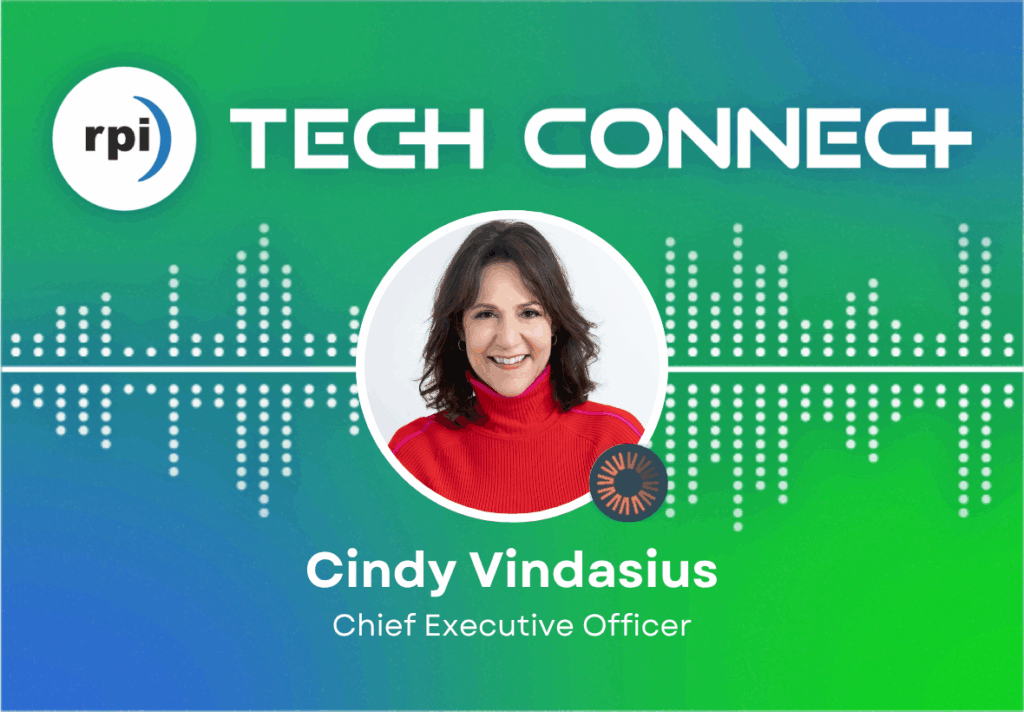
ERP success often happens quietly. When the system runs smoothly, it blends into the background, even though the journey to get there is full of effort, decisions, and change. In this episode of RPI Tech Connect, ERP advisor Cindy Vindasius joins to discuss how teams can bring those wins to the surface.
Cindy shares real-world stories about why preparedness is rarely what people think it is, why “Phase Zero” work creates the foundation for everything that follows, and how experience, resources, and process shape the outcome of every ERP initiative. She also dives into the people side of transformation, from navigating resistance to recognizing the small, meaningful victories along the way.
If you are planning, leading, or supporting an ERP project, this conversation will help you understand how to make success visible, appreciated, and shared across your organization.
Interested in listening to this episode on another streaming platform? Check out our directories or watch the YouTube video below.
Meet Today’s Guest, Cindy Vindasius
Cindy Vindasius CPA, MBA is the founder of Vindasius Advisory, with 30+ years at the intersection of finance, operations, and enterprise systems. She has led 12 ERP implementations, eight IPOs, and four global compliance initiatives, helping high-growth companies scale while avoiding costly pitfalls.
Her unique strength lies in blending technical accounting, process design, systems integration, and AI insight. From startups to global enterprises, Cindy builds scalable, compliant, and future-ready environments.
Through The Vindasius Way, she delivers structured transformation packages, tools, and programs that create lasting impact, equipping leadership teams to scale with clarity and confidence.
Meet Your Host, Chris Arey
Chris Arey is a B2B marketing professional with nearly a decade of experience working in content creation, copywriting, SEO, website architecture, corporate branding, and social media. Beginning his career as an analyst before making a lateral move into marketing, he combines analytical thinking with creative flair—two fundamental qualities required in marketing.
With a Bachelor’s degree in English and certifications from the Digital Marketing Institute and HubSpot, Chris has spearheaded impactful content marketing initiatives, participated in corporate re-branding efforts, and collaborated with celebrity influencers. He has also worked with award-winning PR professionals to create unique, compelling campaigns that drove brand recognition and revenue growth for his previous employers.
Chris’ versatility is highlighted by his experience working across different industries, including HR, Tech, SaaS, and Consulting.
About RPI Tech Connect
RPI Tech Connect is the go-to podcast for catching up on the dynamic world of Enterprise Resource Planning (ERP). Join us as we discuss the future of ERPs, covering everything from best practices and organizational change to seamless cloud migration and optimizing applications. Plus, we’ll share predictions and insights of what to expect in the future world of ERPs.
RPI Tech Connect delivers relevant, valuable information in a digestible format. Through candid, genuine conversations and stories from the world of consulting, we aim to provide actionable steps to help you elevate your organization’s ERP. Whether you’re a seasoned professional or new to the ERP scene, our podcast ensures you’re well-equipped for success.
Tune in as we explore tips and tricks in the field of ERP consulting each week and subscribe below.

Transcript
Chris Arey
Welcome back to RPI Tech Connect. Today we’re digging into one of the most ironic truths about ERP. It’s the only project where success feels like failure.
Think about it. When it works, no one notices. Orders ship, invoices post, reports run. It’s business as usual. But the road to get there can be full of challenges, resistance, and frustration. So why does ERP success feel so underwhelming?
More importantly, how can we change that perception? Today I’m joined by Cindy Vindasius, an ERP leader who has seen this story play out countless times. Cindy, it’s an absolute pleasure to have you here today. I’d love to hear more about you if you wouldn’t mind sharing.
Cindy Vindasius
Thanks, Chris. I’ve been around a long time, but I’ll give you the short version. It’s Cindy Vindasius. And if you want to remember it, it’s like vivacious, right? Vindasius, like vivacious.
I’m a technology transition advisor. I’m a CPA and an MBA. And I’ve spent over 30 years at the intersection of systems process and technical accounting.
ERP is my jam, which probably nobody ever says. I appreciate the audience and everybody chiming in, because I really, my goal is to have it decrease that risk of failure rate, right? To have it have smooth sailing going forward.
Chris Arey
Right out of the gate, I’m liking the energy you’re bringing to this topic Cindy. Where are you calling in from today?
Cindy Vindasius
I’m one of one. California. Actually, I’ve been in Silicon Valley all my life, so I’m right here in the hotbed of all of this.
Chris Arey
Very cool. It’s always good to have West Coast folks on the program here. Love to hear that. Let’s go ahead and jump right in. I think a great place to start today would be to talk about the beginning of an ERP project.
You know, a lot of companies feel like they’re prepared and ready to go, but sometimes expectations and reality don’t come out the way they wanted it to. Why do you believe that happens?
Cindy Vindasius
I think preparedness is a word that can be interpreted many ways. It depends on your role, right? If you’re an executive, you think, I’m prepared. I’ve lined up the vendor and I’ve got a team in place to do this.
If you’re in IT, you’re like, I’ve got the structure. I’ve got everything that I need to do. If you’re in finance and operations, that’s a longer story because most people have no concept of what it means to prepare.
I’m going to go a little bit further on that because if you’re in finance and operations, you’re told the things that you need to participate in in a project. You can look at those things and say, that’s going to be tough. Like, I have my day job, but I think I can squeeze that in.
What’s not on that list is all the other things you’re going to be asked to do that aren’t managed by the project manager. It’s a lot, and it’s hard to be prepared.
Instead of saying ERP, as in enterprise resource planning, I say experience, resources, and process. Because going through an ERP plan, it’s so much more beneficial if you have experience somewhere on the team internally to help you prepare.
Resources, you never have enough internal resources and when you don’t have internal resources, you hire external resources and the knowledge walks out the door.
And P for process, no one ever has their processes documented from the beginning and you don’t realize how important that is until you must change them.
In short, what nobody’s prepared for is change.
Chris Arey
Yeah.
Cindy Vindasius
Change is going to happen. How do you prepare for change? You don’t know what the change is, so it’s impossible to prepare. So the only thing I would say is get your mindset in being open that this is going to require change.
Chris Arey
Man. You just hit like three home runs in a row right there. I want to spend a little more time talking about each of them.
That was really good. That was really good. So if I’m hearing you correctly, depending on your business function within an organization, preparedness means something different. Is that right?
Cindy Vindasius
Mm hmm. Yeah. What do I need to be prepared? And who’s looking at the whole thing? Right. It’s also in the gaps, right?
Chris Arey
Got it, okay. And then it was experience, resources, and process. The way that you described it is so much more literal. Big fan of that. It sounds like preparedness is more about mindset and change management than it is about software. What can you share?
Cindy Vindasius
Software is configurable, right? So in a lot of ERP projects, a lot of people come in with their process and understanding and say, this is the way that we do it, right?
This is a common thing that I see, because I deal with a lot of post-series C investment, pre-IPO, where they’re coming from a quick box or a zero and they’re going to a sort of middleware system that I would say.
And the number one thing you need to get right in my opinion is scalability. You’re going to a middle market system, and you need to develop a system and a platform that scales for a number of reasons.
So you can expand, and so you don’t have to do it again. Now with AI, you need that scalability to be able to leverage those tools. If you’re trying to put your custom process into a system that’s not designed to facilitate that process, it’s worthwhile to take the time to challenge yourself.
Do I need this customized process because this is a unique feature of my business? Or is it just because you don’t want the heavy lift of telling people that the approval workflow is going to be a little bit different? Right?
Chris Arey
Yeah. Yeah.
Cindy Vindasius
What people don’t realize is you need to change, do everything upfront. Anything that you ever say will deal with it later. Never ever happen.
The other thing I would say is getting your executives on board, because scalability helps them make hard decisions. A lot of times that’s where that responsibility falls.
Chris Arey
Yeah. We talk about this a lot on the show. ERP projects are an opportunity to revisit processes, right? So often we hear folks say, we do it this way because that’s the way that we’ve always done it. As you mentioned, you’re implementing this new software, you have a custom process. Is there something out of the box that it can do to simplify that process? And if so, how do you get people on board to accept that?
Change management is obviously a huge part of these projects. What is your philosophy or approach to that?
Cindy Vindasius
Yeah. That is a good question. I like to have a committee, so that when changes are proposed, it passes through the group. What does it affect? What is the outcome? And I look at, you know, scalability impact on the business, as in the number of people impacted, but also the longer-term implications.
Again, it comes down to the executives agreeing to it, but you’ve got to position the story correctly, right?
More importantly, you need to encourage your vendor to do things that are scalable, right? You may not even know what’s not scalable without their help.
Chris Arey
That’s a really good point. And you have to be thinking long-term here too. You’re not setting up these new processes or configuring the applications to work for the next six months.
You need to think long-term, and I like the approach you outlined there.
Cindy Vindasius
Yeah. You’ve got to throw in segregation of duties as well, because you’re dealing with unrestricted access in these early stages, something that you must temper a little bit.
A lot of times if you change process, you can say, it’ll help us avoid fraud, right? Don’t let the AP person own the vendor master, right?
Ensuring that employees don’t have unrestricted access to all systems helps maintain order while carrying out these important processes.
Chris Arey
Got it. I’m hearing a lot of similarities and consistency with some of the things that we encourage here at RPI. We call it the continuous improvement committee, and it’s comprised of various employees that are qualified to assess the long term impacts of proposed changes.
Love to hear that. For those of you listening in, we actually did not compare notes on this. It’s always nice to see it happen.
Cindy Vindasius
No, that was off script for sure. Yeah.
Chris Arey
Cool. I found you on LinkedIn, and you had a really compelling LinkedIn post that I want to bring up now.
It’s how we started the episode. But you know, you’ve said that ERP is the only project where success feels like failure. What do you mean by that?
Cindy Vindasius
I’ve been in finance and operational systems for a long time. I don’t think I would be in this profession if I needed praise.
We’re a support organization and the goal of any project is no disruption, right? Facilitating a seamless transition: think of it as you moving office spaces.
You want your new desk all set up the same way you had it, with minimal impact to your routine. You may praise the people for facilities moving things on the time of a move, but any disruption will likely prompt a complaint.
I have received praise for something finance has done, and that’s always on the opening bell of an IPO. That’s the only time people are like, thank you, finance.
Now, how can I sell my stock? Right? That’s an entirely different thing. I would almost change your perception. Think about it, I mean, people don’t understand the heavy lift of what you’re doing and they don’t want to know because it’s technical.
It’s something that people can’t even comprehend. You’re my people, right? All of the people listening along with us are as well. But nobody else really cares, including most of my friends and my family.
Although both of my kids are CPAs, so they kind of get it. But when I go to the systems, they’re like.. what? It is important to be present within your community and celebrate little wins, and hopefully your manager, boss, or CFO understands the lift.
Nobody else understands the lift, but you do. So, it is important to change your mindset to not needing the praise, but understanding the value of a job well done, right?
Chris Arey
Yeah, I guess when you think about an ERP project that typically spans between 12 to 18 months in length, having a goal to be as least disruptive as possible says something about the work, doesn’t it?
Cindy Vindasius
Yeah. I mean, the perception is chaos. It is a harder lift. I think it is an even more difficult lift because people aren’t prepared. We’re going back to what’s prepared, but like, I don’t know if we even talked about phase zero.
Phase zero is the phase of work that most, when someone comes to do an ERP implementation or they choose a vendor, everyone assumes it’s already done and it’s never done.
Is your data clean? Who owns your data? Are your processes documented? Do you have enough internal resource bandwidth to manage this project? And if you don’t start with all those things done, you’re behind, which exponentially exacerbates the chaos.
Chris Arey
You call it phase zero, we call it pre-planning. There’s planning and then there’s pre-planning. When you don’t take that initiative to do that upfront, you’re already setting the project up on the wrong foot.
Cindy Vindasius
It’s a zero.
I mean, and not to promote what I’ve done, but I’ve just spent a year and a half creating an online program to help finance and operations people prepare for ERP implementations to increase that rate of success and give you some sense of how to prepare.
The number one thing is don’t even start till your phase zero is done. That’s going to save you a lot of time.
Chris Arey
Nice.
I love to hear that you’re a proponent of that as well. I would like to see your online course about this, and for those of you listening in, you want to learn more about it, we’d love to share that resource with you.
Cindy Vindasius
We can talk about that offline. It’s available.
Chris Arey
So let’s talk about some, you know, sometimes during these projects, you’ve got business users and different folks in the organization who say, I have to keep doing it this way. My way is special. This is a process that like, can’t be replicated.
Being extremely resistant towards it. And maybe there is some truth there, in that there’s some benefit in doing it the way that they’ve done it. So the question is, how do you approach those types of ingrained habits?
You encourage people to come in and try it the other way, right? A lot of times they don’t see why changing it matters to them. If you have a team mentality, oftentimes the change that they have to make will impact someone downstream.
The extreme case is when you have to get someone to take on more steps. Saying, now you have to do this, this and this. They’re like, what? I’m not going to do that.
Right. You kind of have to experiment a little bit to find out how to manage these things effectively. A lot of times it just takes understanding that if you do these two small things, then this person later down the line doesn’t have to spend two hours resolving that.
Right. I mean, you have to come in and make a team effort.
Chris Arey
And you’re showing these folks like what it’s like in someone else’s shoes. Here’s what making the small change to your workflow is going to do for your teammates.
Cindy Vindasius
Right? I pull on empathy, right?
Chris Arey
It’s not a fake thing.
Cindy Vindasius
It’s real, and if it really comes down to it, then you have to go up the chain and say, wouldn’t it be great if you agreed to this before we had to go to your boss? Right?
I like dealing with all levels, from AP personnel to executives, and as a result I often act as a translator. Helping both parties best articulate their issue, right?
The toughest one is when the decisions are made, because no one wants the hot potato. Like, I don’t want to have to do that. And it’s like, okay, you’ve just got to figure out other ways to get things done.
Chris Arey
And is that process of getting folks to think about like the team effort as a whole communicated one-on-one? Do you encourage managers to have those conversations with their teams?
How is that message conveyed in a way that everyone understands?
Cindy Vindasius
Yeah, I have a lot of different strategies. I do a lot of team building things. For example, when we’re tasked with changing a process, I make sure to use the buddy system when possible, so that no one feels alone in that endeavor.
Chris Arey
Haha.
Cindy Vindasius
So then they get a buddy. What they have to do is have two processes, their main process. They have to draft the process and have their buddy review it. Because then it’s like peer pressure.
It’s like, well, wow. I have to do it. I have to get it done and it has to be great. There’s also a prize for the team that gets it done first. So, it’s really like, woo.
Chris Arey
Yeah!
Cindy Vindasius
The other thing is that in a group dynamic, there is usually someone with a negative agenda. This does not work, blah, blah, blah. So, at the beginning of every project, I like to employ what is called an emotional guidance scale.
There are positive things, like five is optimism, 6 is hopefulness, and then it descends all the way down to hatred, rage, anger and grief. What I do is show them this list of 22 emotions, and I tell them that to ensure productive participation in these meetings, you need to be at the bare minimum, optimistic.
People often ask, why do we need to be hopeful? The answer to that question is because I do not want you to be passive, I want you to be actively here trying to move forward.
When you have those instances where someone gets on their platform and starts being negative, I don’t call that person out individually. I take five and then they come back and then I show them the chart.
I go, just reminding us of where we are. And 90 % of the time that person’s behavior is fixed without anything needing to be said.
Chris Arey
Wow, I love that process. It makes people feel like they’re actively trying this new process, while seeing a better way and leaving that negativity behind. That’s powerful.
Cindy Vindasius
Yeah. I mean, it’s a good thing. I’ve had CFOs walk into the room angry and I’m like, turn around, you’re not a five.
It may seem like a bit much at first, but I tell everyone that I work with, just remember the scale, because it will come back around eventually.
Chris Arey
Yeah. Really awesome. Showing how emotional and people-driven these projects really are. You hear about software, ERP systems, you know, they’re massive pieces of technology that support entire businesses.
When you think about what’s powering and who’s using it, at the end of the day, it is very much a people project.
I really like the way that you approach it.
Cindy Vindasius
Yeah. I like to empower people to learn new things, right? I mean, how great does it feel when you learn something new, you know?
Chris Arey
And when you immediately set that tone by having a good attitude, right? That’s all you can really ask from somebody at the end of the day. Like, just try. Just try to not immediately dunk on this new thing that you don’t know about.
Cindy Vindasius
Yeah. Yeah. It’s usually that person who’s been there the longest, who has the most knowledge and who’s very valuable. You understand where they’re coming from and want to support them, but they’ve got to maintain a positive attitude.
Chris Arey
Yeah. Love it, love to hear it.
Cindy Vindasius
Nobody wants positive Polly to call you out.
Chris Arey
No, it’s not super fun. But you talk about the exercise of buddying up with somebody and having to document your process and explain it to them. That brings a lot of light to some things that could have been done better.
Being in that position is going to be a bit uncomfortable at first, but afterwards you’re going to feel so much better and you’re going to discover new ways to do things. It’s just a good thing in general.
Cindy Vindasius
Yeah, it tends to work out well. There aren’t many groans when you tell them what their buddy pair is going to do.
Chris Arey
Yup, yup, know that. I know that feeling.
So, let’s talk now about some of these silent victories. ERP projects are not as simple as you’re done, great job. There are so many different things that happen throughout those 12 to 18 months that are great and contribute to you making progress.
What do you recommend for celebrating those types of things? How would you approach that?
Cindy Vindasius
Well, the ERP is done in phases, right? The only people that are going to appreciate what’s done are the people that understand the lift, which are the people around you.
There should be space for you in your monthly staff meeting to over challenges you’ve
Try and explain it to the people that understand what you do and the positivity will come. You need to have internal gratification, right? Like you’re doing a good thing.
Chris Arey
You have to really take the time to really vocalize the lessons learned, the challenges overcome, the wins, the deadlines met, and the milestones.
Documenting what you’re going to do or setting aside, you know, 10 minutes at the end of a meeting to talk about progress. It’s going to make people feel heard and seen and acknowledged and all of those things are just good. Is that right?
Cindy Vindasius
Yeah. That’s why I think the CFO job is super hard because they may understand the small details, but no one else on the executive team wants to hear any of that. They have to be good in positioning it in a way that makes their team feel like rock stars.
Chris Arey
So let me ask you this, part of this episode is this perception of ERP success, and how it often feels like failure. I think we’re kind of getting to the root of that now. Sometimes the wins aren’t celebrated? Have you seen that in your experience? You’ve got to encourage and remind people to talk about the wins and the victories?
Cindy Vindasius
Yeah. So, I have an interesting experience, and I think I can even share the name of the client. 23andMe was a client of mine. They had just gone public via a SPAC, which was crazy in and of itself.
A month later, they bought a company that focused on a completely different process and operated online, whereas 23andMe has you spit into a tube and you get your genealogical tree.
The only thing these two companies had in common was that they were both in the medical field.
The whole team was overwhelmed. Their first quarter release had to include the numbers from this new company. And then they had to integrate it. I’d been with them in a lot of different things.
They hired me to come back saying, how could we do this? So, we spent time. We got the numbers smoothed out. I mean, it was a lot of work. There were payroll issues and plenty of other things.
I spent months planning, because it was an unusual situation. They had them in different subsidiaries, and we ended up using different locations so that we could put all the same people together. It was very creative and everyone on the team loved it. We were excited.
We thought the CFO would praise us for that. And the day before cutover, we were on the quarter end call with the CFO and the whole group. He did not even mention it. And we were like, what?
Chris Arey
Dude.
Cindy Vindasius
Yeah. But it was okay. I’m sitting there, and they’re like anything else and I’m a consultant, right? And I’m like, I’m sorry, Jim, can I say something?
I said, I was going to mention that you forgot to mention that we’re going live with this, but the fact that you even forgot that it was happening is praise enough.
Chris Arey
Yeah, that’s a good point too. interesting. We’re talking about taking the time to celebrate it, but if you’re doing such a good job that no one notices, then do you need to draw attention to it? Damn, it’s a paradox.
Cindy Vindasius
The CFO had all these different things that he was worried about. He wasn’t worried about it at all. So, when I mentioned it, he was like, oh, good point. That’s not even on my radar, because I’m only dealing with issues.
He was under the impression that everything was going right on that front, and he was right. Everyone just laughed, and I was like look, I don’t need the praise, but remember, we’re doing this tomorrow.
Chris Arey
I almost like that more. Maybe it’s one of the situations where you just have to be able to read the room and decide whether it’s worth calling out, or if it is a situation like this where things are just going so well that it’s not even necessary. And wow, I was not expecting that example. That was a good one. So, for those of you listening in, it can go that way sometimes too.
Cindy Vindasius
Right? I was shocked. I didn’t want to make a big deal out of it, but over half of the team members on the call were involved with those cut-over activities. I figured he should at least recognize them for what they accomplished.
Chris Arey
Yeah, yeah. Awesome. Well, we’re getting close to time. I don’t know if you know this, but on RPI Tech Connect, I always like to ask my guests if they had one actionable takeaway for today’s audience, what would it be?
I’d love to hear from you. What’s one thing you want today’s listeners to walk away with?
Cindy Vindasius
I’m going to go back to the very beginning, experience, resources, and process. Prepare for an ERP. That’s what you should be thinking about. You should be asking yourself, are my team and I prepared for this undertaking?
Do I have enough resources or where can I get resources, are my processes documented, and do they reflect reality? You need those three things before you even start.
The other thing I would say is if you like these sorts of ideas, I talk a lot on LinkedIn, so you could follow me there.
Chris Arey
Yes, yes, follow Cindy on LinkedIn. She discusses this stuff in detail on a regular basis. I along with other folks here at RPI are big fans.
There is a lot of good stuff to check out there. Well, thank you again, Cindy. That’s something I’m going to take away. I’m going to find places to insert that as the experience, resources, and process. It’s fantastic. I agree, ERP is so much more than just Enterprise Resource Planning.
Cindy Vindasius
It’s all yours. It’s all yours. There you go. I mean, I’m sorry, but what is that name? It makes no sense. Then you have to give a whole paragraph of what it means to explain to a normal person. Yeah.
Chris Arey
For those of you listening, if you have any questions about today’s segment, or you would like to learn more about how RPI or Cindy can help you with your next ERP project, we’d love to hear from you.
You can contact us by emailing podcast@rpic.com. Again, that’s podcast@rpic.com. This is RPI Tech Connect and we’ll see you next time. Thanks, Cindy.