After strong listener feedback on our first look at the Infor Velocity Suite, we’re back to dig deeper into how organizations are putting it to work.
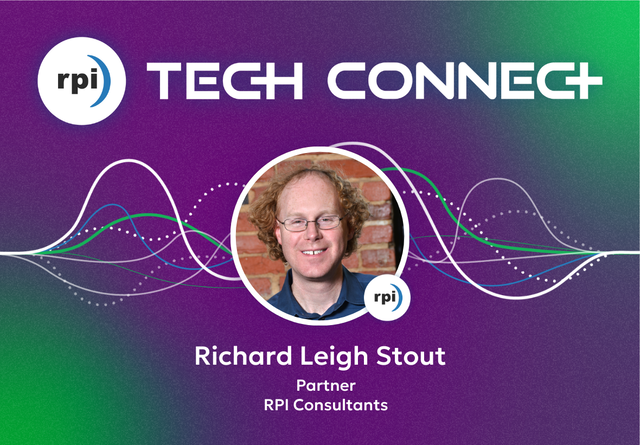
In this episode of RPI Tech Connect, RPI Partner Richard Leigh Stout returns to discuss real-world use cases of process mining and automation—the Velocity components delivering the most immediate value for CloudSuite users. Stout shares how these tools enhance discovery, support continuous improvement, and go far beyond the idea of Velocity as just an AP automation solution.
The conversation also looks ahead to AI agents and the evolving role of intelligent automation in ERP. If you’re wondering where to start with Velocity Suite or how to build momentum in your optimization journey, this one’s for you.
Interested in listening to this episode on another streaming platform? Check out our directories or watch the YouTube video below.
Meet Today’s Guest, Richard Leigh Stout
Recognized as a thought leader throughout the Infor CloudSuite and Lawson communities, Richard Leigh Stout joined RPI’s management team in 2014. He first served as the Director of our Technical Services practice, before taking the role of Director of Infor Service Delivery.
Mr. Stout has grown the practice with a focus on client satisfaction and the core values of RPI, completing hundreds of projects from interface flows to Lawson upgrades to full CloudSuite implementations. He draws on the experience of the whole team to architect elegant solutions that meet complex business challenges faced by RPI’s service industry clients.
Prior to joining the management team, he spent 10 years as an RPI Consultant, allowing him the opportunity to gain a wide-ranging familiarity with Infor implementation and optimization projects. In this role, he expanded his knowledge of workflow and process automation, document management, data management and reporting, integrations between Infor and other systems, web user interface development, as well as end user training and documentation.
Meet Your Host, Chris Arey
Chris Arey is a B2B marketing professional with nearly a decade of experience working in content creation, copywriting, SEO, website architecture, corporate branding, and social media. Beginning his career as an analyst before making a lateral move into marketing, he combines analytical thinking with creative flair—two fundamental qualities required in marketing.
With a Bachelor’s degree in English and certifications from the Digital Marketing Institute and HubSpot, Chris has spearheaded impactful content marketing initiatives, participated in corporate re-branding efforts, and collaborated with celebrity influencers. He has also worked with award-winning PR professionals to create unique, compelling campaigns that drove brand recognition and revenue growth for his previous employers.
Chris’ versatility is highlighted by his experience working across different industries, including HR, Tech, SaaS, and Consulting.
About RPI Tech Connect
RPI Tech Connect is the go-to podcast for catching up on the dynamic world of Enterprise Resource Planning (ERP). Join us as we discuss the future of ERPs, covering everything from best practices and organizational change to seamless cloud migration and optimizing applications. Plus, we’ll share predictions and insights of what to expect in the future world of ERPs.
RPI Tech Connect delivers relevant, valuable information in a digestible format. Through candid, genuine conversations and stories from the world of consulting, we aim to provide actionable steps to help you elevate your organization’s ERP. Whether you’re a seasoned professional or new to the ERP scene, our podcast ensures you’re well-equipped for success.
Tune in as we explore tips and tricks in the field of ERP consulting each week and subscribe below.

Transcript
Chris Arey
This is RPI Tech Connect. Welcome back. I’m your host, Chris Arey. On a previous episode, we broke down the Infor Velocity Suite and got a ton of great feedback from our listeners.
The response was so strong that we’ve decided to do a follow-up session. So here we are with RPI partner, Mr. Richard Leigh Stout, a fan favorite here on the podcast. It’s great to have him in person for a special episode of RPI Tech Connect. Mr. Stout, great to have you, sir. How are you?
Richard Leigh Stout
Thanks so much for having me, Chris. Always a pleasure to be on the pod. And man, I have to say, I hear great things about your work. The pod is blowing up. You have a new studio that’s very high-tech and fancy and looks like you got a Helly Hansen sponsorship as well.
That’s very exciting, man. I’d love to hear about all the good things that are happening.
Chris Arey
Yeah, thank you. I appreciate that. Great to have you here. So I want to start with a simple question. Why the need for a follow up on Velocity Suite? Last time we talked about the three main components of Velocity Suite, process mining, automation, and genAI.
Today we’re going to be zeroing in on two of those components: process mining and automation. So, Stout, I’d love to hear from you.
Why are these two areas generating so much?
Richard Leigh Stout
These are the two areas I want to focus on because I think they’re the areas that are going to deliver the most immediate value to Infor customers deploying Velocity Suite.
When you look at process mining, that’s going to become an amazing tool for us to use in discovery, right? As part of continuous optimization initiatives, process mining is going to become a valuable input.
And when you look at automation, that’s a concept that we’ve been doing for a really long time. The RPA tool built in the Velocity Suite adds another capability in our automation toolbox.
Now, there are other Velocity Suite components. There are advanced workspaces. And for me, it’s harder to quantify what the real value add is going to be for another user experience enhancement.
And then we’ve got gen AI. I think that’s probably the hardest one to pin down. It’s hard for people to think, all right, maybe I’m using ChatGPT for various things such as writing an email or what have you.
I can’t really see how that becomes a part of my daily transactional activity in the system. That one, I think, has a lot of potential, especially when it comes to inserting gen AI into decision-making flows. But we’re not quite there yet, so let’s focus on the things that we can use right away to obtain some value.
Chris Arey
I like how you distinguished the process finding and the automation from the AI, which is all the rage now, as I’m sure you’re aware.
Richard Leigh Stout
Everything’s getting branded AI, and maybe some of this is marketing hype. Honestly, a lot of the components of Velocity Suite are just natural evolution of things that we’ve been working on for a long time. Nice. Ok.
Chris Arey
For those of you listening in, marketing hype, not something you often see on RPI Tech Connect. Let’s move on to discussing process mining.
The RPI team has been running discovery assessments for years. How does Velocity change how we do that?
Richard Leigh Stout
Right. When we come in and do an optimization assessment for a client, we’re going to start with a discovery phase. That involves stakeholder interviews that are guided by a business process framework. It involves logging into the system, looking at the system configuration and workflows, and seeing how the system is set up. It involves some data analysis, right?
Pooling some transactional data out of system, performing statistical analysis, and then putting all of that together for our consultants. This allows us to get a good picture of how well the system is aligned with business processes, and how well the processes are meeting leading practice standards.
The process mining tool that’s part of Velocity Suite adds another dimension to that, right? Process mining is going to show us the speed at which different processes are running or where the bottleneck might be, along with the process’ variants.
This lets us dig into why certain scenarios require an alternate path. Having that information gives us another way to look at what’s going on in an organization.
Maybe it helps to validate what we’re hearing when we talk to business users about how they use the system. Maybe it gives us something to challenge and say, well, we’re hearing that you use the system this way, but we’re seeing something a little bit different when we look at the process running out.
Now, the other thing is, I don’t think you can completely automate discovery using something like process mining, because it’s not always going to give you the full story.
Process mining might show that we’re skipping a step, or it looks like something is going wrong here, but it might not be aware of a process that you have outside of the system. There might be business processes or policies or things going on that process mining isn’t going to be able to get the full picture on.
That’s why it’s only one input for us.
Chris Arey
I like the word dimension you use there. It’s like adding color and more context to a process that a business is performing. just more context. And if I’m hearing you correctly, process mining is not replacing discovery, but kind of complementing it.
Richard Leigh Stout
Right, yeah, exactly. That’s not to say we can’t do a thorough discovery process without it, but I think that it will add a lot of value. Not just for a one-time assessment that you might be doing, but to really empower organizations to take on that culture of continuous improvement.
It becomes another tool to enable organizations to drive that sort of optimization assessment type initiative on their own. And even better, it gives you something to measure against and it helps you establish KPIs.
If you do an optimization assessment and then that yields some recommendations, you try and enact those recommendations. Maybe that means you’re trying to automate a process that is manual and is showing up as maybe the bottleneck or add some exception management in.
Whatever you’re doing, you want to know if that works. You want to go back to that process mining output, compare the before and after, and see if it’s picking up on your approach.
Chris Arey
I really like the way you’re talking about process mining as a concept here. And now I’d like to hear a little bit more about specific processes that you have in mind for this type of tool. What can you share?
Richard Leigh Stout
Infor has delivered some baseline processes, things like rec to check, record to report, recruit to onboard. These come with a process builder and can be customized to align with clients’ actual use of the system.
We can also extend a delivery process to bring in steps or data that are occurring in a separate system. One thing we’ve been looking at is clients that use a separate enterprise asset management system for procurement, right?
In the case where, let’s say a work order is generated in the EAM system and ultimately driving a procurement event that’s flowing through into Infor FSM. When you’ve got a process spanning two different systems, that’s where inefficiencies might creep in.
If we can bring transactional data from the EAM into Infor Data Lake and then correlate that with purchase orders, receivers, and invoices in Infor FSM, we’re going to get a much more complete picture of that flow. That’s going to maybe uncover some insights that otherwise would have been hard to say.
Chris Arey
So process of mining allows for that kind of I guess, pooling of data? Yeah.
Richard Leigh Stout
Exactly, cross functional, cross process, cross system boundaries. We can bring all this information into Infor Data Lake and basically analyze it in one flow.
Chris Arey
That sounds pretty exciting.
Richard Leigh Stout
Yeah, yeah, that’s why I’m excited about this. It’s going to be really cool.
Chris Arey
It almost sounds like a continuous improvement feedback loop I’m hearing here where you’re looking at what this process is doing, you’re identifying areas where you can improve, and then you’re just doing it, based on those recommendations?
Richard Leigh Stout
Yeah, that’s exactly right. I agree. It’s important to have these tools that help us change our mindset from, ok, we’re going to stabilize, and then we’re going to have this cycle where we do a big improvement project or a big upgrade.
That doesn’t line up with modern SaaS software. So having more tools that support a continuous improvement mindset is important. That’s going to help us change our paradigm.
Chris Arey
Awesome. We love to hear that in for us making available tools like Process Mining. So, thank you for sharing all that about Process Mining.
I’d like to shift gears now and talk a little bit more about automation. I know there’s been some confusion between RPA and IPA. They’re both different types of automation. Can you break down the difference?
Richard Leigh Stout
Yeah, sure. Here at RPI Consultants, we’ve been working with Infor Process Automation, IPA, for over 10 years. There is a video of a much young version of myself on YouTube presenting IPA to a Lawson audience.
We’ve been using it for a long time. And IPA is built into the Landmark Application platform, tightly integrated into the platform that’s running the HCM and the FSM applications. It’s the default tool for approvals.
It gets used a lot for interface build. And there’s a reason for that, right? It’s context aware. It runs right within the system. So, you don’t have to worry about how well it’s integrated or authentication security, or any kind of challenges with that, right?
Not to say that we’ve ignored RPA, right? Different tools. At the same time, we’ve been following the wave in Robotic Process Automation.
Chris Arey
Different tool.
Richard Leigh Stout
Actually, when RPA first came out, kind of maybe bothered me a little bit because I thought, man, you’re just putting a new label on a thing that we’ve had, right? IPA qualifies, I think, as Robotic Process Automation, but it was ahead of its time, right?
IPA was out there before people started clawing at that. For us, it’s important for us to evaluate everything that’s out there.
We want to act as our client’s advisor. And we want to be open to any tools or technologies who are not specifically tied to one vendor or taking a philosophy that you have to adopt every tool that comes out of your ERP vendor’s platform.
About four years ago, we became Blue Prism partners and started upskilling on that tool and looking at other RPA tools.
Tools like that have their place because they can replicate end user behavior. They can replicate a set of clicks. They can work through some tasks that don’t fit for traditional interface or integration type development, access to system that doesn’t have APIs or what have you. It’s just that in the Infor space, IPA was so good that really made RPA a lot less compelling.
As a result, I think we’ve continued to center around IPA as the primary tool for automation.
Chris Arey
Awesome, so we’ve heard a little bit now about the difference between IPA and RPA. I’d love to hear more about what’s different in the Velocity Suite with automation and RPA.
Richard Leigh Stout
Yeah, with Infor’s built-in RPA tool, obviously you’re getting full integration with the CloudSuite platform, so it’s able to take a lot of actions within the system but also has a traditional set of nodes that you find in any RPA tool so we can reach out and interact with other systems.
But honestly, what is most exciting to me is the possibility of adding AI agents within an RPA automation. When you can start bringing in AI analysis and decision making as a step in an automation, we’re adding intelligent analysis and orchestration to a process.
Chris Arey
Is that now, is that later? When does that become reality?
Richard Leigh Stout
Yeah, you know, I think we’re just starting to see that in other industries and other systems. Obviously, ERP is maybe a laggard when it comes to adopting a new technology.
And, you know, there are a lot of concerns about relying on AI to make decisions because ERPs are used in a different context.
There are compliance considerations. There are all sorts of rules that need to be followed. I think there’s going to be some time to watch this technology be put into use in other types of use cases and systems.
And we’ll be able to learn from that, right? When we do start adopting that in ERP, we’re going to be much more educated about the pitfalls and how to avoid them.
Chris Arey
So I have a question for you here. There have been a lot of folks that are characterizing Velocity as being solely an AP automation tool. Is that a fair assessment? What are your thoughts on that?
Richard Leigh Stout
No, man, that’s completely wrong. That’s a lazy take. If you see Velocity Suite as just an AP automation tool, you’re totally missing the boat. Next question.
Chris Arey
Ok, that was a strong reaction from Mr. Stout there. We know not to bring that question up again.
Let’s talk then about it as being more than just an AP solution. I like this analogy of Velocity Suite as a toolbox. It’s not just a point solution. It can help clients do a lot more with their work.
So, how does RPI fit into this equation?
Richard Leigh Stout
Yeah, exactly. think the toolbox analogy makes a lot of sense. If an organization already has strong business intelligence, they already have a good picture of what’s going on and are monitoring KPIs.
Process mining just basically adds one more ability and a different view into the system. An organization may already have some document automation processes, or there may be certain business areas that have invested more in that area.
Velocity Suite’s RPA may enable other business areas to start taking advantage of those automations that may have been costly or time consuming to implement with the previous set of tools.
It really enables incremental improvement basically. And I think it helps clients remain a bit more in the driver’s seat and have a little bit more control over improving their use of the system.
And honestly, maybe lowers their reliance on consultants like us. But on the flip side, automation on its own, that doesn’t necessarily solve problems. A lot of the work that we’re doing right now is helping organizations understand what makes sense to automate. If you automate a poor process, you’re just going to have bad outcomes appearing more quickly.
The alignment between people and systems is really important. I like to think that technology alone can’t really solve that, right? That’s a people problem, and we’re in the people solutions business.
The other thing is it’s important to have a good roadmap, right? And kind of understand that as you’re working with these tools, you need to have a good vision of where you want to be, and how these things fit together.
That helps to bring everybody to the table, right? It helps build consensus; it helps build buy-in to what we’re doing and ultimately yields more effective results.
Chris Arey
I like how candid you’re being about this and recognizing that a tool like this does help organizations be in the driver’s seat and be more a little proactive about how their businesses or processes are running.
On the flip side, as you mentioned, like this is a partnership, right? You’re going to need support as you always have, you might be able to buy a jet, but who’s going to fly the jet, right?
You need help and guidance and using a piece of technology like that.
Richard Leigh Stout
Our philosophy here has always been to enable clients, right? The entire time I’ve been a consultant, I always try and provide training and insight and enable my clients to do what I do because there’s no shortage of work for me, right?
I don’t need to put myself into a repetitive scenario. That’s not why I became a consultant. I like solving new challenges, right? If I can enable a client to take something on and be able to solve a problem, that opens more space for me to look at something new and provide a new kind of value. Mic drop.
Chris Arey
There is more. We’ve talked now about process mining, automation, and the role RPI plays in helping organizations use a tool like this. Now I want to look ahead a little bit. You mentioned AI agents, embedding those into RPA flows.
I want to hear more about that. What can you add?
Richard Leigh Stout
Yes, this is where RPA really starts to get interesting, right? RPA on its own can replicate a process that’s done manually.
If you think about a traditional flow-based automation, you can connect to a system, you can have an event that starts a process, you can gather some data, you can have a decision tree, you can have approvals, you can have notifications, and you can even have some action.
But essentially, whoever is building that flow needs to understand all the possibilities and account for that and decide on all the potential actions or notifications. When we can bring in AI in the middle of that, we’re able to basically add a little bit of insight and eventually automate some action.
Let me break this down. Imagine you’ve got an exception management flow, right? An exception in a process occurs, the flow kicks in, it gathers some relevant data, it builds a notification, and it surfaces that to a decision maker. says, hey, this exception occurred, here’s all the information you need to make a decision how to handle this, you can act on it.
We’ve been doing this for a long time, not just with workflow tools, but with reports, with dashboards, with business intelligence, right? It’s sort of moving to this exception management mentality.
But humans still need to be a part of the process because you need to think about this and decide what needs to happen and take action.
If we can add generative AI into the equation, our exceptional management flow still gathers all the information, but then we pass it on to something like chatGPT and prompt it to act as an MIS administrator in a healthcare setting that uses Infor CloudSuite as your ERP.
We say, this exception occurred, here’s all the relevant data, what do you recommend? We can take the output of that node and pass that onto our decision maker. Now, suddenly, you’re servicing an exception and you’re saying, here’s the problem that’s been encountered, here’s some relevant context, here’s our recommendation on how to handle it and why.
That becomes powerful. That’s going to save a lot of time.
Chris Arey
If I’m hearing you correctly, adding AI to this equation is helping provide relevant context. AI is instant, right? You prompted it and your results are there. So that’s saving a ton of time.
And what I like most about this is that it’s like CloudSuite knows your business and the people who work inside it, down to the letter. Yeah. Is that right?
Richard Leigh Stout
Well, I’ll tell you what, Infor is leaning into this. They’re developing industry AI agents. They’re going to be available as part of Velocity Suite. That means there is going to be a genAI model that’s been tweaked for a specific role but also is trained on your business processes.
So, we take the business process graph that models your organization’s processes and policies, the same graph that process mining is driving, right? We take that and your AI agent is aware of that. So now you’ve got an AI agent that knows what role they’re to act as, what industry they’re in.
It’s an expert on the application and they know your specific organization’s business processes top to bottom. What came before me in this process, and what are the next steps that need to happen to make this process successful?
Those AI agents are going to be able to offer much better, more tailored advice.
Chris Arey
It’s nice to hear all of these things coming together, Like one, like the process mining into automation, automation, and now into AI. We’re not there yet, it sounds like, with the AI agents, but you think we will be soon.
Richard Leigh Stout
Yeah, that’s on the roadmap. And to take it one step further, I think initially we’re going to want to add some AI-based analysis and problem-solving recommendations. As we start to get more comfortable with that, we’re going to start adding some autonomy to these agents.
So, we’re going to say, if this exception occurs, analyze it, make a recommendation. If your recommendation falls into a couple of these actions that we’ve vetted, go ahead and take that action.
At that point, you’re just getting a notification that says, hey, a problem occurred. Here’s what I did to solve it. And we’re good now. I’m just letting you know.
Chris Arey
We’re going to get to that point.
Richard Leigh Stout
Yeah, absolutely, because we’re already seeing that in other use cases, other industries. It’s only a matter of time before that is ready for back-office processes.
Chris Arey
Very exciting time to be an Infor user. And if you’re not checking out the Velocity Suite, we’ve covered a lot of ground today, hearing a lot about a lot of different use cases and value it’s providing.
And, you know, it’s nice to hear too that there’s some things to look forward to. It’s evolving, it’s continuously improving as we always encourage businesses to do. So Stout, thank you so much for hanging out and jumping back on the pod.
We covered a lot of ground today. If there was one takeaway you’d want today’s audience to walk away with, what you give them?
Richard Leigh Stout
Yeah, I guess there’s one takeaway. If you’re waiting for a fully mature AI-based solution in the ERP with the perfect use case, you’re going to miss the wave, right? You know, it’s time. Velocity Suite, the time is now to get started and, you know, start using the tools that are the easiest approach.
And in my opinion, that’s process mining and RPA, you have to start rolling them out incrementally, getting comfortable and staying in tune for what’s next. There’s a lot of exciting stuff on the horizon.
Chris Arey
I love how actionable that was too. So those of you listening in, if you have any questions about the Velocity Suite or how RPI can help you make use of the tool, we’d love to hear from you.
You can contact us by emailing us at podcast@rpic.com, that’s podcast@rpic.com. This has been RPI Tech Connect.
Thank you so much Mr. Stout.
Richard Leigh Stout
Thank you Chris, it’s been a pleasure to be here.